
A first offense DUI in California is a misdemeanor in most cases, but calling it minor would be a mistake. The penalties are real, the process is more complicated than most people expect, and the consequences extend well beyond any jail time or fine.
California maintains two separate proceedings after a DUI arrest: a criminal case in court and an administrative license suspension process through the DMV. Both must be addressed, on different timelines, or you will face consequences that could have been avoided. This guide covers exactly what a first offense DUI in California involves, what the penalties look like in practice, and what a DUI defense attorney can do to limit the damage.
What Is a First Offense DUI in California?

California Vehicle Code 23152 makes it unlawful to drive under the influence of alcohol, drugs, or a combination of both. A first offense means no prior DUI convictions on your record within the preceding 10 years. California’s 10-year lookback period means older convictions do not count toward the offense level, but any DUI within that window turns your current charge into a second offense with significantly higher penalties.
The standard legal limit is a blood alcohol concentration of 0.08 percent or higher. However, California law also permits a DUI charge based on actual impairment even if BAC is below 0.08. A driver who shows clear signs of impairment at 0.06 percent can still be charged and convicted. The 0.08 threshold creates a legal presumption of impairment, but it is not the only basis for a charge.
Stricter limits apply to certain drivers regardless of visible impairment. Drivers under 21 face a zero-tolerance standard of 0.01 percent. Commercial vehicle operators face a limit of 0.04 percent. Drivers who are already on DUI probation face a 0.01 percent limit as a condition of that probation.
Penalties for a First DUI in California
A first offense DUI conviction under Vehicle Code 23152 carries a defined range of penalties. Courts have discretion within those ranges, and the outcome in any individual case depends on the facts, the jurisdiction, and whether counsel is able to negotiate effectively on the defendant’s behalf.
| Consequence | Mandatory? | Standard Range | Notes |
| County jail | No (common) | 48 hrs – 6 months | Often converted to work release or house arrest |
| Base fine | Yes | $390 – $1,000 | Penalty assessments multiply total to $2,000+ |
| License suspension (DMV) | Yes | 4 months (APS) | Separate from any court-ordered suspension |
| License suspension (court) | Yes | 6 months | Restricted license often available after 30 days |
| DUI school | Yes | 3 or 9 months | 9 months if BAC 0.15% or higher |
| Probation | Yes | 3-5 years | Informal probation standard for first offense |
| Ignition interlock device | Yes (IID pilot counties) | 6 months minimum | Required statewide if restricted license sought |
| SR-22 filing | Yes | 3 years | Certificate of financial responsibility required |
The base fine of $390 to $1,000 does not reflect actual out-of-pocket cost. California adds a series of penalty assessments, surcharges, and fees on top of the base fine that routinely multiply the total to $2,000 or more, and in some counties significantly higher. Defendants should budget for the total cost, not the statutory base.
Will You Go to Jail for a First DUI?
Jail is possible for a first DUI in California, but it is not the automatic outcome most people fear. California Vehicle Code 23536 sets the minimum jail time for a first DUI conviction at 96 hours and the maximum at 6 months. Judges have substantial discretion, and in most first offense cases involving a standard BAC with no aggravating factors, actual custody time is often reduced, suspended, or converted to an alternative program.
The most common alternatives to jail time for first DUI offenders in California include:
- Work release: The defendant serves their sentence working for a county work program during daytime hours and returns home at night. Common in Los Angeles and surrounding counties.
- House arrest / electronic monitoring: The defendant wears a GPS ankle monitor and is confined to their residence except for approved activities such as work, school, or medical appointments.
- Community service: Some courts accept community service hours in lieu of jail time, particularly for first offenders with no prior criminal history.
- CalTrans roadside work: Roadside cleanup crews operated by Caltrans serve as a jail alternative in certain counties.
Whether you qualify for one of these alternatives depends on the county, the specific judge, your criminal history, and the circumstances of the arrest. An experienced DUI attorney knows what alternatives are available in the specific court where your case is filed and can advocate for the most favorable option.
Factors That Make First DUI Penalties More Severe
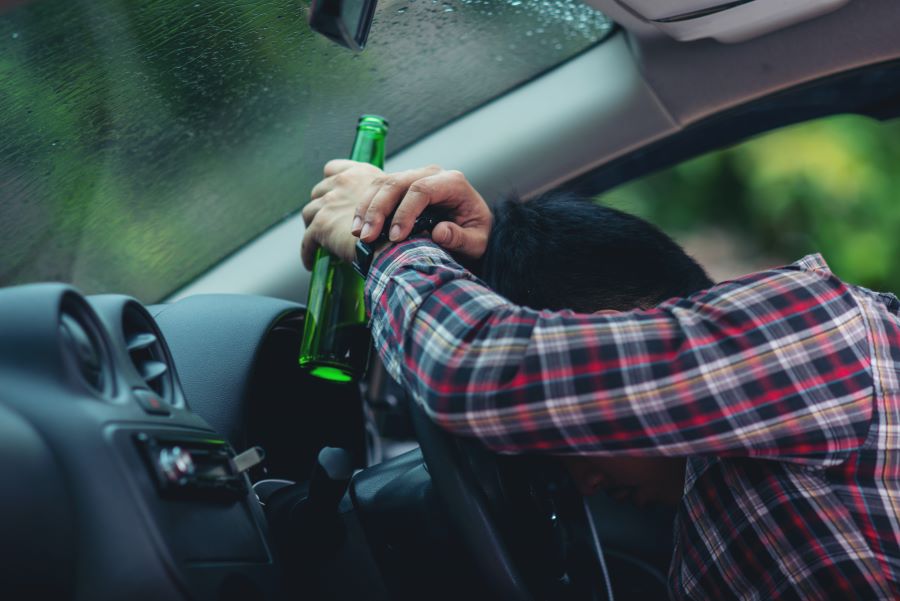
Several circumstances can push a first DUI toward the high end of the penalty range or trigger mandatory enhancements that override judicial discretion:
- BAC of 0.15 percent or higher: Requires completion of a 9-month DUI school program rather than the standard 3-month program, and is treated as an aggravating factor at sentencing.
- Refusal to submit to chemical testing: California’s implied consent law requires drivers to submit to a breath or blood test after a lawful arrest. Refusal results in a mandatory 1-year DMV license suspension on top of any court-ordered suspension, and the refusal itself can be used as evidence of consciousness of guilt at trial.
- Child passenger under 14 in the vehicle: Vehicle Code 23572 adds a mandatory 48-hour jail enhancement when a minor under 14 was in the car during the DUI offense, even on a first offense.
- Excessive speed: Driving 30 mph or more over the freeway speed limit, or 20 mph or more over surface street limits, while DUI triggers an additional 60-day jail enhancement under Vehicle Code 23582.
- Causing an accident or injury: A DUI that results in injury to another person can be charged as a felony under Vehicle Code 23153, regardless of the defendant’s prior record.
- Drug-impaired driving: A drug offense DUI follows the same basic framework but introduces different evidentiary challenges, particularly around establishing impairment without a simple numeric BAC threshold.
Long-Term Consequences of a First DUI Conviction
The penalties listed above are the immediate legal consequences. A first DUI conviction carries a longer tail of collateral effects that are often more disruptive to daily life than the sentence itself.
DMV Administrative License Suspension
A DUI arrest triggers an automatic DMV administrative per se (APS) suspension that is independent of the criminal case. You have only 10 days from the date of arrest to request a DMV hearing to contest the suspension. If you miss that window, the suspension takes effect automatically. The DMV administrative hearing is a separate proceeding from the criminal court case and requires its own preparation and strategy.
DUI Probation Conditions
First offense DUI probation in California typically runs three to five years and includes conditions such as not driving with any measurable alcohol in your system, not refusing any lawful chemical test, and not committing any additional criminal offenses. A probation violation can result in revocation and imposition of the suspended jail sentence.
Defendants who complete their sentence may still face ongoing supervision, and the difference between parole and probation in California affects what those obligations look like in practice.
SR-22 and Insurance Costs
A DUI conviction requires an SR-22 filing, which is a certificate from your insurance carrier confirming minimum liability coverage. The requirement lasts three years from license reinstatement. Most insurers treat a DUI conviction as a high-risk event and increase premiums by 80 to 100 percent or more. Some standard carriers will not renew the policy at all, moving the driver into the non-standard market with even higher rates.
Employment and Professional Licensing
Many employers conduct background checks and treat DUI convictions as disqualifying for roles involving driving, security clearances, or positions of trust. Professional licensing boards for healthcare workers, attorneys, teachers, and commercial drivers have their own separate processes for evaluating DUI convictions. The consequences vary significantly by profession and should be researched specific to your field.
Defense Strategies for a First DUI Charge
A first DUI is not a guaranteed conviction. There are several well-established defense avenues that a skilled attorney will evaluate from the moment they are retained:
Challenging the Traffic Stop
The Fourth Amendment requires that a traffic stop be based on reasonable suspicion of a traffic violation or criminal activity. If the officer lacked a lawful basis to stop the vehicle, any evidence obtained as a result of that stop, including BAC test results, may be suppressible under the exclusionary rule. This is one of the most powerful pretrial tools available in DUI defense.
Miranda Rights and Statements to Police
Miranda rights can become an issue in a DUI case if police question a driver while in custody without first providing the required warnings. If a driver’s statements were obtained in violation of their Miranda rights, those statements may be excluded from evidence. While a Miranda rights DUI defense does not automatically lead to dismissal of the charge, it can limit the prosecution’s evidence and strengthen the overall defense strategy.
Challenging Field Sobriety Tests
Field sobriety tests are not infallible. They are physical performance tests that can be affected by fatigue, medical conditions, footwear, road conditions, and the officer’s own administration technique. Field sobriety test results can be challenged based on improper administration, environmental conditions, or physical factors that have nothing to do with intoxication.
Challenging BAC Test Results
Breathalyzer results are subject to calibration errors, improper use of the device, radio frequency interference, and physiological factors including mouth alcohol contamination, certain diets, and medical conditions that affect breath readings. Blood test results can be challenged on chain of custody grounds, improper storage, or contamination during analysis. A rising BAC defense argues that the defendant’s BAC was below 0.08 at the time of driving but continued to rise in the time between the stop and the test.
Negotiating a Wet Reckless Reduction
In cases where the evidence is not strong enough to guarantee conviction but not weak enough to support dismissal, a plea to wet reckless under Vehicle Code 23103.5 may be available. A wet reckless carries lower penalties than a DUI conviction, does not trigger the same insurance consequences, and carries less stigma. However, it still counts as a prior DUI for sentencing purposes if the defendant is charged again within 10 years, and it does not prevent the DMV from proceeding with its administrative suspension.
Frequently Asked Questions
Is a first DUI a misdemeanor or felony in California?
A first DUI is a misdemeanor in the vast majority of cases. It becomes a felony if the DUI caused injury or death to another person under Vehicle Code 23153, or if the defendant has three or more prior DUI convictions within the 10-year lookback period. A first DUI involving a child under 14 in the vehicle remains a misdemeanor but carries a mandatory jail enhancement.
How long does a DUI stay on your record in California?
A first DUI conviction remains on your driving record for 10 years from the date of the offense, and that period is used to determine whether any subsequent DUI is treated as a second offense. The conviction remains on your criminal record permanently unless successfully expunged. It does not disappear automatically after 10 years from the criminal record perspective.
Can a first offense DUI be reduced to a wet reckless?
Yes, in some cases. A wet reckless reduction is most commonly available when the BAC was close to the legal limit, there was no accident or injury, and the defendant has no prior criminal history. The decision is ultimately up to the prosecutor and depends on the specific facts of the case and the jurisdiction. Not all courts are equally open to wet reckless reductions, which is one reason local knowledge and court relationships matter in DUI defense.
Will you lose your license after a first DUI in California?
You will face two separate suspension processes. The DMV imposes an automatic 4-month administrative suspension triggered by the arrest itself unless you request a hearing within 10 days and win it. The criminal court imposes a separate 6-month suspension upon conviction. A restricted license that allows driving to and from work, school, and DUI school is typically available after 30 days, conditioned on installation of an ignition interlock device.
Can a first DUI be expunged in California?
Yes. A first DUI conviction is eligible for expungement under Penal Code 1203.4 once probation is completed, provided no new crimes were committed during probation. Expungement dismisses the conviction and allows the defendant to truthfully answer most job applications that they have not been convicted of that offense. It does not restore DMV driving record status, eliminate the conviction for purposes of subsequent DUI sentencing, or restore firearm rights. The expungement attorneys at Manshoory Law Group can assess eligibility and handle the petition.
Charged With a First DUI in California?
A first offense DUI in California can lead to fines, license suspension, probation, DUI school, and increased insurance costs, even when no accident or injury occurred. While many first-time offenders avoid significant jail time, the outcome of a case often depends on factors such as BAC level, aggravating circumstances, and the strength of the available defenses. Because a DUI arrest triggers both a criminal case and a separate DMV process, taking prompt action is critical to protecting your driving privileges and minimizing the long-term consequences.
Contact Manshoory Law Group for a free case analysis with a DUI defense attorney who handles first and multiple offense cases throughout Los Angeles and Southern California.