
Swatting, the practice of making a false emergency call designed to trigger a heavily armed law enforcement response at someone’s home, school, or business, has become one of the most aggressively prosecuted forms of online harassment in the United States. What may have started as an online prank between gamers or streamers a decade ago has resulted in deaths, multi-decade federal prison sentences, and a wave of new state laws across the country, including in California.
If you or a family member has been accused of swatting, the stakes are enormous. Even a “successful” hoax that didn’t physically hurt anyone can carry years in prison, restitution orders that can reach into the tens of thousands of dollars, and federal charges if the call crossed state lines or used the internet. If someone was injured or killed in the police response, the exposure can extend to life imprisonment.
Talk to a Los Angeles criminal defense attorney before you say anything else to investigators. Swatting cases move quickly, often involve federal agencies alongside local police, and require specialized defense strategy from the very first contact.
What Is Swatting?
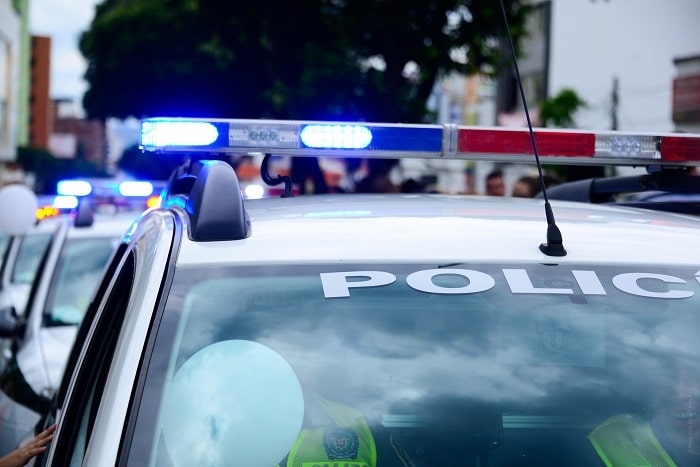
Swatting is the act of making a false report to emergency services, usually 911, describing an in-progress violent crime at a specific location. The reports almost always involve scenarios that demand the most aggressive possible response: an active shooter, a hostage situation, a bomb threat, a murder in progress. The goal is to provoke a SWAT team or other tactical response unit to descend on the target’s home, school, or workplace.
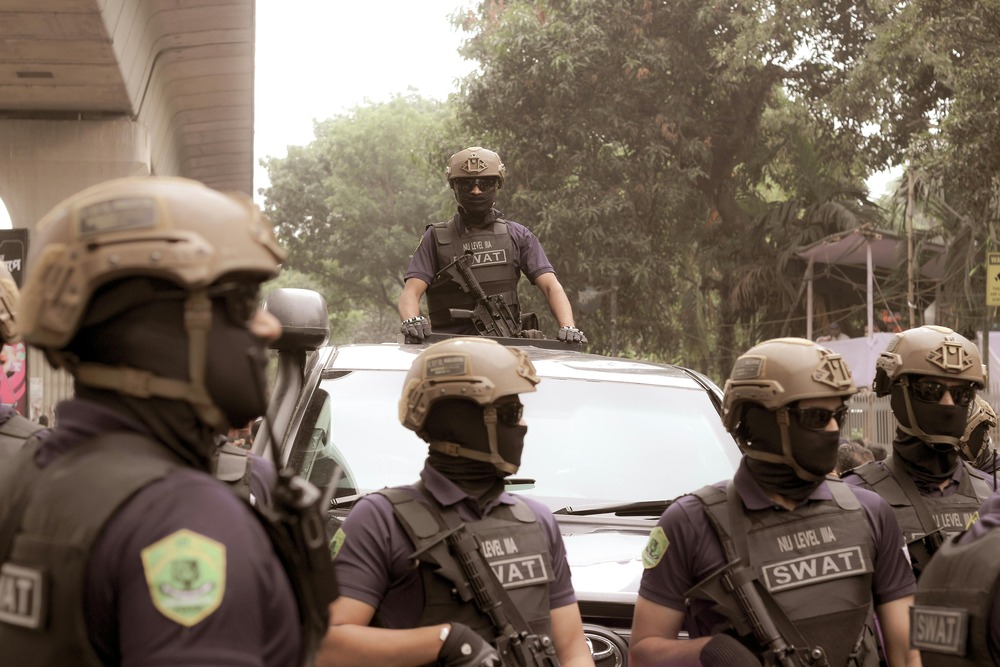
The danger is not theoretical. SWAT teams arrive expecting to encounter armed and dangerous suspects. They breach doors, deploy flash-bang grenades, point loaded weapons at occupants, and sometimes fire. People have died in these responses, including a Wichita, Kansas man whose death in 2017 led to a 20-year federal prison sentence for the California man who initiated the hoax call. More recently, an 18-year-old from California was sentenced to four years in federal prison in 2025 for a nationwide swatting campaign that targeted schools, places of worship, and government buildings, according to the FBI’s official statement on swatting.
Both California and federal law take these cases extremely seriously, and prosecutors routinely seek maximum sentences.
California Swatting Law: What the State Can Charge
California’s primary swatting statute is the false reporting statute, which makes it a crime to report an emergency to public safety officials knowing the report is false. The law applies broadly to any kind of false emergency report, from fake bomb threats and hostage situations to fabricated active shooter calls. It does not require the caller to use any specific words or to mention SWAT teams by name. What matters is that the report was knowingly false and was designed to trigger a public safety response. The statute also covers people who cause a false report to be made, which means defendants can be charged even when they didn’t personally place the call.
Base offense. A standard false report of an emergency is a misdemeanor punishable by up to one year in county jail and a fine of up to $1,000.
Wobbler when injury results. If the false report results in great bodily injury to anyone, the crime becomes a wobbler that can be charged as either a misdemeanor or a felony, with a felony conviction carrying up to three years in state prison.
Felony when death results. If the false report causes someone’s death, the offense is a straight felony with a potential state prison sentence of up to three years, plus additional manslaughter or murder charges depending on the circumstances.
Mandatory restitution to responding agencies. Under California law, anyone convicted of falsely reporting an emergency that triggered a response can be ordered to pay the full reasonable costs of that response to the public agency. There is no statutory cap on this restitution. The mobilization of a SWAT team, patrol cars, fire apparatus, and ambulances easily costs tens of thousands of dollars, and judges routinely order full reimbursement.
Related charges. California prosecutors typically stack additional counts when the facts support them, including:
- Misusing 911 to harass or annoy (a separate misdemeanor)
- Making criminal threats when the call targets a specific person
- Conspiracy when more than one person was involved in planning the call
- Manslaughter or murder when the response results in someone’s death
Expanded scope under SB 19 (introduced 2025). California lawmakers have introduced legislation to close a gap in existing law: under the original statute, the false report generally had to threaten specific people in order to trigger prosecution. SB 19 would extend prosecution to false reports of mass violence at schools, hospitals, and houses of worship even when no specific person is named. Defense lawyers handling current cases should be alert to whether this expanded framework applies.
Federal Swatting Law: When the Case Goes to Federal Court
Contrary to a common misconception, federal law absolutely does prosecute swatting, and federal sentences are typically much higher than state-level outcomes. The most commonly charged federal statute is the federal false information and hoaxes statute, which criminalizes false reports designed to make others believe a violent crime is in progress.
Base federal offense. Up to 5 years in federal prison.
If serious bodily injury results. Up to 20 years in federal prison.
If death results. Up to life imprisonment in federal prison.
These are not theoretical maximums. The 2019 sentencing of Tyler Barriss, the California man whose hoax call to Wichita police led to the death of a 28-year-old man, resulted in 20 years in federal prison for that single case. He pleaded guilty to 51 charges in total stemming from swatting calls across multiple states.
Other federal statutes commonly charged alongside swatting:
- Interstate communications threats (when the call crossed state lines or used the internet)
- Conspiracy
- Wire fraud (when financial gain or extortion was involved)
- Cyberstalking (under federal stalking laws)
Mandatory federal restitution. Federal law requires courts to order restitution to victims of these offenses. That covers medical costs, lost income, property damage, therapy expenses, and even costs incurred from participating in the investigation. Federal restitution orders cannot be discharged in bankruptcy and follow the defendant for life.
Why Swatting Cases Are Treated So Harshly
Several factors make swatting cases stand out for aggressive prosecution. Both state and federal authorities have moved swatting to the top of their priority lists in recent years, and the punishments handed down by judges have grown significantly harsher as a result. Unlike many other forms of online misconduct, swatting carries a built-in potential for catastrophic harm that prosecutors and courts treat as deeply aggravating, even in cases where no one was physically hurt. Understanding these factors helps explain why even a single swatting incident can result in years of prison time and lifetime financial consequences.
- Predictable risk of death. Courts have consistently held that anyone who initiates a SWAT response by false report is on notice that the response could result in serious injury or death. This makes manslaughter and even murder charges plausible when the worst happens.
- High public attention. Swatting cases attract significant media coverage, especially when victims include children, public figures, or vulnerable communities. Prosecutors face strong political pressure to seek maximum penalties.
- Federal-state cooperation. Swatting cases almost always involve electronic communications that cross state lines, which means the FBI and federal prosecutors can get involved alongside local authorities. Parallel prosecutions and superseding indictments are common.
- Easier evidence trail than most internet crimes. Despite the use of VPNs, voice-changing software, and spoofed phone numbers, federal investigators have become very effective at tracing swatting calls back to their source. Forensic phone records, network logs, account metadata, and online chatter often identify the caller within days.
Common Defenses to Swatting Charges
Despite the harsh consequences, several defenses are available depending on the facts. Swatting cases are far more defensible than prosecutors often acknowledge, especially in the early stages of an investigation. The digital evidence that prosecutors rely on, including IP addresses, account credentials, and phone metadata, is frequently less conclusive than it first appears. A skilled defense attorney can challenge the prosecution’s proof on multiple fronts, often before charges are even filed.
Mistake of fact (good faith report)
This is the most important defense in any false reporting case. If you genuinely believed an emergency was occurring, even if you were wrong, you did not “knowingly” make a false report and cannot be convicted. People misinterpret loud sounds, suspicious behavior, or fragments of conversations all the time. Good faith reports do not become crimes just because they turn out to be inaccurate.
Lack of intent
Swatting requires intent to report something the defendant knew to be false. If the prosecution can’t prove that knowing falsity, the charge fails. Confused, intoxicated, or mentally impaired callers may have a viable defense on this element.
Mistaken identity
Swatting investigations often rely on IP addresses, VPN exit nodes, voice-changer accounts, and shared devices that can be spoofed, compromised, or shared among multiple users. If the prosecution cannot tie the call specifically to the defendant, the case may collapse. Account credentials are routinely stolen, traded, and used by people other than the registered owner.
Coerced or duped caller
Some swatting cases involve people who were tricked into making the call, paid by someone else to do it without understanding the consequences, or who were minors manipulated by older participants in an online group.
Unlawful search or seizure
Federal and state investigations into swatting almost always involve searches of phones, computers, gaming accounts, and cloud storage. If law enforcement obtained the evidence without a proper warrant or in violation of the Fourth Amendment, that evidence can be suppressed and the case can fall apart. See our guide on California’s cyberstalking and online harassment laws for more on how digital evidence is challenged in these cases.
First Amendment defense (limited)
Pure speech is generally protected, but reports designed to trigger a violent law enforcement response have been consistently treated by courts as outside the First Amendment’s protection. This defense rarely succeeds in swatting cases, but elements of it can sometimes apply when the speech is ambiguous or political.
What to Do If You’re Accused or Investigated
If federal agents, FBI, or local police have contacted you about a swatting investigation, your next steps will shape the entire case. The window between first contact and formal charging is often where cases are won or lost, sometimes within just a few days. Investigators count on suspects feeling pressured to “explain themselves” or “clear up a misunderstanding,” and many people destroy their own defense in the first conversation. The decisions you make right now, before any lawyer has reviewed the evidence against you, can determine whether you face a misdemeanor, a multi-year federal sentence, or no charges at all.
- Do not talk to investigators. This is non-negotiable. Federal agents are highly skilled at eliciting incriminating statements during what feel like casual conversations. Politely decline: “I want to speak with my attorney before answering any questions.”
- Do not delete or destroy evidence. Wiping a phone, clearing chat history, deleting accounts, or destroying devices can lead to obstruction of justice charges that are sometimes more severe than the underlying swatting charge.
- Do not contact the alleged victim, other suspects, or witnesses. Any communication can become evidence of consciousness of guilt or witness tampering.
- Document anything that supports your version of events. If your account was compromised, your devices were shared, or someone else used your network, preserve that evidence immediately.
- Hire a defense attorney experienced in federal cases. Swatting cases often involve federal jurisdiction, and not every criminal defense lawyer has federal court experience. Choose accordingly.
Frequently Asked Questions
Is swatting a felony in California?
It depends on the outcome. A basic false emergency report is a misdemeanor punishable by up to one year in county jail. If the false report causes great bodily injury, it becomes a wobbler that can be charged as a felony with up to three years in state prison. If the report causes someone’s death, it’s a felony, and additional manslaughter or murder charges typically follow.
Can I be charged in federal court for swatting?
Yes. Federal law specifically criminalizes false information and hoaxes, with penalties of up to 5 years for the base offense, up to 20 years if serious bodily injury results, and up to life in prison if death results. Most swatting cases cross state lines or use the internet, which makes federal jurisdiction almost automatic.
Will I have to pay back the police for the response?
Yes, in most cases. California law allows courts to order swatters to reimburse public agencies for the full reasonable costs of the emergency response. There is no statutory cap. A SWAT team mobilization typically costs tens of thousands of dollars, and judges routinely order full restitution on top of any criminal fines.
What is the best defense to a swatting charge?
The strongest defense in most cases is mistake of fact: that you genuinely believed an emergency was occurring even if you were wrong. The prosecution must prove that you knowingly made a false report. Other defenses include lack of intent, mistaken identity (your account, IP, or device was used by someone else), and unlawful search of your devices.
Can a minor be charged with swatting?
Yes. Minors can face state juvenile charges and, in some cases, federal charges that are transferred from juvenile to adult court depending on the severity. Several high-profile federal swatting prosecutions in 2025 involved 18-year-old defendants sentenced to multi-year federal prison terms. Anyone under 18 facing swatting allegations needs an attorney experienced in both juvenile and federal practice.
Talk to a Los Angeles Criminal Defense Attorney Today
Swatting prosecutions are among the most aggressively pursued cases in California right now. Federal and state agencies have invested significant resources into identifying, charging, and convicting people who make false emergency calls, and judges have been imposing increasingly harsh sentences in response to the well-publicized harm these calls cause. For defendants, that means the timeline is short, the exposure is high, and the difference between a manageable outcome and a multi-year prison sentence often comes down to the quality of the defense from day one.
The criminal defense attorneys at Manshoory Law Group focus exclusively on criminal defense and handle both state and federal cases throughout California. We know how investigators build these cases, where the digital evidence tends to be weakest, and how to challenge unlawful searches, mistaken-identity issues, and overcharging at every stage.
Consultations are free, and we’re available 24/7. Flexible payment plans are available.
Call 877-977-7750 today or contact us online to discuss your case.