
A DUI arrest in Glendale sets two separate processes in motion at once, and most people only learn about the second one after it is too late to do anything about it. One is the criminal case that brings you to court. The other is an administrative action against your driver’s license, and it runs on a 10-day clock that starts the day you are arrested.
From the 10-day DMV window to the final court date, here is what happens next, in order, and when you actually need to act.
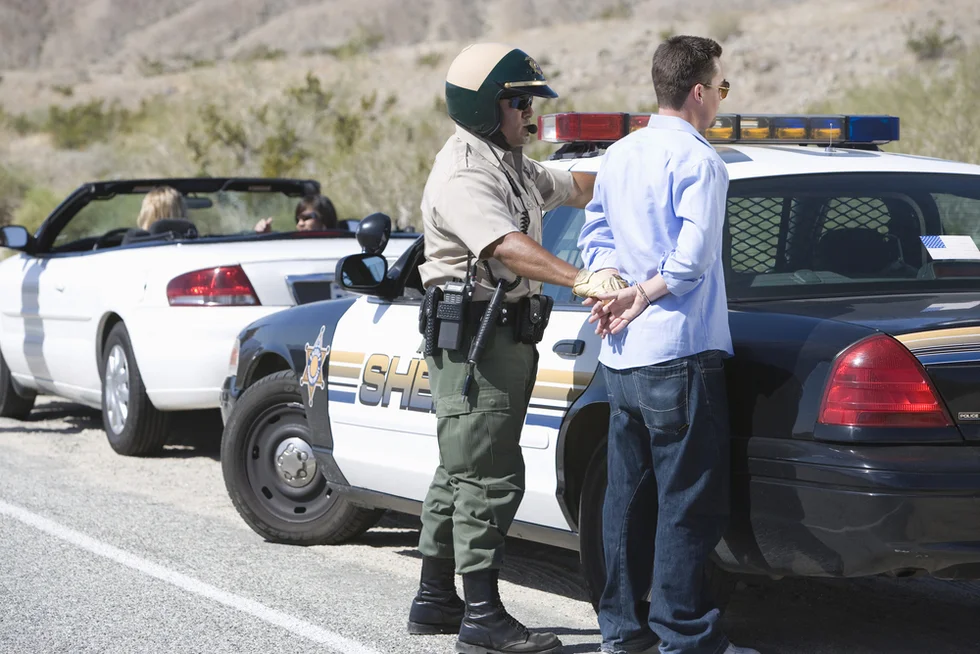
What Happens Right After a DUI Arrest in Glendale?
A DUI arrest triggers a sequence of events long before any court date is set, beginning with the initial traffic stop and continuing through field sobriety testing, chemical testing, booking, and the first administrative steps involving your driver’s license. What happens in those first hours and days can have a significant impact on the evidence available in your case, the deadlines you must meet, and the options your attorney may have when challenging the arrest or negotiating the charges. Understanding what happens immediately after a DUI arrest can help you recognize which steps require prompt action and which decisions may affect the rest of the case.
The Stop, Testing, and Booking
Most Glendale DUI arrests begin with a traffic stop by the Glendale Police Department, often along Brand Boulevard, Colorado Street, or the 134 and 2 freeway corridors. The officer looks for a legal reason to pull you over, then develops suspicion from what they observe: odor, speech, eyes, and how you respond to questions.
Field sobriety tests come next, and they are voluntary in California for drivers over 21 who are not on DUI probation. The preliminary alcohol screening device offered at the roadside is also usually optional. What is not optional is the post-arrest chemical test. Once you are lawfully arrested, California’s implied consent law requires you to submit to a breath or blood test, and refusing carries its own enhanced penalties on top of the DUI.
After the arrest, you are transported for booking and typically released within a few hours on bail or a written promise to appear. You leave with a citation, a court date, and a temporary paper license.
The 10-Day DMV Deadline
The officer takes your license and issues an administrative order of suspension. You have 10 days from the arrest to request a hearing from the DMV Driver Safety Office. If you do not, the suspension takes effect roughly 30 days after your arrest without anyone reviewing whether it was justified.
Requesting the hearing stays the suspension while it is pending, forces the California DMV to prove three specific things (that the stop was lawful, that the arrest was lawful, and that your BAC was 0.08% or higher, or that you refused testing), and gives your attorney a chance to question the arresting officer under oath long before trial. It is the single most time-sensitive step in the entire case.
The Glendale DUI Court Process, Step by Step
Once charges are filed, the case moves through a predictable sequence of court appearances, beginning with the arraignment and continuing through pretrial conferences, negotiations, and, if necessary, trial. Understanding what happens at each stage, what information becomes available, and which decisions actually matter can help you better understand the progress of your case and recognize when important opportunities to challenge the evidence or resolve the charges are being addressed.
Arraignment
Glendale DUI cases are filed in Los Angeles County Superior Court and heard at the Glendale Courthouse on East Broadway, though assignments can shift, so confirm the location on your citation. Arraignment is your first appearance. The charges are read, you enter a plea, and bail and release conditions are set. For a misdemeanor DUI, your attorney can usually appear on your behalf so you do not have to take the day off work.
Almost every defense attorney enters a not guilty plea at arraignment. Pleading guilty at the first appearance surrenders every piece of leverage before anyone has looked at the evidence, which is why understanding the difference between a no contest and a guilty plea matters before you say anything on the record.
Pretrial Conferences and Negotiations
This is where the case is actually decided. Your attorney receives discovery, which includes the police report, body camera and dash camera footage, breath machine calibration and maintenance records, blood test documentation, and the officer’s training records. Motions may be filed to suppress evidence from an unlawful stop or to exclude an unreliable test result.
Negotiations happen across several pretrial appearances. What moves a prosecutor is not argument alone but a documented problem: a gap in the calibration log, a stop that lacked a legal basis, video that contradicts the written report. Cases usually resolve here.
Trial or Resolution
If no acceptable offer emerges during the pretrial process, the case is set for a jury trial, where the prosecution must prove the DUI charges beyond a reasonable doubt. Most DUI cases do not reach the trial stage and are resolved through negotiations or another outcome before a jury is selected, but demonstrating a credible willingness and ability to take the case to trial can affect how the prosecution approaches negotiations and the offers presented to the defense. In Los Angeles County, a misdemeanor DUI case commonly takes approximately three to six months to move from arraignment through negotiations and other pretrial proceedings to its final resolution, although the actual timeline can vary depending on the circumstances of the case and the court’s schedule.
DUI Penalties You Face in Glendale
A first misdemeanor DUI conviction typically brings three to five years of informal probation, fines and assessments often exceeding $2,000, a three-month alcohol education program, a six-month license suspension, and an ignition interlock requirement for restricted driving. Up to six months in jail is authorized but uncommon on a clean record.
Aggravating facts change the picture quickly. A BAC of 0.15 percent or higher, excessive speed, a collision, a child passenger under 14, or a refusal all trigger enhanced penalties, longer programs, and less prosecutorial flexibility. A second offense within 10 years carries mandatory jail, an 18- or 30-month program, and a two-year suspension.
The consequences also extend past the courthouse. Insurance premiums rise sharply, employers who run driving records will see the conviction, and for anyone who is not a citizen, a DUI can interact with immigration status in ways worth understanding before entering any plea.
How Glendale DUI Cases Are Prosecuted
Glendale misdemeanor DUI cases are typically prosecuted by the city attorney’s office, with the District Attorney handling felonies. That distinction matters, because misdemeanor prosecutors carry heavy caseloads and evaluate files quickly. A well-documented defense presented early gets attention that a vague request for leniency will not.
Glendale also sits at the junction of several freeways and hosts regular DUI saturation patrols and checkpoints. Checkpoint arrests bring their own defense issues, since California requires checkpoints to follow specific constitutional rules on supervision, neutral stopping formulas, signage, and duration. When those rules are not followed, the resulting arrest can be challenged.
Common Defenses in Glendale DUI Cases
The strongest defenses come from the record, not from the story:
- Unlawful stop or detention. No reasonable suspicion means the evidence that followed may be suppressed.
- Rising BAC. Alcohol consumed shortly before driving keeps absorbing, so the test number may exceed your actual level while driving.
- Breath testing errors. Machines require regular calibration and accuracy checks, and the records often show lapses.
- Blood sample problems. Improper storage, missing preservative, or a broken chain of custody undermines the result.
- Field sobriety test conditions. Uneven pavement, poor lighting, footwear, injuries, and anxiety all skew performance.
- Report inconsistencies. When body camera footage contradicts the written narrative, the officer’s credibility becomes the issue, which is where challenging the police report becomes a real strategy rather than a talking point.
Reduced Charges: Wet Reckless and Other Outcomes
The most common favorable resolution is a reduction to a wet reckless, a plea to reckless driving with an alcohol notation. It cuts the fines, shortens probation to one to three years, reduces the alcohol program to 12 hours, and avoids the conviction-based license suspension. It still counts as a prior DUI for 10 years.
A dry reckless is better still, since it carries no alcohol notation and is not priorable, but prosecutors reserve it for weak cases. Some defendants may also qualify for diversion or alternative sentencing depending on the charge and circumstances, though standard DUI charges are generally excluded from misdemeanor diversion in California.
Frequently Asked Questions About Glendale DUI Arrests
Where do Glendale DUI cases go to court?
Glendale cases are handled in Los Angeles County Superior Court, most often at the Glendale Courthouse. Because branch assignments change, the date and location printed on your citation is the authority, and the court’s website confirms current locations.
Can I drive after a DUI arrest in Glendale?
Yes, temporarily. The pink temporary license the officer issues generally allows you to drive for about 30 days. If you request a DMV hearing within 10 days, your driving privilege continues until the hearing is decided.
What if I refused the breath or blood test?
Refusal triggers a separate one-year license suspension and adds a penalty enhancement to the criminal case. It also removes a chemical result from the prosecution’s evidence, which changes the defense strategy substantially. The consequences of refusing a DUI test are severe enough that these cases need to be assessed carefully rather than assumed to be stronger or weaker.
Will a Glendale DUI show up on background checks?
Yes. A DUI conviction is a misdemeanor criminal conviction and appears on background checks until it is expunged. It also stays on your DMV record for 10 years and counts as a prior for that entire period.
Facing DUI Charges in Glendale? Get a Free Case Analysis
The first and most time-sensitive deadline is the DMV window, which closes just 10 days after the arrest. Missing this deadline can affect your ability to challenge the administrative suspension of your driver’s license, making it important to act quickly after an arrest. At the same time, the evidence that can shape the defense, including breath-test calibration and maintenance records, blood-test documentation, police reports, and body camera footage, needs to be requested and reviewed before your attorney can effectively identify weaknesses in the prosecution’s case or challenge the evidence in court.
If you were arrested for DUI in Glendale, contact Manshoory Law Group for a free case analysis at (877) 977-7750. Available 24/7.