
A sobriety test is a roadside evaluation police officers use to decide whether a driver is impaired by alcohol or drugs. In California, field sobriety tests are voluntary, and you can refuse them without any legal penalty. Chemical tests taken after a lawful DUI arrest are a different matter: refusing a breath or blood test at that stage triggers an automatic license suspension and enhanced penalties. Knowing which test is which, and what your rights are at each stage of a stop, can make a real difference in the outcome of a DUI case.
This guide explains what a sobriety test is, the three standardized tests officers use, when you can refuse, what happens if you do, and how a Los Angeles DUI lawyer can challenge sobriety test evidence in court.
What Is a Field Sobriety Test?
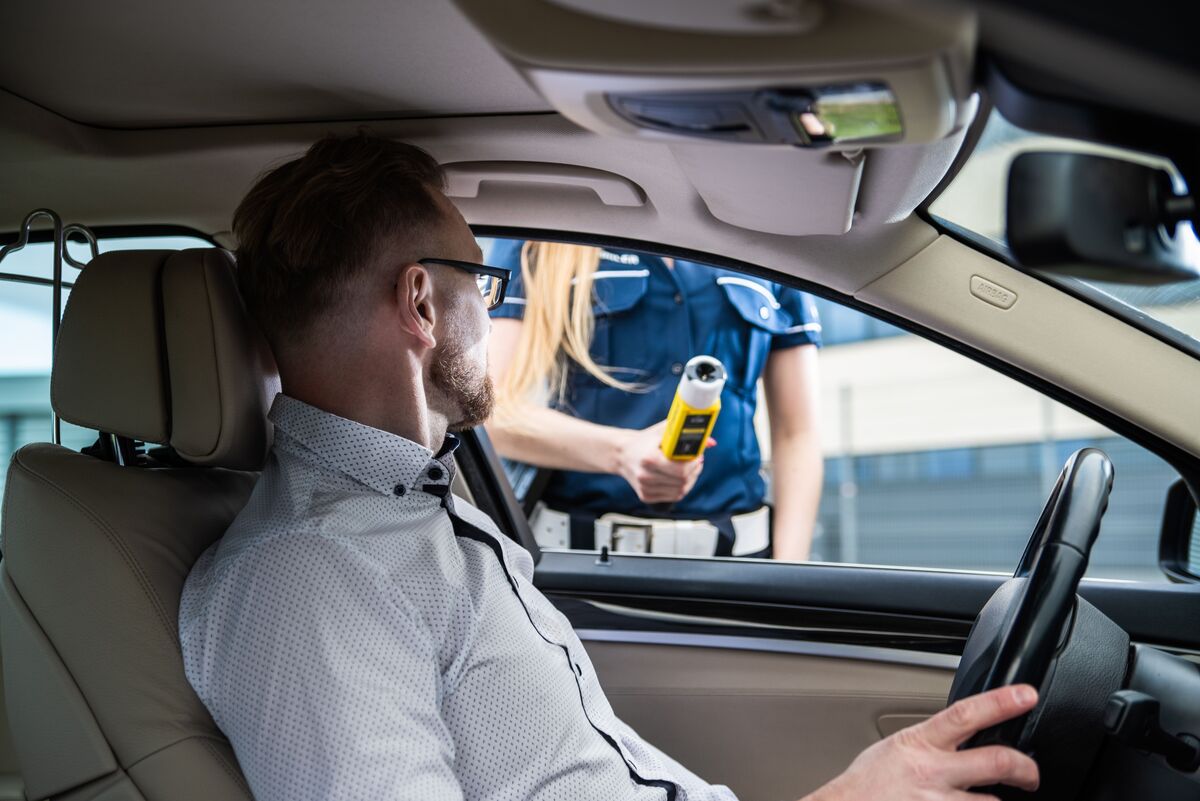 A field sobriety test (FST) is a set of physical and cognitive exercises administered on the roadside during a traffic stop when an officer suspects impaired driving. The officer watches how you balance, how you follow instructions, and whether your eyes, speech, or movements show signs of intoxication.
Unlike a breathalyzer, a field sobriety test does not measure anything scientific. The result is the officer’s subjective opinion of your performance, recorded in a police report that the prosecution can later use against you. Nervousness, fatigue, uneven pavement, poor lighting, footwear, and medical conditions can all cause a completely sober person to “fail.”
Why Do Police Use Field Sobriety Tests?
Police use field sobriety tests to build probable cause for a DUI arrest. The tests give officers observable “evidence” of impairment to justify the arrest and support the charge in court later. In practice, many officers have already decided to make an arrest before the tests even begin, and the exercises simply add supporting material to the police report.
In addition to the three standardized tests covered below, officers sometimes use non-standardized exercises such as the finger-to-nose test, reciting the alphabet, counting backward, or the Romberg balance test. These informal tests have never been scientifically validated as indicators of impairment, which makes them even easier for a defense attorney to attack in court. They are just as voluntary as the standardized tests.
The 3 Standardized Field Sobriety Tests (NHTSA)
The National Highway Traffic Safety Administration (NHTSA) recognizes three standardized field sobriety tests. These are the only roadside tests with any validated connection to impairment, and even they are far from reliable.
Horizontal Gaze Nystagmus (HGN) Test
The officer asks you to follow a pen, finger, or flashlight with your eyes while keeping your head still. They’re looking for nystagmus, an involuntary jerking of the eyes that becomes more pronounced with intoxication. The problem: many medical conditions, medications, and even natural eye characteristics can produce that same jerking in sober people.
Walk-and-Turn Test
You are instructed to take nine heel-to-toe steps along a straight line, turn on one foot, and take nine steps back. The officer scores “clues” such as stepping off the line, using arms for balance, starting too early, or taking the wrong number of steps. Age, weight, injuries, footwear, and road conditions routinely cause sober drivers to show these clues.
One-Leg Stand Test
You must raise one foot about six inches off the ground and hold it while counting aloud, typically for 30 seconds. Swaying, hopping, using your arms, or putting your foot down count against you. Anyone with balance issues, back or leg problems, inner ear conditions, or simple nerves can struggle with this test while completely sober.
Can You Refuse a Field Sobriety Test in California?
Yes. Field sobriety tests are voluntary in California, and you have the legal right to politely decline them. There is no fine, no license suspension, and no criminal charge for refusing a field sobriety test. Officers are not required to tell you the tests are optional, and many drivers take them simply because they believe they have no choice.
Declining the tests limits the evidence available to the prosecution. If you take the tests and perform poorly, every stumble can become part of the case against you. If you decline, the officer must rely on other observations, such as driving pattern, odor of alcohol, or slurred speech, to justify the arrest.
Who Cannot Refuse? (Drivers Under 21 and DUI Probation)
Two groups of drivers do not have a free pass to refuse. Drivers under 21 and drivers on probation for a prior DUI are required to submit to a preliminary alcohol screening (PAS) breath test under California’s zero tolerance rules. Refusal in either situation results in an automatic license suspension, even if the driver was sober.
Field Sobriety Tests vs. Chemical Tests: What’s the Difference?
Field sobriety tests happen at the roadside before any arrest and are voluntary. Chemical tests happen after a lawful DUI arrest and are mandatory. Confusing the two can cost you your license.
| Field Sobriety Tests | Chemical Tests (Post-Arrest) | |
| When given | Roadside, before arrest | After a lawful DUI arrest |
| Mandatory? | No, voluntary for most drivers | Yes, under implied consent law |
| Penalty for refusing | None (with limited exceptions) | 1-year license suspension plus sentencing enhancements |
| Examples | HGN, walk-and-turn, one-leg stand | Breath or blood test at the station |
What Is California’s Implied Consent Law?
Under Vehicle Code section 23612, every driver who accepts a California driver’s license is deemed to have consented to chemical testing of their blood or breath if lawfully arrested for DUI. This is called implied consent. The law applies only after an arrest; it does not apply to roadside field sobriety tests or, for most adult drivers, to the handheld roadside breath device.
Is the Roadside Breathalyzer (PAS Test) Mandatory?
No, not for most drivers. The preliminary alcohol screening (PAS) device offered at the roadside before arrest is voluntary for adult drivers who are not on DUI probation. It is a pre-arrest investigative tool, just like the physical tests. Only after you are arrested does the implied consent law require you to complete a breath or blood test.
What Happens If You Refuse a Sobriety Test?
If you refuse a field sobriety test, the officer will continue the investigation using other observations. Your refusal cannot be punished as a separate offense, but the officer may note it in the report, and a prosecutor may later argue it showed “consciousness of guilt.” A defense attorney can push back on that argument, since exercising a legal right is not evidence of intoxication.
Can You Still Be Arrested If You Refuse?
Yes. Refusing a field sobriety test does not prevent an arrest. If the officer believes there is probable cause based on your driving, appearance, speech, or the odor of alcohol, you can still be arrested for DUI. At that point the implied consent law takes over, and you must submit to a chemical test or face the consequences of a refusal.
Penalties for Refusing a Chemical Test After a DUI Arrest
 Refusing a post-arrest chemical test carries serious consequences that apply even if you are never convicted of DUI. A first refusal results in a one-year driver’s license suspension through the DMV, with no eligibility for a restricted license. A second refusal within ten years brings a two-year revocation, and a third brings three years.
On top of the license consequences, a refusal allegation adds a sentencing enhancement to the underlying DUI charge, including additional mandatory jail time and a longer DUI education program. Prosecutors also treat refusal cases more aggressively, because the refusal itself can be presented to the jury. If the stop involves an accident with injuries or a fatality, the stakes rise dramatically, and charges can escalate to felony DUI causing death in the worst cases.
It is also worth understanding how sobriety test evidence fits into more serious charges. In cases involving a fatal collision, prosecutors rely heavily on roadside observations and test results to establish negligence or impairment, whether the charge is vehicular manslaughter for a sober driver or a DUI resulting in death for an intoxicated one. What happens in the first thirty minutes at the roadside can shape the entire case that follows.
How Accurate Are Field Sobriety Tests?
Not very accurate. Even under NHTSA’s own research, conducted in ideal conditions with perfectly administered tests, the HGN test is roughly 88% accurate, the walk-and-turn about 79%, and the one-leg stand about 83%. Real-world conditions are rarely ideal. Uneven shoulders, passing traffic, flashing lights, bad weather, and imprecise officer instructions all degrade reliability further.
The tests also assume a healthy, rested, calm test subject. Drivers who are overweight, over 65, injured, fatigued, or simply frightened perform worse regardless of sobriety. That is why experienced defense attorneys treat field sobriety test results as one of the most attackable pieces of evidence in a DUI case.
There is a second layer of unreliability that most drivers never consider: the officer. The standardized tests only reach their claimed accuracy when administered exactly according to NHTSA protocol, with precise instructions, proper demonstrations, and correct scoring. Studies and courtroom experience show that officers frequently deviate from the protocol, misremember the scoring criteria, or grade the same performance differently from one another. Every deviation is an opening for the defense.
How a DUI Attorney Can Challenge Sobriety Test Results
Field sobriety test evidence is only as strong as the way it was gathered. A skilled defense attorney can challenge it on several fronts:
- The stop itself was unlawful. Police need reasonable suspicion to pull you over. If the stop was invalid, everything that followed, including test results, can be suppressed.
- The tests were administered incorrectly. NHTSA protocols require precise instructions and demonstrations. Deviations invalidate the results.
- Conditions made the tests unreliable. Dashcam and bodycam footage often shows poor lighting, sloped pavement, or traffic distractions that explain a “failed” test.
- Medical or physical factors explain the performance. Injuries, vertigo, neurological conditions, age, and anxiety all mimic signs of impairment.
- The officer’s scoring was subjective. Cross-examination frequently reveals that the “clues” in the report do not match what the video shows.
Frequently Asked Questions About Sobriety Tests in California
Should I Take a Field Sobriety Test If I’m Sober?
Most defense attorneys advise against it. Even sober drivers fail these tests because of nerves, fatigue, physical limitations, or poor testing conditions, and a “failed” test becomes evidence supporting an arrest. Politely declining is your legal right and does not carry any penalty.
Can My Refusal Be Used Against Me in Court?
A refusal of a field sobriety test can be mentioned as one circumstance surrounding the arrest, and a prosecutor may argue it suggests guilt. It is not a crime and carries no direct penalty. Refusing a post-arrest chemical test is different: that refusal can be presented to the jury and adds enhanced penalties to the DUI charge.
Can Medical Conditions Cause You to Fail a Sobriety Test?
Yes. Inner ear disorders, back and leg injuries, neurological conditions, eye conditions that cause natural nystagmus, obesity, age over 65, and even prescription medications can all cause a sober person to fail a field sobriety test. Telling the officer about a relevant condition, and telling your attorney afterward, can be important to your defense.
Do Police Have to Tell You the Tests Are Voluntary?
No. California officers are not required to inform you that field sobriety tests are optional, and they often phrase the request in a way that sounds like a command. Many drivers submit to the tests believing they are mandatory. Legally, you are only required to follow lawful orders, and an officer cannot order you to perform voluntary tests.
What Should I Say If an Officer Asks Me to Take a Sobriety Test?
Stay calm and polite. You can say something like: “Officer, I respectfully decline to take any field sobriety tests.” Do not argue, do not physically resist, and do not lie. Provide your license, registration, and insurance as required. If you are arrested, comply with the chemical test and ask to speak with an attorney as soon as possible.
Arrested for DUI in Los Angeles? Talk to Us Before You Talk to Anyone Else
What you did or did not do at the roadside is only the beginning of a DUI case. How the stop was conducted, how the tests were administered, and how the chemical test was handled all create opportunities for a strong defense. The attorneys at Manshoory Law Group have extensive experience challenging sobriety test evidence and DUI charges throughout Southern California.
If you have been arrested for DUI, contact Manshoory Law Group 24/7 for a free consultation. The sooner we review the details of your stop, the more options we have to protect your license, your record, and your freedom.