
Jun 14, 2026
The title reads: “Famous Person Arrested” or “Celebrity Sentenced to Prison.” It’s an undeniable attention-grabbing piece of news, a clear indication that even those seemingly invincible personalities we witness on screens or prominently displayed on magazine pages can confront the repercussions of their deeds, just like any other individual! Nevertheless, what is it about these narratives that captivate us so deeply?
Famous People in Prison: Legal Process and Public Interest
A portion of the fascination stems from the paradox. We view celebrities as beings of immense stature, frequently seen as indestructible. When individuals experience a downfall and find themselves incarcerated, it greatly undermines our perception of them and the world we live in.
Furthermore, such situations frequently entail notorious offenses, intricate legal disputes, and widespread media scrutiny, generating a frenzy that captures the public’s interest, especially those involving prison sentences.
In spite of the enhanced attention, famous people in jail go through a legitimate process that often copies the regular legal system. They participate in trials where famous people are “presumed innocent until proven guilty[1] have the right to a lawyer[2] and their sentencing should be commensurate with the severity of the crime”.
However, celebrities in prison and their notoriety bring about added intricacies. Pervasive media attention has the potential to sway prospective jurors, their affluence may afford them superior legal assistance, and their public persona can be exploited by both the prosecution and the defense.
10 Most Famous People in Jail Right Now
Now, let’s explore the narratives of ten famous people in jail. It is important to acknowledge that this compilation is not comprehensive and does not follow a specific sequence:
1. Suge Knight
Death Row Records co-founder, Suge Knight, was a powerful man in the music industry – he was the one who helped the careers of Tupac Shakur, Dr. Dre, and Snoop Dogg. Yet, not even his influence could help him avoid punishment. After experiencing several incarcerations, he received a 28-year prison term in 2018 for pleading no contest to voluntary manslaughter in connection with a deadly hit-and-run incident[3] from 2015. Currently, Suge Knight[4]
is held at the Richard J. Donovan Correctional Facility in San Diego.
2. Jared Fogle
Besides being the face of Subway, Jared Fogle was also the fast food’s chain golden goose, as he provided the company with some excellent marketing material[5]. However, in 2015, Fogle’s carefully built image collapsed, as he was convicted of child pornography and sex trafficking. The man got punished with a 15-year-long sentence, which he will serve at the Federal Correctional Institution Englewood.
3. Danny Masterson
The star of “That 70s Show,” Danny Masterson is currently under great scrutiny. In September 2023, he was charged with three counts of rape, although he denies all accusations. He’s currently serving 30 years in prison[6]. Also, he was recently moved to California Men’s Colony, a state prison in San Luis Obispo, California.
4. Elizabeth Holmes
Former business tycoon and current fraud convict, Elizabeth Holmes is serving an 11 years and 3 months sentence. The would-be developer of a revolutionary blood testing technology would later be convicted of defrauding investors after the hyped testing machines proved either fraudulent or unsuccessful. Currently, Holmes is currently serving at a federal women’s prison camp located in Bryan, Texas[7]
5. R. Kelly
The R&B singer has been active for several decades, yet his activity can hardly be considered wholesome anymore. In 2022, the court sentenced him to 30 years behind bars after numerous charges of racketeering and sex trafficking. Currently, Kelly is serving time[8]
at the Metropolitan Correctional Center in Chicago.

6. Harvey Weinstein
Former movie producer Harvey Weinstein was a very influential and powerful person in Hollywood. However, the #MeToo campaign has struck him, and multiple reports of sexual assault have appeared[9]. In 2020, he was charged with rape and sexual assault, sentenced to 23 years. Now, Weinstein is detained at Wende Correctional Facility in western New York.
7. Bill Cosby
Bill Cosby was a popular comic whose conduct with several cases of sexual harassment received him back. He was accused of sexual assault in 2018 and was found guilty during trial. However, after three years in prison, Cosby regained his freedom in 2021, courtesy of Pennsylvania’s state supreme court, which nullified his conviction[10]
8. Joe Exotic
The reality show celebrity has captivated his audiences, but the sham of exotic creatures in his zoo means more than that. In 2020, he was convicted of several counts of wildlife smuggling and conspiracy to kill for money. He was sentenced to 22 years of detention and is now being kept at the Federal Medical Center FMC Butner, in North Carolina, after being diagnosed with cancer[11]
9. Ryan Grantham
Ryan Grantham[12] was a known young Canadian actor, but his behavior demonstrated that none of us is shielded from any problems, irrespective of our high status. Ryan Grantham was accused of killing his mother in 2020. He was sentenced to life in prison after pleading guilty at the British Columbia Supreme Court in Vancouver.
10. Josh Duggar
Reality TV star Josh Duggar found popularity on the show 19 Kids and Counting, offering viewers an intimate look at the unusual lifestyle of his conservative Christian family. Yet, his reputation was shattered in 2021, as he was convicted of receiving and possessing child pornography. The case incited a nationwide discussion[13] on the issues that pertain to holding public figures liable and the necessity of considering the safety of children. Josh Duggar was sentenced to 12 years of incarceration and is currently serving his sentence at Federal Correctional Institution Seagoville located in Texas.
Legal Lessons Learned
The instances involving these celebrities in prison serve as valuable legal examples that can educate the public. Through highlighting the significance of responsibility and shedding light on imperfections within our justice system, each case provides valuable perspectives on wider societal matters.
These cases of famous people in jail act as a prompt for us to recognize our duty to report suspicious conduct and take steps against individuals who exploit others.
But most importantly, no matter who is facing criminal charges, it’s of utmost importance to contact an experienced Criminal Defense Attorney to navigate the complicated legal field with all the tools necessary!
To conclude, the legal challenges faced by well-known individuals not only captivate our interest but also offer significant insights for society at large. Analyzing these examples and understanding how they have had an impact will be a step toward building a fairer and more inclusive society.
As these individuals confront the repercussions of their behavior, it prompts us to contemplate the significance of honesty, responsibility, and the equitable pursuit of justice for everyone.
While these individuals are known as “famous people in prison”, the general public remains attentive to the progression of their legal proceedings, contemplating the valuable insights gained and contemplating the necessary reforms to avert comparable wrongdoings from occurring again.
References
- Innocent until proven guilty | Office of Justice Programs. (n.d.). https://www.ojp.gov/ncjrs/virtual-library/abstracts/innocent-until-proven-guilty
- Right to Counsel Clause of the Sixth Amendment | Office of Justice Programs. (n.d.). https://www.ojp.gov/ncjrs/virtual-library/abstracts/right-counsel-clause-sixth-amendment
- Manshoory, S. (2023, September 20). What you need to know about Hit-and-Run Accidents | Manshoory Law. Manshoory Law Group, APC. https://manshoorylaw.com/blog/what-you-need-to-know-about-hit-and-run-accidents/
- Gee, A. (2023, October 24). How Suge Knight started a podcast from prison. Rolling Stone. https://www.rollingstone.com/music/music-features/suge-knight-collect-calls-podcast-1234860995/
- Director, A. R.-. D. (2015, December 18). Fox 59. Fox 59. https://fox59.com/news/indycrime/ex-subway-spokesman-jared-fogle-transferred-to-federal-prison-in-colorado/
- Vasquez, I. (2023, December 28). Danny Masterson transferred to state prison and Mugshot released after rape conviction. Peoplemag. https://people.com/danny-masterson-transferred-state-prison-mugshot-released-after-rape-conviction-8420533
- Paul, K. (2022, November 20). Theranos founder Elizabeth Holmes sentenced to more than 11 years for defrauding investors. The Guardian. https://www.theguardian.com/us-news/2022/nov/18/elizabeth-holmes-theranos-trial-sentencing
- Moghe, S., & Andone, D. (2022, June 30). R. Kelly sentenced to 30 years in prison for federal racketeering and sex trafficking charges. CNN. https://edition.cnn.com/2022/06/29/us/r-kelly-sentencing-racketeering-sex-trafficking/index.html
- Maddaus, G. (2020, March 20). Variety. Variety. https://variety.com/2020/biz/news/harvey-weinstein-state-prison-1203537940/
- Valdez, J. (2022, December 28). Bill Cosby plans 2023 return to performing stand-up comedy – Los Angeles Times. Los Angeles Times. https://www.latimes.com/entertainment-arts/story/2022-12-28/bill-cosby-2023-return-to-performing-comedy-sexual-assault-accusations
- Norman, G. (2023, November 6). “Tiger King” star Doc Antle pleads guilty to federal money laundering, wildlife trafficking. Fox Business. https://www.foxbusiness.com/entertainment/tiger-king-star-doc-antle-pleads-guilty-federal-money-laundering-wildlife-trafficking
- Special, E. S. (2022, October 1). Who is Ryan Grantham? The Riverdale actor sentenced to life for killing his mother. The Economic Times. https://economictimes.indiatimes.com/news/international/us/who-is-ryan-grantham-the-riverdale-actor-sentenced-to-life-for-killing-his-mother/articleshow/94487067.cms
- Walrath-Holdridge, M. (2023, October 13). Josh Duggar denied appeal, will stay in prison on child pornography charges until 2032. USA TODAY. https://www.usatoday.com/story/entertainment/2023/10/13/josh-duggar-denied-appeal-prison-2032-child-pornography-charges/71168029007/
Jun 12, 2026
Most criminal cases are decided on evidence, and a significant portion of the evidence presented in serious cases comes not from eyewitnesses or physical objects alone, but from expert witnesses who interpret what that evidence means. Examples include a DNA analyst who explains why a profile is a match, a toxicologist who testifies about a driver’s impairment level, and a forensic psychiatrist who addresses a defendant’s mental state at the time of the alleged offense. None of these witnesses simply describe what they observed. They provide specialized analysis that juries are not equipped to perform on their own.
For the defense, expert witnesses are often the mechanism through which the prosecution’s scientific or technical evidence gets effectively challenged. Understanding what an expert witness is, what types appear in criminal cases, how they are qualified, and how courts evaluate their testimony is essential for anyone trying to understand how serious criminal cases actually get tried.
What Is an Expert Witness?
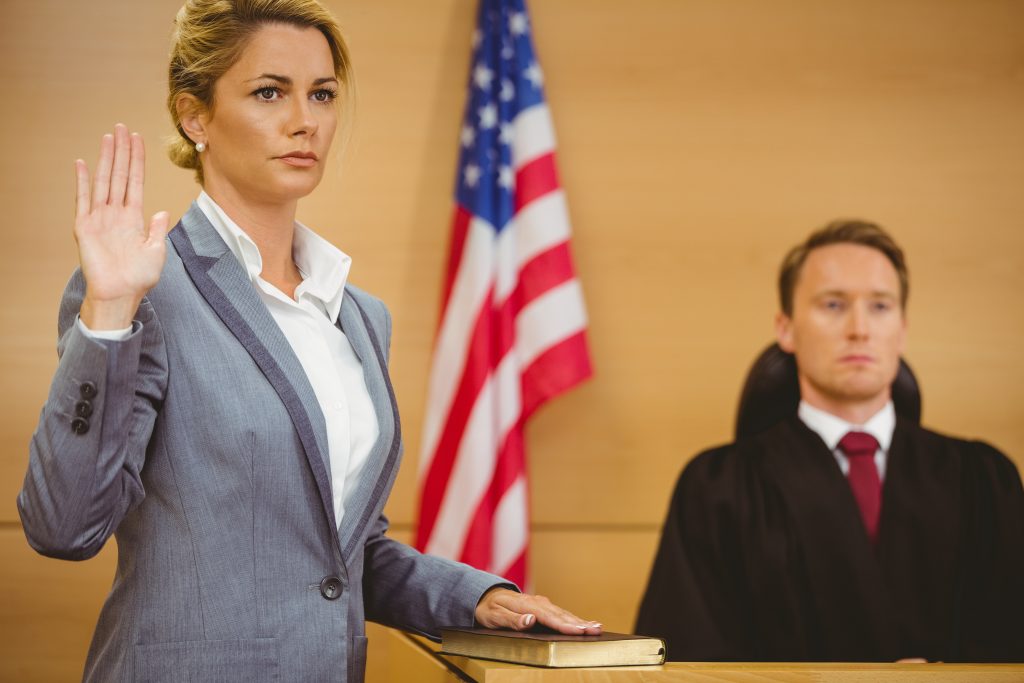
An expert witness is a person permitted by the court to offer opinion testimony based on specialized knowledge, training, skill, experience, or education in a particular field. Unlike a fact witness, who can only testify to what they personally saw, heard, or did, an expert witness may express opinions and draw conclusions from evidence, provided those opinions fall within their area of expertise.
In California, the admissibility of expert testimony is governed by California Evidence Code sections 720 and 801. Under Evidence Code 720, a person qualifies as an expert if they have special knowledge, skill, experience, training, or education sufficient to qualify them as an expert on the subject matter at issue.
The federal standard, established by Federal Rule of Evidence 702 and interpreted through the Supreme Court’s decision in Daubert v. Merrell Dow Pharmaceuticals, requires that the testimony be based on sufficient facts or data, that it be the product of reliable principles and methods, and that the expert reliably applied those principles to the facts of the case.
California state courts apply a standard derived from People v. Kelly, which focuses on whether the underlying scientific technique is generally accepted in the relevant scientific community.
The court acts as a gatekeeper. Before an expert may testify, opposing counsel can challenge their qualifications and the reliability of their methodology. A witness who fails to clear that threshold will not reach the jury.
Types of Expert Witnesses in Criminal Cases
The type of expert engaged in any given case depends on what the charges are and what evidence the prosecution is relying on. The following are the most commonly retained expert witnesses in California criminal defense:
| Expert Type |
Typical Case Context |
What They Establish |
| Forensic scientist / DNA analyst |
Violent crimes, sexual assault, homicide |
Source or exclusion of biological evidence |
| Toxicologist |
DUI, drug offenses, poisoning |
Substance identification, impairment level, metabolization timeline |
| Digital forensics expert |
Cybercrime, child exploitation, fraud |
Device analysis, data recovery, metadata interpretation |
| Forensic psychiatrist / psychologist |
Insanity defense, competency, sentencing |
Mental state at time of offense, competency to stand trial |
| Ballistics / firearms expert |
Shooting incidents, weapons charges |
Trajectory, range, firearm identification |
| Accident reconstruction expert |
Vehicular homicide, DUI causing injury |
Speed, point of impact, fault determination |
| Medical expert |
Assault, child abuse, wrongful death |
Injury causation, timing, consistency with allegations |
Forensic Scientists and DNA Analysts
DNA evidence is among the most persuasive forms of physical evidence presented in criminal trials. A forensic expert witness in this area may testify about the laboratory methods used to analyze a sample, the statistical probability of a match, the chain of custody for the sample, and potential sources of contamination or error.
Defense-retained DNA experts frequently identify procedural failures in how samples were collected or processed. Understanding DNA evidence in criminal cases can make the difference between a conviction and an acquittal.
Toxicologists
Toxicologists testify about the presence of alcohol, drugs, or other substances in a person’s body and what effect those substances would have had at a specific point in time. In DUI cases, they may challenge the prosecution’s BAC analysis or testify about the rate at which alcohol is metabolized, raising questions about whether the defendant’s BAC at the time of driving actually exceeded the legal limit.
In drug cases, they may address whether a substance meets the legal definition of a controlled substance or whether a prescribed medication could have produced the observed behavior.
Digital Forensics Experts
As criminal cases increasingly involve digital evidence in criminal trials, digital forensics experts have become a standard feature of complex prosecutions and defenses alike. They analyze phones, computers, cloud accounts, and network logs to establish timelines, identify the source of communications, or challenge the prosecution’s interpretation of digital data.
Defense digital forensics experts often focus on chain of custody issues, unauthorized access to accounts, or metadata that contradicts the prosecution’s timeline.
Forensic Psychiatrists and Psychologists
Mental health expert witnesses play a central role in cases where the defendant’s state of mind at the time of the offense is at issue. They may testify in support of an insanity defense under California Penal Code 25, address whether a defendant is competent to stand trial, or provide a psychiatric evaluation relevant to sentencing.
In cases involving mental illness in the criminal justice system, trauma histories, or cognitive impairment, a mental health expert can provide context that significantly affects how the jury interprets the defendant’s conduct.
How Expert Witnesses Influence Criminal Trials
Expert testimony operates on juries differently from other evidence. A lay witness describes events. An expert witness interprets them. When a forensic scientist tells a jury that the probability of a random DNA match is one in several billion, that number carries authority that most jurors are not equipped to question independently. When a defense toxicologist testifies that the blood draw in a DUI case was taken an hour after the stop and that BAC naturally rises after drinking stops, that challenges the prosecution’s entire theory of impairment.
Research consistently shows that juries give substantial weight to expert testimony, and that the side with more credible expert witnesses often prevails in cases where the physical evidence is otherwise ambiguous. The prosecution has access to state crime laboratories and government-funded experts. The defense must proactively identify, retain, and prepare its own experts, and must fund that work from the defense budget.
An expert witness retained by the defense also serves a function beyond trial testimony. During the investigation phase, they can review the prosecution’s evidence, identify weaknesses in methodology, and advise the defense attorney on what pretrial motions are worth filing.
A motion to suppress or exclude the prosecution’s expert may be one of the most effective tools available, and it is rarely possible without a defense expert who can articulate what is wrong with the other side’s analysis.
Qualifications Required to Testify as an Expert Witness
There is no single credential that makes someone an expert witness. California Evidence Code 720 identifies five bases for qualification: knowledge, skill, experience, training, and education. Any one of these may be sufficient depending on the field. A seasoned homicide detective may qualify as an expert on gang culture based on experience alone, while a forensic pathologist may qualify based primarily on medical training and credentials.
In practice, courts look at the totality of the witness’s background in relation to the specific opinions they are being asked to offer. A witness who is qualified to offer general opinions about DNA analysis may not be qualified to offer specific opinions about a particular laboratory’s proprietary software. The scope of the qualification matters as much as its existence.
Opposing counsel may conduct a voir dire examination of the expert before they testify, challenging their qualifications in front of the judge. If the court finds the witness insufficiently qualified, they will not be permitted to testify as an expert, though they may still testify as a fact witness about their direct observations.
Legal Standards for Expert Testimony in California
California applies the Kelly standard, derived from People v. Kelly (1976), to novel scientific evidence. Under Kelly, the proponent of scientific evidence must establish three things:
- the method is generally accepted as reliable in the relevant scientific community
- the witness testifying is a properly qualified expert
- the correct scientific procedures were used in the particular case
This standard is more conservative than the federal Daubert framework in some respects because it requires general acceptance in the relevant scientific community rather than simply judicial evaluation of the method’s reliability. Courts have applied it to exclude bite mark evidence, certain blood spatter interpretation techniques, and other forensic methods that lack sufficient scientific consensus.
For the defense, the Kelly standard is a powerful tool. If the prosecution’s forensic evidence rests on a methodology that has not achieved general scientific acceptance, a well-prepared defense expert can testify to that fact, and a motion to exclude the evidence may follow.
How Defense Attorneys Use Expert Witnesses Strategically
Retaining the right expert witness is part of the broader work of building a defense, which begins well before trial. The independent investigation and trial preparation process at Manshoory Law Group includes identifying what expert analysis is needed, engaging specialists who can evaluate the prosecution’s evidence independently, and preparing them to testify effectively.
Defense attorneys use expert witnesses in several distinct ways:
- To challenge the prosecution’s forensic evidence: A defense expert who can identify flaws in laboratory procedure, chain of custody gaps, or methodological problems gives the jury a reason to doubt the prosecution’s scientific conclusions.
- To present an alternative interpretation: In cases involving ambiguous physical evidence, a defense expert may offer a competing explanation that is equally consistent with the facts but points away from guilt.
- To address the defendant’s mental state: Particularly in cases involving a diminished capacity argument, an insanity defense, or sentencing mitigation, a psychiatric expert can provide testimony that changes how the jury or sentencing judge views the defendant’s conduct.
- To educate the jury: Some expert witnesses serve primarily to correct common misconceptions. An eyewitness identification expert, for instance, may testify about the known limitations of human memory and the conditions under which misidentification most commonly occurs.
The strategic use of technology in building criminal cases, both for the prosecution and the defense, continues to evolve. The discussion of how technology is used in criminal justice provides useful context for understanding where expert witnesses fit into the broader evidentiary landscape.
Frequently Asked Questions
What is the difference between an expert witness and a regular witness?
A fact witness, sometimes called a lay witness, may only testify about things they personally observed. They cannot offer opinions or interpret evidence beyond their direct experience. An expert witness may offer opinions and draw conclusions from evidence within their area of expertise, even without personal observation of the events at issue. This distinction is the reason experts are so valuable in cases involving scientific, medical, or technical evidence that jurors cannot evaluate on their own.
Can the defense hire their own expert witness?
Yes. The defense has the right to retain independent expert witnesses in any criminal case. In California, indigent defendants may petition the court for funding to hire defense experts under Evidence Code 730 and Penal Code 987.9. Courts have recognized that denying a defendant access to necessary expert assistance can amount to a due process violation. In retained cases, the defense attorney identifies and engages experts as part of trial preparation.
How much does an expert witness cost in a criminal case?
Expert witness fees vary significantly by field and the scope of work required. Forensic scientists and medical doctors typically charge between $300 and $600 per hour for review and consultation, with higher rates for deposition and trial testimony. Highly specialized experts in fields like neuropsychology or accident reconstruction may charge more. In complex cases, expert costs can reach tens of thousands of dollars. This is one reason that the quality of private defense representation matters, since retained counsel can allocate resources toward expert engagement in ways that overburdened public defenders often cannot.
Can expert witness testimony be challenged?
Yes, in two distinct ways. First, before trial, a party may file a motion to exclude the opposing expert on the grounds that their methodology does not meet the applicable legal standard (Kelly in California state court, Daubert in federal court). If the motion is granted, the expert cannot testify at all. Second, at trial, opposing counsel may cross-examine the expert on their qualifications, the bases for their opinions, any inconsistencies with other experts in the field, and any financial interest they have in the outcome of the case.
What happens if the court disqualifies an expert witness?
If the court excludes a prosecution expert, the evidence that witness would have presented may be inadmissible, which can significantly weaken or eliminate part of the prosecution’s case. If a defense expert is excluded, the defense loses the ability to present that particular testimony and may need to rely more heavily on cross-examination of the prosecution’s experts. Disqualification decisions are one of the reasons that pretrial motions in serious criminal cases can be as consequential as the trial itself.
Building a Defense That Matches the Prosecution’s Resources
The prosecution in a serious criminal case has access to state crime laboratories, government-funded scientists, and experienced forensic experts who testify regularly. Matching that firepower requires a defense attorney who knows what experts to retain, when to retain them, and how to prepare them to withstand cross-examination.
At Manshoory Law Group, expert witness strategy is built into the defense from the investigation phase forward. If you are facing charges that involve forensic, scientific, or technical evidence, contact Manshoory Law Group for a free case analysis.

Jun 11, 2026
A first offense DUI in California is a misdemeanor in most cases, but calling it minor would be a mistake. The penalties are real, the process is more complicated than most people expect, and the consequences extend well beyond any jail time or fine.
California maintains two separate proceedings after a DUI arrest: a criminal case in court and an administrative license suspension process through the DMV. Both must be addressed, on different timelines, or you will face consequences that could have been avoided. This guide covers exactly what a first offense DUI in California involves, what the penalties look like in practice, and what a DUI defense attorney can do to limit the damage.
What Is a First Offense DUI in California?

California Vehicle Code 23152 makes it unlawful to drive under the influence of alcohol, drugs, or a combination of both. A first offense means no prior DUI convictions on your record within the preceding 10 years. California’s 10-year lookback period means older convictions do not count toward the offense level, but any DUI within that window turns your current charge into a second offense with significantly higher penalties.
The standard legal limit is a blood alcohol concentration of 0.08 percent or higher. However, California law also permits a DUI charge based on actual impairment even if BAC is below 0.08. A driver who shows clear signs of impairment at 0.06 percent can still be charged and convicted. The 0.08 threshold creates a legal presumption of impairment, but it is not the only basis for a charge.
Stricter limits apply to certain drivers regardless of visible impairment. Drivers under 21 face a zero-tolerance standard of 0.01 percent. Commercial vehicle operators face a limit of 0.04 percent. Drivers who are already on DUI probation face a 0.01 percent limit as a condition of that probation.
Penalties for a First DUI in California
A first offense DUI conviction under Vehicle Code 23152 carries a defined range of penalties. Courts have discretion within those ranges, and the outcome in any individual case depends on the facts, the jurisdiction, and whether counsel is able to negotiate effectively on the defendant’s behalf.
| Consequence |
Mandatory? |
Standard Range |
Notes |
| County jail |
No (common) |
48 hrs – 6 months |
Often converted to work release or house arrest |
| Base fine |
Yes |
$390 – $1,000 |
Penalty assessments multiply total to $2,000+ |
| License suspension (DMV) |
Yes |
4 months (APS) |
Separate from any court-ordered suspension |
| License suspension (court) |
Yes |
6 months |
Restricted license often available after 30 days |
| DUI school |
Yes |
3 or 9 months |
9 months if BAC 0.15% or higher |
| Probation |
Yes |
3-5 years |
Informal probation standard for first offense |
| Ignition interlock device |
Yes (IID pilot counties) |
6 months minimum |
Required statewide if restricted license sought |
| SR-22 filing |
Yes |
3 years |
Certificate of financial responsibility required |
The base fine of $390 to $1,000 does not reflect actual out-of-pocket cost. California adds a series of penalty assessments, surcharges, and fees on top of the base fine that routinely multiply the total to $2,000 or more, and in some counties significantly higher. Defendants should budget for the total cost, not the statutory base.
Will You Go to Jail for a First DUI?
Jail is possible for a first DUI in California, but it is not the automatic outcome most people fear. California Vehicle Code 23536 sets the minimum jail time for a first DUI conviction at 96 hours and the maximum at 6 months. Judges have substantial discretion, and in most first offense cases involving a standard BAC with no aggravating factors, actual custody time is often reduced, suspended, or converted to an alternative program.
The most common alternatives to jail time for first DUI offenders in California include:
- Work release: The defendant serves their sentence working for a county work program during daytime hours and returns home at night. Common in Los Angeles and surrounding counties.
- House arrest / electronic monitoring: The defendant wears a GPS ankle monitor and is confined to their residence except for approved activities such as work, school, or medical appointments.
- Community service: Some courts accept community service hours in lieu of jail time, particularly for first offenders with no prior criminal history.
- CalTrans roadside work: Roadside cleanup crews operated by Caltrans serve as a jail alternative in certain counties.
Whether you qualify for one of these alternatives depends on the county, the specific judge, your criminal history, and the circumstances of the arrest. An experienced DUI attorney knows what alternatives are available in the specific court where your case is filed and can advocate for the most favorable option.
Factors That Make First DUI Penalties More Severe

Several circumstances can push a first DUI toward the high end of the penalty range or trigger mandatory enhancements that override judicial discretion:
- BAC of 0.15 percent or higher: Requires completion of a 9-month DUI school program rather than the standard 3-month program, and is treated as an aggravating factor at sentencing.
- Refusal to submit to chemical testing: California’s implied consent law requires drivers to submit to a breath or blood test after a lawful arrest. Refusal results in a mandatory 1-year DMV license suspension on top of any court-ordered suspension, and the refusal itself can be used as evidence of consciousness of guilt at trial.
- Child passenger under 14 in the vehicle: Vehicle Code 23572 adds a mandatory 48-hour jail enhancement when a minor under 14 was in the car during the DUI offense, even on a first offense.
- Excessive speed: Driving 30 mph or more over the freeway speed limit, or 20 mph or more over surface street limits, while DUI triggers an additional 60-day jail enhancement under Vehicle Code 23582.
- Causing an accident or injury: A DUI that results in injury to another person can be charged as a felony under Vehicle Code 23153, regardless of the defendant’s prior record.
- Drug-impaired driving: A drug offense DUI follows the same basic framework but introduces different evidentiary challenges, particularly around establishing impairment without a simple numeric BAC threshold.
Long-Term Consequences of a First DUI Conviction
The penalties listed above are the immediate legal consequences. A first DUI conviction carries a longer tail of collateral effects that are often more disruptive to daily life than the sentence itself.
DMV Administrative License Suspension
A DUI arrest triggers an automatic DMV administrative per se (APS) suspension that is independent of the criminal case. You have only 10 days from the date of arrest to request a DMV hearing to contest the suspension. If you miss that window, the suspension takes effect automatically. The DMV administrative hearing is a separate proceeding from the criminal court case and requires its own preparation and strategy.
DUI Probation Conditions
First offense DUI probation in California typically runs three to five years and includes conditions such as not driving with any measurable alcohol in your system, not refusing any lawful chemical test, and not committing any additional criminal offenses. A probation violation can result in revocation and imposition of the suspended jail sentence.
Defendants who complete their sentence may still face ongoing supervision, and the difference between parole and probation in California affects what those obligations look like in practice.
SR-22 and Insurance Costs
A DUI conviction requires an SR-22 filing, which is a certificate from your insurance carrier confirming minimum liability coverage. The requirement lasts three years from license reinstatement. Most insurers treat a DUI conviction as a high-risk event and increase premiums by 80 to 100 percent or more. Some standard carriers will not renew the policy at all, moving the driver into the non-standard market with even higher rates.
Employment and Professional Licensing
Many employers conduct background checks and treat DUI convictions as disqualifying for roles involving driving, security clearances, or positions of trust. Professional licensing boards for healthcare workers, attorneys, teachers, and commercial drivers have their own separate processes for evaluating DUI convictions. The consequences vary significantly by profession and should be researched specific to your field.
Defense Strategies for a First DUI Charge
A first DUI is not a guaranteed conviction. There are several well-established defense avenues that a skilled attorney will evaluate from the moment they are retained:
Challenging the Traffic Stop
The Fourth Amendment requires that a traffic stop be based on reasonable suspicion of a traffic violation or criminal activity. If the officer lacked a lawful basis to stop the vehicle, any evidence obtained as a result of that stop, including BAC test results, may be suppressible under the exclusionary rule. This is one of the most powerful pretrial tools available in DUI defense.
Miranda Rights and Statements to Police
Miranda rights can become an issue in a DUI case if police question a driver while in custody without first providing the required warnings. If a driver’s statements were obtained in violation of their Miranda rights, those statements may be excluded from evidence. While a Miranda rights DUI defense does not automatically lead to dismissal of the charge, it can limit the prosecution’s evidence and strengthen the overall defense strategy.
Challenging Field Sobriety Tests
Field sobriety tests are not infallible. They are physical performance tests that can be affected by fatigue, medical conditions, footwear, road conditions, and the officer’s own administration technique. Field sobriety test results can be challenged based on improper administration, environmental conditions, or physical factors that have nothing to do with intoxication.
Challenging BAC Test Results
Breathalyzer results are subject to calibration errors, improper use of the device, radio frequency interference, and physiological factors including mouth alcohol contamination, certain diets, and medical conditions that affect breath readings. Blood test results can be challenged on chain of custody grounds, improper storage, or contamination during analysis. A rising BAC defense argues that the defendant’s BAC was below 0.08 at the time of driving but continued to rise in the time between the stop and the test.
Negotiating a Wet Reckless Reduction
In cases where the evidence is not strong enough to guarantee conviction but not weak enough to support dismissal, a plea to wet reckless under Vehicle Code 23103.5 may be available. A wet reckless carries lower penalties than a DUI conviction, does not trigger the same insurance consequences, and carries less stigma. However, it still counts as a prior DUI for sentencing purposes if the defendant is charged again within 10 years, and it does not prevent the DMV from proceeding with its administrative suspension.
Frequently Asked Questions
Is a first DUI a misdemeanor or felony in California?
A first DUI is a misdemeanor in the vast majority of cases. It becomes a felony if the DUI caused injury or death to another person under Vehicle Code 23153, or if the defendant has three or more prior DUI convictions within the 10-year lookback period. A first DUI involving a child under 14 in the vehicle remains a misdemeanor but carries a mandatory jail enhancement.
How long does a DUI stay on your record in California?
A first DUI conviction remains on your driving record for 10 years from the date of the offense, and that period is used to determine whether any subsequent DUI is treated as a second offense. The conviction remains on your criminal record permanently unless successfully expunged. It does not disappear automatically after 10 years from the criminal record perspective.
Can a first offense DUI be reduced to a wet reckless?
Yes, in some cases. A wet reckless reduction is most commonly available when the BAC was close to the legal limit, there was no accident or injury, and the defendant has no prior criminal history. The decision is ultimately up to the prosecutor and depends on the specific facts of the case and the jurisdiction. Not all courts are equally open to wet reckless reductions, which is one reason local knowledge and court relationships matter in DUI defense.
Will you lose your license after a first DUI in California?
You will face two separate suspension processes. The DMV imposes an automatic 4-month administrative suspension triggered by the arrest itself unless you request a hearing within 10 days and win it. The criminal court imposes a separate 6-month suspension upon conviction. A restricted license that allows driving to and from work, school, and DUI school is typically available after 30 days, conditioned on installation of an ignition interlock device.
Can a first DUI be expunged in California?
Yes. A first DUI conviction is eligible for expungement under Penal Code 1203.4 once probation is completed, provided no new crimes were committed during probation. Expungement dismisses the conviction and allows the defendant to truthfully answer most job applications that they have not been convicted of that offense. It does not restore DMV driving record status, eliminate the conviction for purposes of subsequent DUI sentencing, or restore firearm rights. The expungement attorneys at Manshoory Law Group can assess eligibility and handle the petition.
Charged With a First DUI in California?
A first offense DUI in California can lead to fines, license suspension, probation, DUI school, and increased insurance costs, even when no accident or injury occurred. While many first-time offenders avoid significant jail time, the outcome of a case often depends on factors such as BAC level, aggravating circumstances, and the strength of the available defenses. Because a DUI arrest triggers both a criminal case and a separate DMV process, taking prompt action is critical to protecting your driving privileges and minimizing the long-term consequences.
Contact Manshoory Law Group for a free case analysis with a DUI defense attorney who handles first and multiple offense cases throughout Los Angeles and Southern California.

Jun 10, 2026
White-collar crime charges can dismantle a life built over decades. A single federal investigation into fraud, embezzlement, insider trading, or money laundering can result in years in prison, the loss of a professional license, and financial penalties that follow you long after release. These are not minor infractions.
Federal prosecutors and agencies like the FBI and SEC pursue these cases aggressively, and by the time most people learn they are under investigation, the government has often been building its case for months or years. If you’re facing white-collar crime charges in California, understanding what you’re up against is the first step.
What Is White-Collar Crime?

White-collar crime refers to financially motivated, non-violent offenses typically committed through deception, fraud, or a breach of trust. The FBI defines white-collar crime as lying, cheating, and stealing. This conduct costs the U.S. economy hundreds of billions of dollars each year.
Unlike violent crimes, these offenses rely on manipulation of information, systems, or professional relationships rather than force. That distinction does not make them minor. Federal prosecutors, the SEC, and the IRS pursue white-collar defendants aggressively, and sentencing guidelines can be severe, particularly when the financial losses are large or a large number of victims are involved.
California handles many white-collar offenses under its own penal code, but when the conduct crosses state lines or involves federal institutions, charges typically move to federal court.
Common Types of White-Collar Crime
White-collar crime is not a single offense. It is a broad category that covers dozens of distinct charges, ranging from relatively contained schemes involving a single victim to large-scale operations that defraud thousands of people and cause losses in the millions. The most common types prosecuted in California include:
Fraud
Fraud is the broadest category of white-collar crime, encompassing a wide range of deceptive conduct carried out for financial gain. It includes securities fraud (providing false information to investors), wire fraud (using electronic communications to execute a scheme), mail fraud, bank fraud, and healthcare fraud. Ponzi schemes and pyramid schemes fall here as well. They promise returns that are paid from new investors’ money rather than actual profits, and they inevitably collapse, often leaving victims with devastating financial losses. What unites all fraud offenses is the element of intentional deception, meaning prosecutors must show that the defendant knowingly made false representations or concealed material information in order to obtain money, property, or some other benefit.
Embezzlement
Embezzlement occurs when someone misappropriates funds they were entrusted to manage, making it distinct from ordinary theft in that the defendant had lawful access to the assets in the first place. The betrayal of that trust is central to what makes embezzlement a serious offense in the eyes of prosecutors and courts. Common examples include an office manager skimming petty cash, a bookkeeper diverting client payments, or an executive redirecting company funds into personal accounts. These schemes can go undetected for months or even years, and the longer they continue, the greater the total loss and the more severe the potential consequences. Under California Penal Code 503, all of these are embezzlement scenarios, and charges can be filed as a misdemeanor or felony depending on the amount taken. When the amount involved exceeds $950, prosecutors will typically pursue felony charges, which can result in significant jail time, restitution orders, and lasting damage to a defendant’s professional reputation.
Money Laundering
Money laundering involves disguising the origins of illegally obtained funds by routing them through legitimate-looking transactions, shell companies, or businesses in order to make dirty money appear clean. The process typically unfolds in three stages: placement, where illegal funds are introduced into the financial system; layering, where the money is moved through a series of complex transactions to obscure its trail; and integration, where the cleaned funds are reintroduced into the economy as seemingly legitimate income or assets. It is often charged alongside other offenses such as fraud, drug trafficking, or embezzlement, because it is the financial layer added on top of an underlying crime rather than a standalone scheme. Federal prosecutors take money laundering seriously, and charges under 18 U.S.C. § 1956 carry up to 20 years in federal prison, substantial fines, and the forfeiture of any property involved in or traceable to
Identity Theft
Using another person’s personal information, such as a Social Security number, financial account data, or identifying documents, to obtain credit, goods, or services is identity theft under California Penal Code 530.5. This includes not only the direct use of stolen information but also selling or transferring that information to others for fraudulent purposes. It is one of the fastest-growing white-collar offenses, fueled in large part by data breaches, phishing schemes, and the widespread availability of stolen personal information on the dark web. Both state and federal authorities treat these cases seriously, and when identity theft is carried out across state lines or involves large numbers of victims, federal charges can significantly increase the potential penalties a defendant faces.
Insider Trading
Insider trading involves buying or selling securities based on material, non-public information that is not available to the general investing public. This type of information can include unannounced earnings results, pending mergers or acquisitions, regulatory decisions, or other developments that would significantly impact a company’s stock price. An executive who sells stock before announcing bad earnings, or a lawyer who tips off a client about an upcoming merger, can face both SEC enforcement and criminal prosecution. Even passing along a tip without personally making a trade can be enough to trigger liability, as prosecutors pursue both the person who shares the information and those who act on it.
Tax Evasion and Tax Fraud
Deliberately underreporting income, hiding assets offshore, structuring transactions to avoid reporting thresholds, or filing false returns all constitute tax fraud. The IRS Criminal Investigation division pursues these cases with significant resources, often working alongside federal prosecutors to build detailed financial cases against individuals and businesses alike. Federal tax evasion charges under 26 U.S.C. § 7201 carry up to five years in prison per count, and because each false filing can be treated as a separate count, defendants can face substantial cumulative sentences even when the underlying conduct spans only a few tax years.
Cybercrime
Financial cybercrimes, including hacking for monetary gain, online fraud schemes, phishing attacks, ransomware, and data theft, are handled under both state law and federal statutes such as the Computer Fraud and Abuse Act. These offenses are taken increasingly seriously as digital financial crime continues to grow in scale and sophistication, with federal agencies like the FBI and Secret Service dedicating specialized units to their investigation. Prosecutors can pursue multiple charges arising from a single incident, meaning that one cyberattack can result in several overlapping counts carrying significant prison exposure. For a closer look at how federal prosecutors approach these cases, see our overview of federal computer crimes and internet fraud.
How White-Collar Crime Is Investigated and Prosecuted
White-collar investigations can begin years before anyone is arrested. Agencies involved include the FBI, IRS Criminal Investigation, SEC, U.S. Postal Inspection Service, and the Department of Justice. State-level cases in California are often handled by the Attorney General’s office or local district attorneys.
Investigators typically rely on forensic accounting, subpoenas for financial records, wiretaps, and cooperation from witnesses or co-defendants. A grand jury may be convened to gather evidence before charges are filed. By the time an arrest happens, prosecutors often have built a case over many months.
Federal white-collar cases carry different procedural rules and potentially harsher sentencing guidelines than state charges. Our federal criminal defense team handles both tracks and can advise on which jurisdiction is likely to control your case.
Penalties for White-Collar Crime in California

Penalties depend on the specific charge, the dollar amount involved, the number of victims, and whether the case is prosecuted at the state or federal level.
At the state level, California treats many white-collar offenses as “wobblers,” meaning they can be charged as a misdemeanor or felony depending on the circumstances. Felony embezzlement under Penal Code 503 can result in up to three years in county jail. Felony fraud under Penal Code 532 also carries up to three years.
Federal penalties are typically more severe. Wire fraud and mail fraud each carry up to 20 years in federal prison per count. Securities fraud can carry up to 20 years as well. Tax evasion carries up to five years per count. When the fraud involves financial institutions or causes losses over $1 million, sentencing enhancements apply.
Beyond incarceration, defendants often face substantial fines, mandatory restitution to victims, asset forfeiture, probation, and loss of professional licenses. A felony conviction can permanently affect employment, housing, and civil rights including the right to vote or own a firearm.
How to Defend Against White-Collar Crime Charges
Every white-collar case is different, and effective defenses vary based on the charge, the evidence, and how the investigation unfolded. Common defense approaches include:
- Lack of intent: Most white-collar offenses require proof that the defendant acted knowingly and with intent to defraud. Demonstrating that errors were made in good faith or that the accused had no knowledge of the wrongdoing can defeat the government’s case.
- Insufficient evidence: Financial prosecutions rely heavily on documents and expert witnesses. Challenging the government’s forensic accounting, the chain of custody for records, or the reliability of cooperating witnesses can weaken the case significantly.
- Entrapment: If law enforcement induced someone to commit a crime they would not have otherwise committed, an entrapment defense may apply.
- Unlawful search and seizure: Evidence obtained in violation of the Fourth Amendment can be suppressed, removing it from the government’s case.
- Statute of limitations: Federal and state fraud charges have filing deadlines. If the government waited too long to bring charges, dismissal may be warranted.
Early retention of experienced counsel matters enormously in white-collar cases. The earlier an attorney is involved, the more options are available, including negotiating with investigators before charges are formally filed. Contact Manshoory Law Group to discuss your situation.
Frequently Asked Questions
Is white-collar crime a felony in California?
It depends on the charge and the amount involved. Many white-collar offenses are wobblers under California law, meaning the prosecutor can charge them as a misdemeanor or a felony. Embezzlement of amounts over $950 is typically charged as a felony. Federal charges are almost always felonies.
What is the difference between fraud and embezzlement?
Fraud involves deceiving someone to obtain money, property, or services. The victim is tricked into giving something up. Embezzlement involves misappropriating assets that were lawfully entrusted to the defendant. There is no deception about possession, only about what is being done with the assets once in hand.
Can you go to prison for white-collar crime?
Yes. Despite the non-violent nature of these offenses, prison sentences are common, especially at the federal level. Federal sentencing guidelines scale prison terms based on financial loss, number of victims, and the defendant’s role in the scheme. Multi-year sentences are not unusual in large-scale fraud cases.
How long do white-collar crime investigations take?
These investigations often run for one to several years before charges are filed. Federal agencies like the FBI and SEC take time to build comprehensive cases. If you suspect you are under investigation, even without a formal notice, consulting a defense attorney immediately is the right move.
Can white-collar crime charges be expunged?
In California, a felony conviction that resulted in a prison sentence is generally not eligible for expungement. Some misdemeanor and probation-only felony convictions may qualify under Penal Code 1203.4. Federal convictions are governed by federal law, which has no general expungement provision for adults. An attorney can evaluate your specific situation and identify any available record relief options.
Facing White-Collar Charges? Act Quickly
White-collar crime charges carry serious consequences: prison time, heavy fines, restitution orders, and lasting collateral effects. These cases move at the government’s pace, which means the investigation is often well underway before a target is notified. Having experienced legal counsel from the beginning can make the difference between a plea to a lesser charge, an acquittal, or a lengthy federal sentence.
The white-collar criminal defense attorneys at Manshoory Law Group have handled fraud, embezzlement, identity theft, and federal financial crime cases across Southern California. Reach out today for a confidential case review.

Jun 7, 2026
One of the first questions people ask after a domestic violence arrest in California is whether the charges can be dropped. The answer is yes, but not in the way most people expect. California takes domestic violence allegations seriously at every stage of the criminal process.
Charges are often filed based on a police report alone, before a full investigation is complete, and before the prosecutor has heard from everyone involved. The decision to drop or pursue those charges belongs entirely to the prosecutor, not the alleged victim. That reality creates real opportunities for the defense, but only when they are recognized and acted on early.
Who Decides Whether Domestic Violence Charges Are Dropped?

In California, the district attorney or city attorney handling the case is the only person with authority to drop, reduce, or dismiss charges. This is a fundamental principle of the criminal justice system: violent crimes are offenses against the state, not against the individual victim. Once a case is filed, the prosecutor controls it.
The alleged victim has no legal power to drop charges. They can express a preference to the prosecutor, decline to participate in the prosecution, or refuse to testify, but none of those actions obligates the prosecutor to dismiss the case. A prosecutor who believes the evidence is sufficient to prove guilt beyond a reasonable doubt may proceed with or without the victim’s cooperation.
Prosecutorial discretion is real and consequential. Prosecutors evaluate cases continuously as new information comes in. Weakened evidence, a materially changed account from the alleged victim, facts that undercut the original narrative, or compelling mitigating information presented by the defense can all move a prosecutor toward dismissal or reduction.
Can the Victim Drop Domestic Violence Charges in California?
No. The alleged victim cannot drop domestic violence charges in California. This surprises many people, particularly in situations where the parties have reconciled, the alleged victim believes the arrest was a mistake, or both parties want to move on without a prosecution.
The reason the law works this way is deliberate. California prosecutors and law enforcement have recognized that victims of domestic violence are often in complex relationships and may face significant pressure, whether emotional, financial, or fear-based, to recant or withdraw their support for prosecution. Giving victims the ability to drop charges would effectively allow abusers to pressure or manipulate their way out of accountability.
What the victim can do is communicate their position to the prosecutor. A victim who states clearly that they do not believe the defendant acted with criminal intent, that their initial account was inaccurate, or that they do not want to participate in the prosecution gives the prosecutor information that bears on how to proceed. It does not force a dismissal, but it is a factor the prosecutor weighs.
What Is a No Drop Policy in Domestic Violence Cases?
Many California prosecutors’ offices operate under a formal or informal no drop policy for domestic violence cases. Under these policies, the office commits to prosecuting domestic violence cases regardless of whether the victim cooperates, recants, or requests dismissal. The policy reflects a view that victims in these situations may be acting under duress and that the state has an independent interest in holding domestic violence offenders accountable.
A no drop policy does not mean every case goes to trial. It means the prosecution will not dismiss charges solely because the victim requests it. Cases can still be resolved through plea agreements, diversion programs, or outright dismissal when the evidence does not support a conviction. The driving factor is the state of the evidence, not the victim’s preference.
For defendants, a no drop policy means that reconciliation with the alleged victim or obtaining a statement from them supporting the defense is not, by itself, a path to dismissal. The defense must address the evidence directly, and that becomes more urgent when you consider the consequences of domestic violence laws in California that follow a conviction well beyond jail time.
Factors That Can Lead to Dismissed Domestic Violence Charges
While prosecutors control the charging decision, several factors make dismissal or significant reduction more likely. A skilled defense attorney works to identify and develop these factors from the moment they are retained.
Insufficient or Contradictory Evidence
The prosecution must prove guilt beyond a reasonable doubt. When the evidentiary foundation is weak, prosecutors are more willing to negotiate or dismiss. Signs of a weak case include:
- Physical evidence that does not support the alleged victim’s account
- No visible injuries consistent with the described incident
- Witness accounts that conflict with the police report
- Surveillance footage or communications that contradict the timeline
Victim Recantation or Changed Account
When an alleged victim provides a new or contradictory statement after the initial police report, the prosecution faces a fundamental problem: which version of events is accurate, and how do they explain the inconsistency to a jury? A credible, documented recantation does not force dismissal, but it significantly undermines the case and gives the prosecutor a legitimate basis to conclude that a conviction is unlikely.
Self-Defense
California law permits the use of force, including in domestic situations, when a person reasonably believes they face an imminent threat of unlawful force. If the defendant acted in self-defense or in defense of another person, the prosecution cannot establish the unlawful intent required for a domestic violence conviction. That absence of intent is not a technicality; it goes to the heart of whether a crime occurred at all.
Building a self-defense theory requires more than raising the claim. Evidence of prior incidents, the relative size and physical capability of the parties, and communications between them must be identified, developed, and presented in a way that holds up under cross-examination. When this defense is available, the facts supporting it need to be in front of the jury in their strongest form.
Lack of Physical Evidence or Medical Records
Domestic battery under Penal Code 243(e)(1) does not require visible injury. Corporal injury under Penal Code 273.5, however, requires proof of a traumatic condition resulting from the assault. If the prosecution charges under 273.5 but cannot produce medical records, photographs, or testimony establishing a qualifying injury, the felony charge may not hold, and a reduction or dismissal becomes available.
Alibi or Presence Evidence
If the defendant can establish through credible evidence, such as phone records, surveillance footage, receipts, or independent witnesses, that they were not present at the location of the alleged incident at the relevant time, the case against them collapses. Alibi evidence must be documented and preserved quickly, as digital records can be overwritten and witness memories fade.
Violation of the Defendant’s Constitutional Rights

If law enforcement conducted an unlawful search, made an arrest without probable cause, or obtained a statement in violation of Miranda rights, evidence derived from those violations may be suppressible. A motion to suppress that removes key evidence from the prosecution’s case can make dismissal the only practical outcome.
California prosecutors can charge domestic violence under several different statutes depending on the nature of the incident and the relationship between the parties. Common domestic violence charges and their sentencing ranges in California:
| Charge |
Penal Code |
Classification |
Max Penalty |
| Domestic battery |
PC 243(e)(1) |
Misdemeanor |
Up to 1 year county jail, $2,000 fine |
| Corporal injury to spouse/cohabitant |
PC 273.5 |
Wobbler |
Up to 4 years state prison (felony) |
| Criminal threats |
PC 422 |
Wobbler |
Up to 3 years state prison (felony) |
| Stalking |
PC 646.9 |
Wobbler |
Up to 5 years state prison (felony) |
How a Defense Attorney Can Help Get Charges Reduced or Dismissed
The earlier a defense attorney is retained in a domestic violence case, the more options are available. The domestic violence defense attorneys at Manshoory Law Group engage from the moment of arrest, not just at arraignment.
Defense attorneys work toward dismissal or reduction through several parallel tracks:
- Independent investigation: Reviewing police reports, obtaining surveillance footage, identifying witnesses who were not interviewed by law enforcement, and examining communications between the parties to develop a complete factual picture before the case proceeds.
- Early engagement with the prosecutor: Presenting mitigating information, evidence of the defendant’s background and circumstances, and any evidentiary problems with the case before charging decisions are finalized. Early contact can influence whether a case is filed at all, and at what charge level.
- Pretrial motions: Filing motions to suppress unlawfully obtained evidence, motions to challenge the sufficiency of the complaint, and motions to dismiss on evidentiary grounds where the facts support them.
- Diversion and plea negotiation: In appropriate cases, particularly first offenses with limited criminal history, California’s domestic violence diversion program under Penal Code 1001.36 may be available. Successful completion of a diversion program results in dismissal of the charges.
If a criminal protective order has been issued in connection with the case, that order carries its own legal obligations and potential violations. The restraining order defense team at Manshoory Law Group handles both the underlying criminal case and any protective order issues simultaneously.
For a more detailed look at the strategies available in building a domestic violence defense, see the overview of how to fight domestic violence charges in California.
Frequently Asked Questions
Can domestic violence charges be dropped if the victim recants?
A recantation is significant but not automatically decisive. It gives the prosecutor a reason to question whether the original account was accurate and whether a jury would convict. Prosecutors under a no drop policy will evaluate whether the remaining evidence, independent of the victim’s testimony, is sufficient to proceed. In many cases, a credible and documented recantation combined with weak independent evidence leads to dismissal or significant reduction.
What happens if the victim does not want to press charges?
The victim does not press charges in California. The prosecutor does. A victim who does not want to participate in the prosecution can communicate that preference to the prosecutor, but it does not force dismissal. The prosecution may attempt to compel the victim’s testimony through a subpoena. A victim who refuses to testify after being subpoenaed may be held in contempt, though prosecutors weigh the practical and strategic consequences of compelling an uncooperative witness before taking that step.
Can domestic violence charges be reduced to a misdemeanor?
Yes, in many cases. California Penal Code 273.5, corporal injury to a spouse or cohabitant, is a wobbler offense, meaning the prosecutor can charge it as a misdemeanor or felony. A defendant with no prior criminal history, limited injuries, and strong mitigating circumstances may be able to negotiate a reduction to a misdemeanor or to a lesser offense like disturbing the peace, which carries significantly less stigma and fewer collateral consequences.
How long do domestic violence cases take in California?
Misdemeanor domestic violence cases typically resolve within three to six months. Felony cases take longer, often nine months to two years depending on the complexity of the evidence, court scheduling, and whether the case goes to trial. Cases involving significant pretrial litigation, multiple witnesses, or forensic evidence take longer. Having defense counsel in place from the beginning generally produces more efficient resolution than entering the case after arraignment.
Will a domestic violence charge stay on your record?
A conviction for domestic violence stays on your criminal record permanently unless you petition successfully for expungement under Penal Code 1203.4. Expungement is available for most misdemeanor and some felony domestic violence convictions once probation is completed, and it relieves the defendant of most collateral consequences, including most employment and licensing restrictions. It does not, however, restore firearm rights or eliminate the conviction for purposes of future sentencing enhancements. The expungement attorneys at Manshoory Law Group can assess eligibility and handle the petition process.
Facing Domestic Violence Charges in California?
Domestic violence charges in California move quickly and carry lasting consequences beyond the courtroom: loss of firearm rights, immigration consequences, impact on child custody, and restrictions on professional licenses. Whether charges can be dropped depends on the strength of the evidence, the specific facts of the situation, and how aggressively the defense is built from the start. The window to influence the prosecutor’s charging decision is often narrow, and early retention of experienced counsel makes the biggest difference. Contact Manshoory Law Group for a free case analysis with an attorney who handles domestic violence defense throughout Los Angeles and Southern California.