
May 29, 2026
Douglas Parker
A call from the San Bernardino Police Department is not the beginning of a legal process most people have thought through. For many defendants, the first hours are the most disorienting: booking, questions, and a holding cell before the case formally enters the criminal system.
If you or someone close to you is facing assault and battery charges in San Bernardino, understanding what happens next and why the early decisions matter is one of the most important things to understand.
How Assault and Battery Arrests Are Processed in San Bernardino
After a San Bernardino Police Department battery arrest, the immediate sequence is fairly predictable:
- You are transported to a local facility for booking.
- Your information is entered into the system and personal property is collected.
- A bail amount is set based on the charge and your criminal history. Prior convictions tend to drive that number up significantly.
At arraignment, typically within 48 to 72 hours of arrest, you appear before a judge and enter your plea. This is your first formal interaction with the court. Many defendants arrive without counsel, which is one of the more consequential mistakes in the early stages.
A defense attorney can often challenge bail amounts or conditions at this point and begin shaping how the case is framed before the San Bernardino County District Attorney’s office files formal charges.

Where San Bernardino Assault Cases Are Heard: San Bernardino Superior Court
San Bernardino Superior Court handles misdemeanor and felony assault matters filed throughout the county and serves a large portion of the Inland Empire. A San Bernardino Superior Court assault case typically begins at arraignment and proceeds through pre-trial hearings, negotiations, and potentially trial if no resolution is reached.
Local court experience can influence how a case is handled. Attorneys who regularly appear in these courtrooms often understand procedural expectations and how certain arguments are received. For assault and battery defense, familiarity with local practices can create opportunities for stronger negotiations and early strategic decisions.
Assault vs. Battery: What the Charge Means in the Inland Empire
California law treats assault and battery as related but legally distinct charges:
- Simple assault, under Penal Code 240, involves an unlawful attempt to commit a violent injury on another person. You do not need to make physical contact for an assault charge to apply. Simple assault defense in California often turns on whether the prosecution can establish that both the intent and the present ability to carry out that force existed at the same moment.
- Simple battery, under Penal Code 242, requires actual physical contact, but that contact does not have to cause injury.
- Battery penalties and escalation are addressed under Penal Code 243, which governs how aggravating factors affect the charge level.
Beyond the basic definitions, the circumstances often determine charging decisions. Domestic battery carries different collateral consequences than a bar fight. Aggravated assault involving use of force, a weapon, or bodily injury can elevate a misdemeanor into a felony wobbler offense, meaning prosecutors have discretion over how it gets charged. A criminal threat charge can run alongside the assault allegation depending on what was said.

Penalties for Assault and Battery Charges in San Bernardino
Penalties for assault and battery charges in San Bernardino depend on the facts of the case, prior convictions, and whether the charge is filed as a misdemeanor or felony.
Common consequences may include jail time, fines, probation, and court-ordered conditions. More serious cases involving weapons, repeat offenses, or significant bodily injury can lead to felony exposure and longer sentences.
Beyond court penalties, a conviction can create a lasting criminal record that affects employment, licensing, housing, and immigration status. For many defendants, the difference between a misdemeanor and felony outcome carries consequences that extend far beyond sentencing.

Can San Bernardino Assault and Battery Charges Be Reduced or Dismissed?
Yes, and this happens more often than many defendants expect when a defense attorney is involved early. Several paths exist depending on the facts:
- Plea bargain: Prosecutors routinely offer reduced charges when the evidence is contested or mitigating factors support a lower charge.
- Diversion program: Some defendants with limited prior criminal records may qualify, allowing them to avoid a conviction appearing on their record entirely if they complete certain requirements.
- Dismissal: Cases built on inconsistent witness testimony, lack of corroboration, or evidentiary problems do not always survive pre-trial scrutiny.
For battery charges specifically, the question of what the complainant can actually establish in court is often more complicated than the initial arrest report suggests. The earlier a defense attorney reviews the evidence, the more options typically exist. Understanding your battery defense in California options is a starting point.
How a Defense Attorney Fights Assault Cases in San Bernardino
Assault and battery charges in San Bernardino turn on specifics. A defense attorney examines:
- Who the witnesses are and whether their accounts hold up under scrutiny
- What law enforcement documented at the scene
- Whether consent or self-defense applies under California law
- Whether the prosecution can meet the legal standard for each element of the charge
In domestic battery cases, the dynamic between the complainant and the defendant often shifts after the arrest, and that shift can affect how the prosecution builds its case. In aggravated assault cases, the central question is what force was used and whether it was legally justified.
Manshoory Law Group handles assault and battery defense in San Bernardino County and across the Inland Empire. Lead attorney Shaheen F. Manshoory holds California State Bar Certification in Criminal Defense Law, one of the rarest credentials in the state.
The firm practices exclusively in Southern California, from cases handled by a Los Angeles criminal defense attorney to matters prosecuted in San Bernardino County Superior Court, the focus is the same: criminal defense only, at every stage of the process. If you are facing assault and battery charges in San Bernardino, California, the time to involve counsel is before your arraignment, not after.

Talk to a San Bernardino Criminal Defense Attorney Now
Assault and battery charges in San Bernardino move through the system on a schedule that does not wait for defendants to get ready. The decisions made in the first 48 to 72 hours, arraignment, bail, how you interact with law enforcement, create conditions that defense attorneys either work with or have to fight against.
Manshoory Law Group is available 24/7 and offers a free case analysis to review your situation and explain your options without obligation. Contact a defense attorney now to get started.
May 29, 2026
Douglas Parker
An arrest for assault or battery in the City of Orange moves quickly. The Orange Police Department makes the arrest, booking follows, and within days a court date is set at the North Justice Center. What happens between the arrest and that first appearance shapes the options available at every stage that follows.
How Assault and Battery Arrests Are Handled in the City of Orange
The Orange Police Department handles assault and battery arrests within city limits. After an arrest, you go through the booking process: fingerprints, photographs, and a review of your criminal record, including prior convictions, which may affect how charges are filed.
From there, the Orange County District Attorney’s office reviews the arrest report and decides what charges to file. That decision shapes everything. A first-time misdemeanor arrest and a repeated felony arrest are processed differently, and the DA’s charging decision reflects that.
Where Orange Assault Cases Go: North Justice Center
Assault and battery charges in Orange are processed at the North Justice Center in Fullerton, the courthouse that handles criminal matters for northern Orange County cities, including Orange. This is where your arraignment will take place, where hearings are scheduled, and where your case will be tried if it reaches trial.
Cases at the North Justice Center are frequently handled by the same prosecutors and judges, which means certain patterns emerge in how assault and battery cases are charged and resolved.
Every defendant at the North Justice Center follows the same procedural stages: arraignment, pretrial hearings, and either resolution or trial. Where your case lands depends on the evidence and defense.

Assault vs. Battery: What the Difference Means for Your Case
California law treats assault and battery as separate offenses, and the distinction affects how a case is charged and defended.
Simple assault (Penal Code 240)
- Physical contact is not required
- An attempt to apply force, paired with the present ability to carry it out, satisfies the elements
Simple battery (Penal Code 242)
- Actual physical contact is required; injury is not
- Even unwanted touching with no resulting harm can meet the standard
Battery causing bodily injury (Penal Code 243)
- Carries heavier penalties than simple battery
- Triggers additional sentencing considerations when bodily injury is established
The line between misdemeanor and felony often comes down to specific facts:
- Whether a weapon was involved
- Whether the alleged victim was a protected person such as a peace officer or healthcare worker
- Whether serious bodily injury resulted
Many assault and battery charges are wobbler offenses, meaning prosecutors have discretion to file either way. That discretion is also where assault and battery defense strategy can intervene most effectively before the charging decision is finalized.

Penalties for Assault and Battery Charges in Orange, California
Penalties for assault and battery charges in Orange, California vary significantly depending on how the charge is filed.
Misdemeanor assault or battery
- Up to six months in county jail
- Fines and probation
- Mandatory counseling in some cases
Aggravated assault or domestic battery with injury
- Potential state prison sentence of two to four years
- Sentencing enhancements for weapon use or victim status
- Mandatory counseling and probation conditions for domestic battery convictions
Beyond incarceration, a conviction carries consequences that outlast the sentence:
- Employment background checks
- Professional licensing complications
- Firearm rights restrictions
- Immigration consequences for non-citizens
Battery charges in Orange, CA are not treated uniformly. A simple battery between strangers is charged and sentenced differently than domestic battery between household members, which triggers mandatory arrest policies and separate sentencing considerations.
A criminal threat charge is a related offense prosecutors sometimes add when threatening statements accompanied the alleged conduct. It compounds exposure significantly and should be treated as a separate defense priority from the outset.

Can Your Assault or Battery Charge in Orange Be Reduced or Dismissed?
Yes, and it happens more often than defendants expect when the defense is prepared.
Assault charges Orange CA prosecutors bring are not always airtight. Witness credibility issues, inconsistent statements, lack of physical evidence, and constitutional problems with how law enforcement conducted the investigation all create defense angles. A diversion program may also be available for first-time misdemeanor defendants, which can result in dismissal upon completion.
A plea bargain is another path, reducing a felony to a misdemeanor or a misdemeanor to an infraction in exchange for a plea. Whether that is the right move depends on the facts and what is at stake for you.
Depending on what you are charged with, understanding simple assault defense in California or battery defense in California can clarify what your attorney will likely focus on.
What to Do Before Your First Court Date in Orange
The period between an arrest and your arraignment is not downtime. What you do during this window can significantly affect how your case develops and what options may remain available later.
Avoid speaking with investigators without legal counsel present, and do not contact the alleged victim under any circumstances. You should also avoid discussing the incident on social media, as statements made early in a case can easily be used against you.
While details are still fresh, write down everything you remember and gather contact information for anyone who may have witnessed the incident. Before your first court appearance, it can help to speak with a Los Angeles criminal defense attorney familiar with how Orange County courts handle these cases.
The earlier you get legal guidance, the more opportunities there may be to protect your position. If you need immediate assistance, contact a defense attorney to discuss your case and understand your options.
Conclusion
Assault and battery charges in Orange move through the system on a timeline that does not slow down while you decide what to do. The North Justice Center, the Orange Police Department, and the Orange County District Attorney’s office handle these cases routinely. Having equally experienced representation from the start is not optional; it is what keeps options open.
Manshoory Law Group handles assault and battery defense for Orange County defendants at every stage of the process. Lead attorney Shaheen F. Manshoory holds California State Bar Certification in Criminal Defense Law, one of the rarest credentials in the state. Contact the firm for a free case analysis before your first court date.

May 29, 2026
Douglas Parker
An arrest for assault or battery in Santa Ana moves quickly. Police reports are filed, cases are assigned, and within 48 to 72 hours decisions are being made that shape everything that follows. Understanding where the pressure points are, and when they occur, is often the difference between a case handled well and one where options quietly disappear.
This page covers how assault and battery charges in Santa Ana, California move through the system, what each stage involves, and why early legal involvement matters.
How Assault and Battery Arrests Are Processed in Santa Ana
When the Santa Ana Police Department makes an arrest for assault or battery, the case begins with booking at the local jail. The individual is photographed, fingerprinted, and held while authorities decide whether release or custody applies.
In less serious misdemeanor cases, release on citation may be possible, but felony charges or prior convictions often result in detention until bail is set.
Anything said during arrest or booking can be used as evidence later, so remaining silent until speaking with an attorney is important. If charges are filed, arraignment typically follows within three court days for those in custody.

Where Santa Ana Assault Cases Are Heard: Central Justice Center
All assault charges in Santa Ana are heard at the Central Justice Center, the main Orange County Superior Court facility for the region. Every hearing, motion, and trial in your case will be conducted there.
A Central Justice Center assault case in Santa Ana proceeds through arraignment, pre-trial conferences, motion hearings, and trial or disposition. The Orange County District Attorney handles felony charges. The Santa Ana City Attorney handles misdemeanors. Knowing which office is prosecuting affects defense strategy from the start.
Familiarity with Central Justice Center assault case Santa Ana procedures, including how individual judges handle arraignments, is a concrete advantage a defense attorney with Orange County courtroom experience brings.
Assault vs. Battery in Santa Ana: What the Charge Actually Means
California law treats assault and battery as separate offenses with distinct elements.
Simple assault (Penal Code 240)
- Physical contact is not required.
- An attempt to apply unlawful force, paired with the present ability to carry it out, is enough to satisfy the elements.
- Simple assault defense in California often turns on whether the prosecution can establish that both intent and present ability existed at the same time.
Simple battery (Penal Code 242)
- Actual physical contact is required, but injury is not.
- Even unwanted touching with no resulting harm can meet the standard.
- Battery defense in California frequently focuses on whether the contact was willful and whether consent, self-defense, or a misread situation undermines the prosecution’s case.
Domestic battery (Penal Code 243)
- Battery committed against a spouse or intimate partner
- Carries mandatory counseling and specific probation conditions that do not apply to general battery charges
When injury is alleged or a weapon is involved, charges can escalate. Aggravated assault can convert a wobbler offense into a straight felony. Misdemeanor assault carries up to six months in county jail. Felony assault can carry two, three, or four years in state prison.

Penalties for Assault and Battery Charges in Santa Ana
Penalties for assault and battery charges in Santa Ana depend on whether the offense is charged as a misdemeanor or felony.
Misdemeanor convictions may include up to six months in county jail, fines, probation, and, in some cases, mandatory counseling. Felony charges carry significantly harsher consequences, including two to four years in state prison, with possible sentencing enhancements depending on injury or weapon use.
Beyond jail or prison time, a conviction can impact employment, housing, and professional licensing. In some cases, it may also create immigration consequences for non-citizens.

Diversion and Dismissal Options for Santa Ana Assault Cases
Not all assault and battery charges in Santa Ana result in a conviction. Effective assault and battery defense often begins before charges are formally filed, and in certain cases, especially for first-time offenders facing misdemeanor charges, diversion programs may be available. These programs typically require the completion of specific conditions such as counseling, classes, or community service.
When a diversion program is successfully completed, the case may be dismissed, meaning no criminal conviction appears on the individual’s record. This can be a significant opportunity to avoid long-term consequences.
In other situations, resolution may occur through plea bargaining, which is a common practice in Orange County courts. A negotiated agreement between the defense and prosecution can sometimes reduce charges or penalties based on weaknesses in the evidence or mitigating circumstances.
Dismissal is also possible when the prosecution is unable to establish key elements of the offense. For example, assault charges require proof of present ability and intent, while battery charges require proof of unlawful and intentional contact. If these elements cannot be proven beyond a reasonable doubt, the case may be dismissed or significantly reduced.
How a Defense Attorney Approaches Assault Cases in Santa Ana
Assault cases in Santa Ana require close attention to what the prosecution is actually relying on. A defense attorney examines whether the alleged contact was intentional, whether the complaining witness’s account is internally consistent, what physical evidence exists, and whether any use of force was legally justified.
Manshoory Law Group, APC represents clients facing assault and battery matters across Orange County and throughout Southern California. Whether you need a Los Angeles criminal defense attorney or representation at the Central Justice Center in Santa Ana, lead attorney Shaheen F. Manshoory brings the same focus: California State Bar Certification in Criminal Defense Law, one of the rarest credentials in the state, and a practice limited exclusively to criminal defense.
If you are facing assault or battery charges in Santa Ana, contact a defense attorney at Manshoory Law Group for a free case analysis. Available 24/7 at (877) 977-7750.
Conclusion
Assault and battery charges in Santa Ana move through the system on a fixed timeline that does not pause while you decide what to do. The earlier a defense attorney is involved, the more of that process can be shaped in your favor.
May 29, 2026
Douglas Parker
Assault and battery charges in Newport Beach carry real consequences, and they move fast. From arrest to arraignment, assault and battery cases in Newport Beach move quickly through the Orange County criminal court system, and early decisions can significantly affect the outcome. Knowing what that process looks like, and what the charges actually mean under California law, can change how you respond from the start.
How Newport Beach Police Handle Assault and Battery Arrests
A Newport Beach Police Department battery arrest typically begins at the scene, where officers determine whether there is probable cause based on witness statements, physical evidence, and the accounts of those involved. An arrest can occur even without visible injury if unlawful force or a credible threat is believed to have taken place.
After arrest, the case moves into the booking process and early court timeline:
- Fingerprinting and photographs are taken at the detention facility
- Booking entry is completed and the case is formally processed
- Bail is reviewed, determining release or continued custody
- Arraignment is scheduled, often within 48 hours of arrest
During this stage, what is said to law enforcement can significantly affect how assault charges in Newport Beach are handled later in court. It is generally advised to avoid making statements without legal counsel present.

Where Newport Beach Assault Cases Are Heard: Harbor Justice Center
Most assault and battery charges in Newport Beach are heard at the Harbor Justice Center, part of the Orange County Superior Court system. This courthouse handles criminal cases for Newport Beach and nearby coastal areas.
Cases are prosecuted by the Orange County District Attorney’s Office and typically move through multiple stages, including arraignment, pretrial hearings, and potential trial.
Because of this structured process, cases at the Harbor Justice Center often require early legal preparation, especially when reviewing evidence and building an assault defense in coastal Orange County.

Assault vs. Battery: How California Law Draws the Line
California law treats assault and battery as separate offenses, though they are often charged together. The statutes that govern these charges are straightforward, but the legal distinctions between them affect how a case is built and defended.
The three core statutes under California law are as follows:
- Penal Code 240 — Simple Assault: An unlawful attempt, combined with the present ability, to commit a violent injury on another person. No physical contact is required.
- Penal Code 242 — Simple Battery: Any willful and unlawful use of force or violence on another person. Even minor unwanted physical contact qualifies if it was intentional and unlawful.
- Penal Code 243 — Battery Penalties: Governs sentencing, distinguishing between simple battery and battery causing serious bodily injury.
These distinctions matter for how your case is charged and what defenses apply. An experienced Assault and Battery Defense attorney can assess which statutes apply to your situation and where the prosecution’s case may be weakest.
Penalties for Assault and Battery Charges in Newport Beach
Assault charges Newport Beach prosecutors bring are typically misdemeanor assault under Penal Code 240. Battery charges defendants face follow a similar baseline, with simple battery also classified as a misdemeanor. However, both can escalate depending on the circumstances.
Key penalty ranges under California law are as follows:
- Misdemeanor assault: Up to 6 months in county jail and fines up to $1,000.
- Simple battery: Up to 6 months in county jail.
- Domestic battery: Up to 1 year in county jail, even on a first offense.
- Assault with a deadly weapon or battery causing bodily injury: May be charged as a wobbler offense, carrying up to 4 years in state prison if filed as a felony.
Prior convictions significantly affect how charges are filed and what sentence a prosecutor will seek. A felony conviction also creates a permanent criminal record with consequences that follow into employment, housing, and professional licensing.

Can Newport Beach Assault and Battery Charges Be Reduced or Dismissed?
Charges are reduced or dismissed more often than most people expect when a defense attorney is involved early. Working with a Los Angeles criminal defense attorney can help identify weaknesses in the prosecution’s case, negotiate with the Orange County District Attorney, and pursue outcomes such as dismissal or charge reduction.
Assault defense cases in coastal Orange County may qualify for outcomes that avoid a conviction entirely:
- Diversion program: Available to some first-time offenders; successful completion can result in full dismissal.
- Plea bargain: A negotiated reduction to a lesser charge, particularly when the evidence on the primary count has weaknesses.
- Outright dismissal: Possible when the prosecution cannot establish each element of the charge beyond a reasonable doubt.
In assault cases, that often means challenging whether the defendant had the present ability to cause injury, or whether the alleged use of force was genuinely non-consensual. These are not automatic outcomes, but they are real legal avenues worth understanding before accepting any offer from the prosecution.

Building a Defense Against Assault Charges in Newport Beach
The defense strategy for assault and battery charges in Newport Beach California depends on the specific facts: what happened, what witnesses observed, what the physical evidence shows, and how the charges were filed.
Common defense arguments include:
- Self-defense or defense of others: Lawful use of force to protect yourself or someone else.
- Lack of intent: The contact was accidental, not willful.
- Mistaken identity: You were not the person who committed the alleged act.
- Insufficient evidence: The prosecution cannot meet its burden of proof.
In cases involving a criminal threat or disputed use of force, the credibility of the parties and the sequence of events often become the central issues.
The attorneys at Manshoory Law Group have handled Simple Assault Defense in California and Battery Defense in California cases across Orange County courts, including Harbor Justice Center.
Shaheen F. Manshoory holds the California State Bar Certified Legal Specialist in Criminal Defense Law credential, one of the most demanding designations in California criminal defense, and the firm practices exclusively in Southern California courts.
If you have been arrested or charged, time matters. Contact a defense attorney at Manshoory Law Group for a free case analysis.
Conclusion
Assault and battery charges in Newport Beach are prosecuted seriously. The Harbor Justice Center, the Orange County District Attorney’s office, and local law enforcement move on their own timeline, and that timeline starts at arrest, not at trial. A charge does not have to become a conviction, but the outcome depends heavily on how early and how well the defense is prepared.

May 29, 2026
Douglas Parker
Assault and battery charges in Anaheim move fast. From the moment of arrest, the Orange County court system sets deadlines, schedules hearings, and builds a case file. Understanding what happens after an arrest, from police contact and booking through arraignment and possible defense options, can help you make informed decisions early.
How Anaheim Police Handle Assault and Battery Arrests
An Anaheim Police Department battery arrest typically begins at the scene. Officers assess the situation, gather statements, and make an arrest determination, often within minutes. You do not have to be the aggressor to be arrested. If there is any physical contact, any allegation of force, or any visible injury, law enforcement may take both parties in.
After arrest comes booking: your photograph, fingerprints, and personal information are entered into the system. An arrest record may exist from this point forward, even if charges are later reduced or dismissed. Bail may be set at arraignment, or you may be released on your own recognizance depending on the charges and prior convictions.
Do not speak to police without an attorney present. Anything said at this stage can be used to build the prosecution’s case.
Where Anaheim Assault Cases Are Heard: Harbor Justice Center
A Harbor Justice Center assault case is heard at the Orange County Superior Court location in Newport Beach. This courthouse handles criminal matters originating in Anaheim and surrounding cities. This is where arraignments, preliminary hearings, and trials for assault and battery charges in Anaheim are conducted.
The Orange County District Attorney’s office prosecutes these cases, and the prosecutors, clerks, and judges at Harbor Justice Center handle a specific caseload with patterns and tendencies that develop over time. An attorney who appears there regularly understands how cases move through that courtroom: how scheduling works, how prosecutors approach negotiations, and what judges expect at each stage. That familiarity is not a minor advantage. Defense strategy often depends on timing, and knowing how a specific court operates shapes both.

Assault vs. Battery: Understanding the Difference Under California Law
These two charges are related but not identical. California law treats them as separate offenses with different elements, and the distinction affects how a case is charged and defended.
- Simple assault (Penal Code 240): An unlawful attempt to commit a violent injury on another person, with the present ability to do so. No physical contact is required. A raised fist, a credible criminal threat, or moving aggressively toward someone may be enough. Simple assault defense in California often turns on whether the prosecution can establish that present ability and intent.
- Simple battery (Penal Code 242): Any willful and unlawful use of force or violence on another person. Contact is required, but injury is not. Even offensive touching can qualify. Battery defense in California frequently focuses on whether the contact was willful and whether the circumstances support a claim of consent or self-defense.
- Domestic battery (Penal Code 243): Battery committed against a spouse, cohabitant, or intimate partner. It carries its own penalties and consequences separate from general battery charges.
Assault charges Anaheim prosecutors file can range from misdemeanor assault to felony assault depending on the circumstances: the severity of bodily injury, the use of a weapon, the identity of the alleged victim, and whether the charge qualifies as a wobbler offense under California law.
Penalties for Assault and Battery Charges in Anaheim
Battery charges Anaheim defendants face vary significantly based on charge level are as follows:
- Simple assault: Up to 6 months in county jail, fines up to $1,000.
- Simple battery: Up to 6 months in county jail, fines up to $2,000.
- Aggravated assault: Up to 4 years in state prison as a felony; less as a misdemeanor.
- Domestic battery: A mandatory minimum 48 hours in jail if convicted, plus fines, probation, and mandatory batterer’s intervention program.
Beyond incarceration, a conviction affects employment, professional licenses, immigration status, and custody arrangements. Assault and battery charges in Anaheim California carry consequences well past the courtroom, which is why how the case is handled matters from day one.

Can Assault and Battery Charges in Anaheim Be Reduced or Dismissed?
Effective assault and battery defense in Anaheim starts well before the courtroom. Charges are reduced or dismissed more often than most people expect when the defense is prepared early.
Assault defense Orange County Anaheim strategies include challenging witness credibility, establishing self-defense or defense of others, sequence of events involving alleged force, and identifying procedural errors in the arrest or booking process.
Depending on the facts, outcomes can include a plea bargain to a lesser charge, enrollment in a diversion program, or outright dismissal. Cases with weak physical evidence, inconsistent statements, or no independent witnesses are often strong candidates for reduction.
The earlier you contact a defense attorney, the more options remain open. Waiting until arraignment narrows what is realistically available.
Why Local Experience Matters in Anaheim Assault Cases
Assault and battery charges in Anaheim are prosecuted in a specific courthouse, by a specific DA’s office, with judges and prosecutors who have consistent patterns of behavior. An Anaheim criminal defense attorney who has handled cases at Harbor Justice Center brings something no amount of general legal knowledge can substitute: familiarity with how that room operates.
Manshoory Law Group practices exclusively in Southern California, covering Los Angeles, Orange County, and San Bernardino County. Whether you need a Los Angeles criminal defense attorney or representation at Harbor Justice Center in Orange County, lead attorney Shaheen F. Manshoory brings the same focus: California State Bar Certification in Criminal Defense Law, one of the rarest credentials in the state, and a practice limited exclusively to criminal defense.
Conclusion
An arrest is not a conviction, but how the case is handled from the first hours forward determines what options remain. The decisions made early, such as what you say, who you call, how quickly you act, carry real weight when facing assault and battery charges in Anaheim.
Contact Manshoory Law Group for a free case analysis and speak directly with a criminal defense attorney who knows these courts.

May 29, 2026
Douglas Parker
Being arrested for assault and battery charges in Irvine California is not just a legal problem. It is a life problem. The decisions you make after arrest, whether speaking to investigators, posting bail, or appearing at arraignment, can affect the outcome of your case.
What Happens After an Assault or Battery Arrest in Irvine
The booking process starts at the Irvine Police Department. Officers log your personal information, photograph and fingerprint you, and enter the charges into the system. If bail is set, you may be released within hours. If not, you wait for arraignment.
Arraignment is when formal charges are read and you enter a plea. By that point, the prosecution has already begun building its case. The earlier you contact a defense attorney, the more of that process you can still influence.
An Irvine Police Department battery arrest goes on record immediately. Depending on background check practices and public record access, an arrest may appear before a conviction.
Where Irvine Assault Cases Go: The Lamoreaux Justice Center
Irvine falls within Orange County jurisdiction, which means a Lamoreaux Justice Center assault case in Irvine is heard at the primary criminal courthouse for central and north Orange County in Santa Ana. Cases here are prosecuted by the Orange County District Attorney’s office, before judges with their own patterns and expectations.
An attorney who regularly appears at Lamoreaux Justice Center understands how cases move through that system. One who does not will be learning on your time.

Assault vs. Battery: What the Charge Actually Means
People use these words interchangeably. California law treats them separately. The three statutes that govern most Irvine assault and battery cases are:
- Penal Code 240 (Simple Assault): Assault does not require physical contact. It generally involves an attempt to use force or an act that creates an immediate threat of harm. Simple assault defense in California often turns on whether the prosecution can establish that the threat was credible and the intent was present.
- Penal Code 242 (Battery): Battery requires actual physical contact, even if the contact caused little or no injury. Battery defense in California frequently focuses on whether the contact was willful and whether the circumstances support consent, self-defense, or a misread situation.
- Penal Code 243 (Simple Battery): This statute covers penalties for many battery-related offenses.
Both assault and battery can be filed as misdemeanors or felonies. A wobbler offense is one that prosecutors can charge either way depending on the circumstances:
- Bodily injury: Whether the alleged victim suffered significant harm
- Weapon involvement: Whether an object was used during the incident
- Victim identity: Cases involving peace officers, older adults, or protected individuals may carry enhanced penalties
- Prior convictions: A prior criminal history can influence charging decisions
Certain allegations, including domestic battery, can also follow different procedural and sentencing rules.
Penalties for Assault and Battery Charges in Irvine
Misdemeanor assault carries up to six months in county jail and fines up to $1,000 under California law. Misdemeanor battery carries up to six months with fines up to $2,000. Felony assault, particularly aggravated assault involving a weapon or significant bodily injury, can carry two to four years in state prison.
These are the statutory ranges. What actually happens depends on the facts, the evidence, and how the case is handled. A plea bargain can reduce a felony to a misdemeanor. A diversion program may allow eligible defendants to avoid a conviction entirely.
The criminal record consequences outlast any sentence. Employment, professional licensing, and immigration status can all be affected. If you are not a U.S. citizen, a conviction involving use of force may carry serious consequences.

Options for Reducing or Dismissing Assault Charges in Irvine
Not every arrest ends in conviction. Effective assault and battery defense in Irvine starts with understanding which options apply to the specific facts of the case. Depending on those facts, several defense paths may be available.
- Self-defense: California permits the use of force to protect yourself or others, but only if the force was proportional to the threat. Self-defense is one possible defense strategy.
- Lack of intent: Assault and battery both require willful conduct. Accidental contact or a misread situation can undercut the prosecution’s case.
- Diversion programs: Available for some first-time misdemeanor defendants. Eligibility depends on the charge, the court, and whether the Orange County DA agrees to the terms.
- Arrest procedure review: An attorney will examine how the Irvine Police Department battery arrest was conducted, including whether Miranda rights were administered, whether evidence was lawfully obtained, and whether witness accounts hold up under scrutiny.
How a Local Defense Attorney Approaches Irvine Assault Cases
Assault and battery charges in Irvine, California are prosecuted in a different courthouse, by a different DA’s office, before judges with their own tendencies. What works in Los Angeles does not automatically translate to Orange County.
An Irvine criminal defense attorney who practices regularly at the Lamoreaux Justice Center will know what arguments land and which ones do not, not from reading case law alone, but from being in that room. That local familiarity changes how a case gets prepared and how negotiations move.
Manshoory Law Group represents clients facing charges across Southern California, including Orange County. The firm is led by Shaheen Manshoory, a State Bar Certified Legal Specialist in Criminal Defense Law, one of the rarest credentials in California criminal defense.
Clients who initially search for a Los Angeles criminal defense attorney often find that Manshoory Law Group covers Orange County with the same depth of local court experience.
What to Do If You Have Been Charged
Assault and battery charges in Irvine, California can both sometimes be charged as misdemeanors or felonies. In some cases, prosecutors may treat the allegation as a wobbler offense, meaning the charge can go either way depending on factors such as bodily injury, weapon involvement, the identity of the alleged victim, and any prior convictions. Certain allegations, including domestic battery, may also carry additional legal and sentencing consequences.
The sooner an attorney is involved, the more options remain available. Contact Manshoory Law Group for a free case analysis.

May 26, 2026
Douglas Parker
Facing domestic violence charges in California is disorienting. The legal system moves fast, and decisions made in the first few hours shape everything that follows.
Below, we cover what domestic violence charges mean under California law, what to expect after an arrest, and why the attorney you call first matters.
What Are Domestic Violence Charges in California?
Domestic violence charges in California cover criminal offenses involving people in close personal relationships: spouses, dating partners, cohabitants, and co-parents.
Two statutes come up most often.
- Penal Code 273.5 covers corporal injury to a spouse or cohabitant. It is commonly charged as a felony when there is a visible injury, even a minor one.
- Penal Code 243(e)(1) covers domestic battery: any willful and unlawful touching of an intimate partner that is harmful or offensive, even without visible injury. That charge is typically filed as a misdemeanor.
California law does not require serious physical harm for an arrest to happen. A complaint, a visible mark, or a responding officer’s judgment can be enough.

What Happens After a Domestic Violence Arrest?
California operates under a mandatory arrest policy in domestic violence calls. When law enforcement responds and finds probable cause (a visible injury, a credible complaint, or signs of a physical altercation), an arrest is required. The responding officer has no discretion to let both parties cool off and walk away.
Once arrested, the person taken into custody is booked and held. What to know when accused of domestic violence goes well beyond the arrest itself. Before release, a judge typically issues an emergency protective order that goes into effect immediately. It can prohibit contact with the alleged victim, restrict where the arrested person can live, and limit access to shared children.
The arraignment usually follows within 48 to 72 hours, and if you have not yet consulted a Los Angeles domestic violence attorney, that hearing is closer than you think.
Domestic Violence Bail and Release Conditions
Domestic violence bail in California is not always straightforward. Bail amounts vary by county, charge severity, and criminal history. In Los Angeles County, a felony charge under PC 273.5 carries a higher bail schedule than a misdemeanor battery charge.
Even after release, conditions apply. A criminal protective order, separate from the emergency protective order issued at arrest, may remain in effect throughout the case. Violating it, even accidentally, can result in new criminal charges. Other common release conditions include no contact with the alleged victim, surrender of firearms, and mandatory check-ins.
Penalties for a Domestic Violence Conviction
The domestic violence arrest consequences in California reach well beyond the courtroom. For a misdemeanor conviction under PC 243(e)(1), penalties can include up to one year in county jail, fines, probation, and mandatory completion of a batterer intervention program, typically 52 weeks. A felony conviction under PC 273.5 can mean 2 to 4 years in state prison.
A conviction also creates a criminal record that surfaces in background checks and professional licensing reviews. Child custody is directly affected; California courts treat domestic violence convictions as evidence against the convicted parent in custody disputes. For non-citizens, immigration consequences can be severe. A long-term restraining order may also be issued at sentencing.
These domestic violence arrest consequences apply to first-time offenders. Prior convictions escalate every one of them.
Can Domestic Violence Charges Be Dropped?
This question comes up in nearly every case, and the answer is more complicated than most people expect.
Can domestic violence charges be dropped? In California, once charges are filed, only the prosecutor can drop them. The alleged victim does not control that decision. Even if the complaining party recants or refuses to testify, the prosecutor can still move forward.
What can actually influence whether charges are reduced or dismissed: the strength of the evidence, inconsistencies in the initial report, lack of corroborating injury, and the quality of the defense presented early.
A protective order issued at arrest does not have to become permanent. Restraining order defense runs parallel to the criminal case and should be addressed with the same urgency.
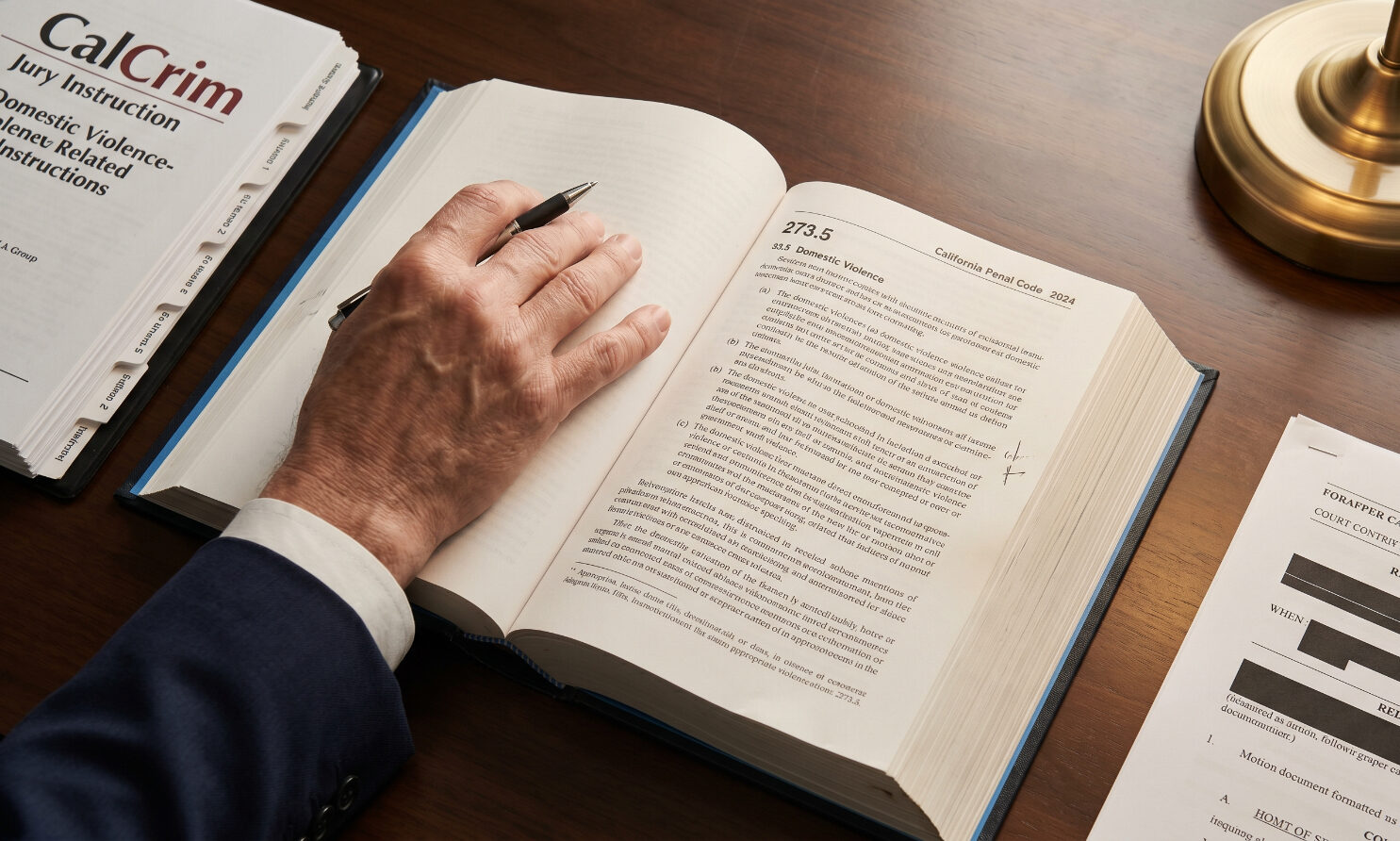
Why Early Legal Representation Matters in Domestic Violence Cases?
The domestic violence arrest process California uses moves quickly. Prosecutors begin building their case from the moment of arrest. The arraignment is days away.
Because early decisions can affect the entire case, experienced legal representation matters. Fighting a domestic violence charge effectively means intervening before charges are formally filed, challenging the emergency protective order, identifying weaknesses in the prosecution’s evidence, and preparing a defense strategy before arraignment. Waiting until after you have entered a plea narrows every option available to you.
Manshoory Law Group focuses exclusively on criminal defense in Los Angeles, Orange County, and San Bernardino County. Lead attorney Shaheen F. Manshoory holds the designation of State Bar Certified Legal Specialist in Criminal Defense Law, one of the rarest credentials in California criminal defense. The firm offers a free case analysis and clients receive direct attorney access from day one.
Conclusion
Domestic violence charges carry consequences that reach far beyond a courtroom, into your record, your parental rights, and for some, your immigration status. California law gives prosecutors significant power to move these cases forward regardless of what the complaining party wants.
The decisions you make in the first 24 to 72 hours can define the outcome of your case.
Contact Manshoory Law Group for a free case analysis. Available 24/7 at (877) 977-7750.

May 20, 2026
Shaheen Manshoory
California legalized adult recreational marijuana use under Proposition 64 in November 2016. What that legalization also created, and what many people still do not know is available to them, is a pathway to clear convictions for conduct that is no longer a crime. Hundreds of thousands of Californians carry marijuana convictions on their records for offenses that would not result in an arrest today. Those convictions affect employment, housing, professional licensing, and immigration status long after the sentence was served. Prop 64 expungement gives eligible individuals a legal mechanism to reduce, dismiss, or seal those records.
The process has evolved significantly since 2016. Automation tools developed by nonprofit organizations, changes to how district attorneys handle retroactive review, and subsequent legislation have made the relief more accessible. This article explains what Prop 64 offers, who qualifies, what outcomes are available, and what the current process looks like.
What Proposition 64 Changed for Past Convictions

Proposition 64, the Adult Use of Marijuana Act, did more than legalize recreational cannabis for adults 21 and older. It also created a statutory framework for retroactively reclassifying and dismissing prior convictions for conduct that is now legal or that carries a lower penalty under current law.
The legal basis for this relief is found in Health and Safety Code 11361.8, which was added by Prop 64. It requires courts to reduce, dismiss, seal, or redesignate eligible marijuana convictions upon petition. Assembly Bill 1793, enacted in 2018, went further by requiring district attorneys to identify eligible convictions in their counties by July 1, 2020, and either petition for their dismissal or file a notice with the court explaining why they oppose relief in a specific case.
The combination of AB 1793 and Code for America’s Clear My Record program, which can scan up to 10,000 records per minute, significantly reduced the burden of finding and processing eligible cases. Many counties have now cleared large volumes of eligible convictions without requiring individual petitions. However, not every eligible conviction has been addressed, and individuals whose records have not yet been cleared may still need to petition directly.
Which Convictions Qualify for Prop 64 Relief?
Eligibility depends on the specific Health and Safety Code section under which the conviction was entered, what the conduct involved, and whether any disqualifying factors apply.
Offenses Eligible for Dismissal and Sealing
Convictions under the following Health and Safety Code sections are eligible to be dismissed with arrest and court records sealed, because the underlying conduct is no longer criminal under current law:
- Health and Safety Code 11362.1(a)(1): possession of 28.5 grams or less of marijuana for personal use
- Health and Safety Code 11362.1(a)(2): possession of 8 grams or less of concentrated cannabis
- Health and Safety Code 11362.1(a)(3): possession of marijuana accessories
- Health and Safety Code 11362.1(a)(4): gifting of up to 28.5 grams of marijuana or up to 8 grams of concentrated cannabis between adults
- Health and Safety Code 11362.1(a)(5): cultivation of six or fewer living plants for personal use
- Health and Safety Code 11361.1(a)(1): certain offenses involving minors where the conduct is now lawful
Felony Convictions Eligible for Reduction to Misdemeanor
Convictions under Health and Safety Code 11357(b)(2), 11358(c), 11359(b), and 11360(a)(2) are eligible for reduction from a felony to a misdemeanor. These cover possession of larger amounts of marijuana, cultivation of more than six plants, and possession with intent to sell. A conviction reduced to a misdemeanor under Prop 64 reflects the lower classification going forward on background checks and in subsequent criminal proceedings.
Misdemeanor Convictions Eligible for Reduction to Infraction
Certain misdemeanor marijuana convictions are eligible for reduction to an infraction, which carries no jail exposure and significantly less stigma on a background check. The specific sections eligible for infraction reduction are outlined in Health and Safety Code 11361.8.
How each conviction type is affected under Prop 64:
| Original Conviction Type |
Outcome Under Prop 64 |
Result |
| Conduct no longer illegal |
Dismissal and sealing |
Arrest and court records sealed |
| Felony now reclassified as misdemeanor |
Reduction to misdemeanor |
Conviction reflects misdemeanor going forward |
| Misdemeanor now reclassified as infraction |
Reduction to infraction |
Conviction reflects infraction going forward |
| Prior serious or violent felony (see exceptions) |
No relief available |
Conviction remains unchanged |
Who Does Not Qualify for Prop 64 Relief

Several categories of convictions are excluded from Prop 64 relief regardless of the underlying marijuana offense. A person is not eligible if:
- The conviction involved a prior or concurrent serious or violent felony, including rape, murder, child molestation, or any offense that qualifies as a strike under California’s three strikes law
- The offense involved the sale or furnishing of marijuana to a minor
- The offense involved a violation of specified environmental laws during the cultivation or processing of marijuana
- The person is a registered sex offender
These exceptions reflect the legislature’s intent to limit relief to conduct that is now considered relatively minor, while preserving consequences for those whose marijuana convictions accompanied more serious criminal behavior.
What Relief Is Actually Available and What It Does
The practical effect of Prop 64 relief depends on which outcome applies. Dismissal and sealing removes the conviction from most background checks accessible to private employers and landlords, restores certain civil rights, and allows the person to truthfully deny the conviction on most applications. It does not erase the record from law enforcement databases. Reduction from felony to misdemeanor changes how the conviction appears on background checks and eliminates the collateral consequences specific to felony status, including firearm restrictions, certain professional licensing bars, and immigration consequences tied specifically to felony convictions. These are the same principles that apply to California expungement generally under Penal Code 1203.4.
Additional relief available in some cases includes sentence reduction for individuals currently incarcerated under a conviction that would carry a lighter sentence today, and early termination of probation for those currently serving a probationary term on an eligible conviction.
For anyone whose only convictions are marijuana offenses that have been dismissed and sealed, benefits that may become available include eligibility for federal student loans, the ability to travel to Canada and obtain visas for certain other countries, and in some cases restoration of firearm rights.
How the Process Works Today

For many people, Prop 64 relief has already been applied automatically through the AB 1793 process. County district attorneys were required to review eligible convictions and either petition the court for relief or file objections by July 1, 2020. Many counties have processed large volumes of cases without requiring individual petitions.
However, automatic processing is not universal. Some counties have processed fewer cases, some convictions fall outside the automatic review parameters, and some objections were filed that were never resolved. If your record still reflects an eligible marijuana conviction, you can petition the court directly under Health and Safety Code 11361.8.
The petition requires identifying the conviction, the court where it was entered, and the specific Health and Safety Code section under which relief is sought. If the conviction occurred in multiple counties, a separate petition is required in each county. The district attorney has the opportunity to object, and if they do, a hearing is scheduled before the court.
If you are still on probation for a marijuana conviction, early termination may be available before pursuing dismissal. Probation modification and early termination is a separate petition process that, if granted, then opens the path to Prop 64 relief without waiting out the full probation term.
Frequently Asked Questions
Has Prop 64 already cleared my marijuana conviction automatically?
It depends on the county and the conviction. Many counties processed eligible convictions through the AB 1793 review by 2020. But not every eligible conviction was captured, and some individuals whose cases fell through the cracks or were objected to have not yet received relief. The only way to know for certain is to pull your current criminal record through the California Department of Justice personal record review process and check whether the conviction reflects the reclassified status.
Can a felony marijuana conviction be reduced to a misdemeanor under Prop 64?
Yes, for the specific offenses listed in Health and Safety Code 11358(c), 11359(b), and 11360(a)(2), which cover larger-quantity possession, multi-plant cultivation, and possession with intent to sell, a petition to reduce the felony to a misdemeanor is available unless the disqualifying exceptions apply. The reduction changes how the conviction appears on background checks and eliminates felony-specific collateral consequences.
Does Prop 64 relief restore firearm rights?
It depends on the nature of the relief and the original conviction. A dismissed and sealed misdemeanor marijuana conviction generally does not bar firearm possession. A reduced felony that now appears as a misdemeanor may restore firearm rights that were restricted because of the felony status, but this requires a careful analysis of the specific conviction and any other criminal history. An attorney should evaluate firearm rights restoration individually rather than assuming it follows automatically from the relief.
Does Prop 64 relief affect immigration status?
It can. A dismissed and sealed conviction or a felony reduced to a misdemeanor may improve immigration outcomes, particularly for individuals facing removal proceedings based on the marijuana conviction. However, immigration consequences of criminal convictions are governed by federal law, and federal law still classifies marijuana as a Schedule I controlled substance. The interplay between Prop 64 relief and federal immigration consequences is fact-specific and should be evaluated by an attorney familiar with both criminal and immigration law.
What is the difference between Prop 64 expungement and regular expungement?
Regular expungement under Penal Code 1203.4 applies after probation is completed and requires the conviction to be a qualifying misdemeanor or felony where no state prison sentence was imposed. Prop 64 relief under Health and Safety Code 11361.8 applies specifically to marijuana convictions covered by the statute and operates on a different eligibility framework, including the ability to dismiss and seal convictions outright rather than simply withdrawing a plea. For convictions that qualify under both frameworks, Prop 64 often provides stronger relief. For convictions that fall outside Prop 64, standard California expungement under Penal Code 1203.4 remains the available pathway.
Find Out Whether Your Marijuana Conviction Qualifies
A marijuana conviction from years ago does not have to define what you can do today. California law provides multiple pathways to reduce, dismiss, or seal those records, and the process is more accessible than it was when Prop 64 first passed. Whether your conviction has already been addressed automatically or still appears unchanged on your record, an expungement attorney can pull your record, identify what relief is available, and handle the petition process. Contact Manshoory Law Group for a free case analysis.

May 10, 2026
Douglas Parker
An assault charge does not wait. The moment law enforcement files a case, the window for effective defense begins closing. For anyone navigating this situation, the core question arrives fast: can assault charges be dropped, or is a conviction the likely outcome?
Assault charges can be dropped or dismissed, but not automatically and not without a defense strategy built around how California prosecutions actually work.
What Are Assault Charges in California?
California law defines assault as an unlawful attempt to commit a violent injury on another person, combined with the present ability to do so. Physical contact is not required. That surprises most people who are charged for the first time.
Assault charges affect more than the immediate case. A conviction touches your criminal record, employment eligibility, professional licensing, housing, and immigration status. Talking with a Los Angeles Assault and Battery Attorney early in the process gives you an accurate picture of what you are actually facing before the case builds further.

Types of Assault Charges in California
The types of assault charges under California law carry different penalties and call for different defenses. The charge category matters from the start.
Simple Assault
Penal Code 240 covers simple assault, a misdemeanor that applies to attempts to apply harmful or offensive contact without a weapon and without causing serious injury. Penalties typically include up to six months in county jail and a fine of up to $1,000.
Aggravated Assault
Penal Code 245 governs aggravated assault, which involves a deadly weapon or force likely to cause great bodily injury. Depending on the circumstances and the defendant’s prior convictions, it may be charged as either a misdemeanor or a felony.
Assault and Battery
Assault and battery charges frequently appear together. Assault is the attempt; battery is the completed act.
Understanding the distinctions between these offenses becomes clearer when looking at Simple vs. Aggravated Assault in California.
Who Has the Power to Drop Assault Charges?
The victim cannot drop assault charges. That is the single most important thing to understand about how California criminal cases work.
Once law enforcement submits a case, the authority to pursue or dismiss it belongs entirely to the prosecution. The victim’s preferences are one input, not the decision. Knowing this changes everything about how to drop assault charges in a way that actually produces results.
Can assault charges be dropped? Yes. The prosecutor initiates that outcome based on evidence strength, witness cooperation, and what the defense raises. Dropping assault charges in California requires specific conditions that prosecutors must consider. None of them happen without active defense work.

Common Reasons Assault Charges Get Dropped or Dismissed
How to get assault charges dismissed usually comes down to one of a handful of concrete factors.
Lack of evidence is the most common. If the prosecution cannot prove every element beyond a reasonable doubt, the case falters. Inconsistent witness accounts, missing physical evidence, and credibility problems all create the kind of openings that lead to dismissal.
Self-defense is a recognized legal basis under California law. If you used reasonable force to protect yourself or someone else from imminent harm, that defense can neutralize the prosecution’s theory.
A diversion program may result in an assault case dismissed in California courts process for qualifying first-time defendants. The defendant completes certain requirements. The case closes upon completion; eligibility must be established early.
When a victim recants or refuses to cooperate, the practical ability to prosecute weakens. This does not automatically end the case but can affect the prosecutor’s decision.

What Happens If the Victim Wants to Drop the Charges?
The process is more complicated than most people expect.
A prosecutor can proceed with or without victim cooperation when independent evidence exists: surveillance footage, a criminal protective order already on record, medical documentation, or third-party witnesses. In those situations, victim recantation alone does not end the case.
When victim testimony is the only real evidence, though, dropping assault charges becomes a realistic outcome. Prosecutors evaluate their cases practically. A case they cannot win at trial rarely goes to trial.
What a victim cannot do is unilaterally close a prosecution. What they can do is communicate their position to the prosecutor, and that carries weight. A Violent Crimes Defense attorney understands how to navigate this dynamic without creating additional legal exposure.

What a Defense Attorney Can Do to Fight Your Assault Charges?
How to fight assault charges in California is not a single-path question. The approach depends on the evidence, the charge level, the court, and what the facts actually support.
Defense attorneys examine witness credibility, review law enforcement conduct, and identify procedural violations that could result in suppression of evidence. These issues do not surface on their own. They require someone actively looking for them.
When a full dismissal is not a realistic goal, the focus shifts toward negotiating the best available outcome. A plea agreement that reduces a felony assault to a misdemeanor, or results in probation rather than custody, is still a significant result. Defense strategies vary by case, but they all share one common feature: early engagement with an experienced attorney.
How to fight assault charges effectively means starting before the case has already run against you. To clarify, how to get assault charges dismissed or substantially reduced depends on how quickly that work begins.
Conclusion
Assault charges in California are serious. They are also dropped, dismissed, and reduced regularly. That outcome requires the right defense, started early enough to matter.
Manshoory Law Group is an experienced criminal defense firm serving Los Angeles, Orange County, and San Bernardino County. Contact us for a free case analysis. Call (877) 977-7750 or reach us online.

May 4, 2026
Shaheen Manshoory
Aggravated sexual assault of a child under California Penal Code § 269 is one of the most serious charges in California’s criminal code. A conviction carries a mandatory prison sentence of 15 years to life, lifetime sex offender registration as a Tier 3 offender, and consequences that follow you for the rest of your life. Because of how severe the penalties are, and because allegations like these can arise from misunderstanding, mistaken identification, or false claims in contentious family situations, having an experienced defense attorney from the first contact with police is critical.
If you or a family member has been accused under PC 269, do not talk to investigators, do not contact the alleged victim or their family, and do not try to explain. Call the Los Angeles sex crime defense attorneys at Manshoory Law Group immediately. Cases at this level move quickly, and early intervention can shape the entire defense.
What Penal Code 269 Actually Prohibits
Despite being called “aggravated sexual assault of a child,” PC 269 is technically an enhancement statute. It elevates the penalty for certain specified sex offenses when they are committed against a child under the age of 14 by someone who is at least seven years older than the child.
For PC 269 to apply, the prosecution must prove that the defendant committed one of the following five underlying offenses against the alleged victim:
- Rape by force, violence, duress, menace, or fear of immediate and unlawful bodily injury (Penal Code § 261(a)(2) or (a)(6))
- Rape in concert with another person (Penal Code § 264.1)
- Sodomy by force, violence, duress, menace, or fear (Penal Code § 286(c)(2) or (3), or (d))
- Oral copulation by force, violence, duress, menace, or fear (Penal Code § 287(c)(2) or (3), or (d))
- Sexual penetration with a foreign object by force, violence, duress, menace, or fear (Penal Code § 289(a))
Three conditions must all be true:
- The alleged victim was under 14 years old at the time
- The defendant was at least seven years older than the alleged victim
- The conduct involved force, violence, duress, menace, or fear (this is what distinguishes PC 269 from other child-related sex offenses)
If any one of these elements is missing, PC 269 does not apply. The conduct may still be prosecutable under another statute (such as PC § 288 for lewd acts with a minor), but the 15-to-life sentencing trigger requires all three.
This is an important point that’s often misunderstood. Not every alleged sex offense involving a child is a PC 269 case. The “aggravated” label specifically refers to force, violence, duress, or fear being part of the alleged conduct.
Penalties Under PC 269

PC 269 carries one of the harshest sentencing structures in California criminal law.
Mandatory prison sentence. A conviction is punishable by 15 years to life in state prison. The defendant must serve at least 15 years before becoming eligible for parole consideration, and parole is far from automatic at that point.
Consecutive sentencing for multiple counts. PC 269 expressly allows judges to impose consecutive 15-to-life terms when:
- The same defendant committed PC 269 offenses against more than one victim, or
- The defendant committed PC 269 offenses against the same victim on more than one occasion
So a defendant charged with three counts arising from three separate alleged incidents can face 45 years to life before any parole eligibility.
Tier 3 sex offender registration for life. Under the Sex Offender Registration Act (PC § 290), a PC 269 conviction triggers Tier 3 registration, which is lifetime registration with no termination possibility. This is the highest tier in California’s Three Tier sex offender registry. Tier 3 registrants must:
- Re-register every year within five working days of their birthday
- Re-register within five working days of any move
- Appear on the public Megan’s Law website indefinitely
- Comply with extensive residency and employment restrictions
No statute of limitations. Under Senate Bill 813 (effective January 1, 2017), California removed the statute of limitations for most serious felony sex offenses, including PC 269. This means prosecutors can file charges decades after the alleged conduct. For older cases, the law in effect at the time of the alleged conduct generally controls. See our guide explaining that California has no statute of limitations for serious sex offenses for more on how this rule works.
Other consequences. A conviction can also result in deportation for non-citizens, lifetime loss of firearm rights, loss of professional licenses, ineligibility for many forms of employment, residency restrictions, mandatory GPS monitoring in some cases, and lifetime prohibition on certain occupations involving children.
Related Charges Often Filed Alongside PC 269
PC 269 rarely appears alone in a charging document. Prosecutors typically file multiple counts under different statutes covering related conduct.
Lewd acts with a child (PC § 288). Touching a child under 14 for sexual purposes, or causing the child to touch themselves or another person sexually. Punishable by 3, 6, or 8 years in state prison, or 5, 8, or 10 years if force or duress was involved.
Continuous sexual abuse of a child (PC § 288.5). Three or more acts of substantial sexual contact with a child under 14 over a period of three months or more by someone with recurring access to the child. Punishable by 6, 12, or 16 years in state prison.
Statutory rape (PC § 261.5). Sexual intercourse with a minor under 18, regardless of consent. Penalties vary based on the age difference between the parties.
Annoying or molesting a child (PC § 647.6). A misdemeanor in most cases, but a wobbler when there are prior convictions.
A single allegation can produce charges under multiple statutes, dramatically increasing the potential prison exposure.
Defenses Against PC 269 Charges
Despite the severity of the charge, several defenses are available depending on the facts.
Mistaken identity. Children may misidentify their alleged abuser, especially when there are multiple adults in the household, when significant time has passed, or when leading questioning has shaped the child’s account. DNA evidence, alibi evidence, and forensic interview analysis can all support this defense.
False allegations. False allegations of child sexual assault are rare but real. They sometimes arise in contentious custody disputes, divorces, or family conflicts. Patterns of disclosure, inconsistencies in the account, and motives to fabricate can all be examined.
Lack of force, duress, or fear. Because PC 269 specifically requires that the alleged underlying offense was committed by force, violence, duress, menace, or fear, the prosecution must prove that element beyond a reasonable doubt. If the alleged conduct does not meet that threshold, PC 269 doesn’t apply, even if other charges might.
Age difference defense. PC 269 requires the defendant to be at least seven years older than the alleged victim. If the age gap is less than seven years, PC 269 cannot apply. The conduct may still be charged under other statutes, but not at the 15-to-life level.
Unreliable child interview evidence. Modern forensic interview protocols (such as the CornerHouse or RATAC method) exist precisely because children are highly suggestible. A defense expert can review whether the interview was conducted properly. Leading or suggestive questioning can taint a child’s testimony.
Coerced or involuntary confession. If law enforcement obtained statements from the defendant through threats, prolonged interrogation, deprivation, or other coercive tactics, those statements may be inadmissible under the Fifth Amendment. A motion to suppress can exclude them.
Unlawful search or seizure. Investigations of these allegations frequently involve searches of phones, computers, cloud accounts, and homes. If law enforcement obtained evidence through an unlawful search, your attorney can move to suppress under Penal Code § 1538.5.
Insufficient evidence. The prosecution must prove every element beyond a reasonable doubt. In cases without physical evidence, the case can come down to the credibility of the alleged victim, the consistency of their account, and corroborating evidence. Aggressive cross-examination and independent investigation can expose weaknesses.
What to Do If You’re Being Investigated
If law enforcement has contacted you, even casually, about an allegation involving a minor, your next steps are critical.
- Do not speak to investigators. Politely decline to be interviewed. “I want to speak with my attorney before answering any questions.” Police interviews in these cases are designed to produce admissions.
- Do not contact the alleged victim or their family. Any communication can be used as evidence of consciousness of guilt or witness intimidation.
- Do not delete anything. Destroying or modifying evidence (text messages, photos, browser history) can lead to obstruction charges and create a damaging inference at trial.
- Preserve exculpatory evidence. Anything that supports your version of events, location data, witnesses, communications, should be preserved immediately.
- Hire a defense attorney experienced in serious sex cases. Not every criminal defense lawyer handles cases at this level. You need someone with specific experience defending serious sex offenses, including the use of forensic experts, child interview specialists, and DNA experts.
- Understand your rights at every stage. For a complete walkthrough of post-arrest procedure, see our guide to your rights when arrested.
The decisions you make in the first 48 hours of an investigation can shape the entire case. Speak to a lawyer first, then decide what (if anything) to say to anyone else.
Frequently Asked Questions
What is the minimum sentence for aggravated sexual assault of a child in California?
The minimum sentence under Penal Code 269 is 15 years to life in state prison. The defendant must serve at least 15 years before being eligible for parole consideration. For convictions on multiple counts, the court can impose consecutive 15-to-life terms, meaning a defendant could face decades before any parole eligibility.
What’s the difference between PC 269 and PC 288?
PC 269 (aggravated sexual assault of a child) applies to specific serious sex offenses committed against a child under 14 by someone at least seven years older, where force, violence, duress, menace, or fear is involved. PC 288 (lewd acts with a minor) covers a broader range of sexual conduct with a child under 14, including conduct without force. PC 269 carries 15 years to life; PC 288 carries 3 to 10 years depending on the circumstances.
Is there a statute of limitations on PC 269 charges?
No. Under Senate Bill 813 (effective January 1, 2017), California removed the statute of limitations for most serious felony sex offenses, including aggravated sexual assault of a child. This means charges can be filed at any time, including decades after the alleged conduct, as long as the prior statute of limitations had not already expired before SB 813 took effect.
Will a PC 269 conviction require sex offender registration?
Yes. A conviction under PC 269 requires lifetime Tier 3 registration under California’s Sex Offender Registration Act (PC § 290). Tier 3 is the most restrictive level, requiring annual registration, registration within five days of any move, and indefinite inclusion on the public Megan’s Law website. There is no path to removal from Tier 3 registration.
Can I get probation instead of prison for a PC 269 conviction?
Generally no. PC 269 is one of the most restricted offenses for probation eligibility in California. While there are very narrow circumstances where a judge has discretion, probation is essentially unavailable in the vast majority of PC 269 cases. The mandatory sentence of 15 years to life is the rule, not the exception.
Talk to a Los Angeles Sex Crime Defense Attorney Today
A charge under Penal Code 269 is among the most serious accusations a person can face in California. The penalties are severe, the social consequences are devastating, and the cases themselves often turn on technical evidentiary issues like child forensic interview protocols, DNA analysis, suggestibility, and the precise statutory elements the prosecution must prove. Defending these cases requires specialized experience.
The criminal defense attorneys at Manshoory Law Group focus exclusively on criminal defense, including serious sex offenses, throughout Los Angeles, Orange County, and Southern California. We know how prosecutors build these cases, how to challenge unreliable evidence, when to bring in independent forensic experts, and where the weaknesses in the prosecution’s case tend to be.
Consultations are free and confidential, and we’re available 24/7. Flexible payment plans are available.
Call 877-977-7750 today or contact us online to speak with an attorney.