
Jan 27, 2026
Douglas Parker
A domestic violence arrest in San Bernardino kicks off a legal process the moment police show up at the door. These arrests happen fast. Officers respond to a call, see injuries or hear conflicting stories, and an arrest is typically made on the spot. Sometimes it doesn’t matter what the alleged victim says later. Mandatory arrest policies give officers no choice.
What comes next? That’s what most people want to know right after an arrest. San Bernardino courts handle these cases with particular focus on victim safety and California’s domestic violence statutes. Every case moves through specific stages. Knowing what to expect helps you prepare instead of scrambling to catch up.
Overview of a Domestic Violence Arrest in San Bernardino
Most domestic violence arrests in San Bernardino follow a predictable pattern. Law enforcement gets called to a reported incident between family members, roommates, or people in a dating relationship. Officers show up, talk to both parties, look for visible injuries, and check for damaged property, trying to figure out what happened.
Here’s the part that catches people off guard: California law requires officers to make an arrest when they have probable cause to believe domestic violence occurred. Even if the alleged victim doesn’t want to press charges. Even if both parties are trying to de-escalate. The decision gets made right there.
After arrest, you’re heading to the West Valley Detention Center or Central Detention Center in San Bernardino. Booking means fingerprints, photographs, personal information on record. How long you stay depends on several factors. Bail eligibility, charge severity, and timing all play a role. Get arrested on a Friday night? You’re waiting until Monday because court access shuts down on weekends.
Meanwhile, law enforcement sends reports to the San Bernardino County District Attorney’s Office. Prosecutors review everything and decide whether to file formal charges. This review process can drag on for days, sometimes weeks. You might sit in custody the whole time, or you could get released on bail with strict conditions attached. Staying away from the alleged victim is usually one of them.

Key Legal Terms and Charges Explained
Domestic violence in San Bernardino isn’t just one charge. It covers several criminal offenses under California law, and the specific charge determines everything. Understanding California domestic violence laws shows you what prosecutors need to prove and what penalties you’re actually facing. Many of these offenses fall under the same legal framework as other common criminal charges in San Bernardino.
California Penal Code Section 243(e)(1) defines domestic battery as willful and unlawful use of force or violence against an intimate partner. It’s a misdemeanor carrying up to one year in county jail. Straightforward on paper, but the real-world application gets complicated.
Then there’s the more serious charge: corporal injury to a spouse under Penal Code Section 273.5. This one applies when violence results in a traumatic condition. Prosecutors can file it as either a misdemeanor or felony depending on injury severity and your prior criminal history. That distinction affects potential prison exposure, probation terms, and long-term consequences.
Criminal threats under Penal Code Section 422 show up when someone threatens to kill or seriously injure another person and causes sustained fear. Restraining order violations fall under Penal Code Section 273.6. These can pile on top of your domestic violence case, adding criminal charges even while the original case is still pending.
The gap between misdemeanor and felony charges? It affects your entire future. Felony convictions mean state prison time, harsher probation terms, lasting damage to job prospects and firearm rights. Know exactly what charge you’re facing so you can evaluate how strong the prosecution’s case actually is.
What Happens After Arrest: Bail, Arraignment, and Court Appearances
Bail amounts in San Bernardino follow a county schedule based on what you’re charged with. Misdemeanor domestic battery usually runs between $20,000 and $50,000. Felony charges push that number higher, sometimes well past $50,000. Judges can bump these amounts up or down. Your criminal history matters, and so does injury severity and whether weapons were part of the incident.
The arraignment is your first court appearance. You’ll hear the formal charges read out loud, enter a plea, and get information about your constitutional rights. San Bernardino Superior Court holds these at the Rancho Cucamonga courthouse or the main courthouse downtown, depending on where the arrest happened.
Most judges slap protective orders on you at arraignment. No contact with the alleged victim. You might also have to turn over any firearms you own.
Pretrial conferences come next. These are meetings where prosecutors and defense attorneys go through evidence, talk about potential plea deals, and set trial dates. It’s your attorney’s chance to review police reports, witness statements, and physical evidence. Seeing what the prosecution actually has helps you decide whether to take a plea offer or push for trial.
Miss a court date? Bad move. That triggers additional charges and an immediate warrant for your arrest.

How San Bernardino Courts Handle These Cases
San Bernardino County takes domestic violence cases seriously, and it shows in how they staff them. The District Attorney’s office puts specialized prosecutors on these cases. Many focus exclusively on domestic violence charges and work closely with victim advocates. They evaluate cases based on injury severity, witness credibility, your prior domestic violence history if you have one, and physical evidence like photographs, medical records, or those 911 calls that got recorded.
Here’s an important point to understand: many first-time offenders facing misdemeanor domestic violence charges may qualify for diversion programs. These programs typically require completion of a court-approved batterer’s intervention program, along with counseling and community service. San Bernardino County offers a 52-week batterer’s intervention program that meets weekly and focuses on anger management, healthy communication, and personal accountability.
Finish diversion successfully? Charges dismissed, no criminal conviction. But there’s a tradeoff. You have to admit responsibility for what happened and give up your right to a speedy trial.
Cases that don’t qualify for diversion go through traditional criminal prosecution. Some end up in jury trials as the case moves through the later stages of a criminal case where prosecutors must prove guilt beyond a reasonable doubt. San Bernardino juries hear all the evidence, watch witnesses testify, and decide whether you committed the offense. Convictions mean jail time, fines that add up fast, mandatory domestic violence classes, and probation stretching out for years.

Common Defenses in Domestic Violence Cases in San Bernardino
Defense strategies usually attack the prosecution’s evidence, challenge witness credibility, or offer different explanations for injuries and property damage. Self-defense claims argue your actions were necessary to protect yourself from immediate harm. This works especially well when both parties end up injured. California law allows reasonable force to defend yourself. Evidence showing the alleged victim threw the first punch? That can lead to dismissal or acquittal.
False accusations happen more often than people think in domestic violence cases. Custody battles, messy breakups, divorce proceedings where someone wants the upper hand. Defense attorneys dig into inconsistencies in witness statements, pull communication records between both parties, identify motivations for making things up. Phone records can provide objective timelines and location data, and so can text messages and social media posts. Sometimes, they directly contradict what someone claimed happened.
Insufficient evidence challenges focus on whether prosecutors can actually prove every element of the charged offense beyond a reasonable doubt. Domestic violence cases lean heavily on victim testimony. When alleged victims recant their story, refuse to cooperate with prosecutors, or give accounts that keep changing, the case starts falling apart. Prosecutors struggle to meet their burden of proof.
Defense attorneys also go after illegal searches, unconstitutional seizures, interrogations that violated your rights. Get that evidence suppressed and the prosecution’s case might collapse entirely.
Working with a San Bernardino criminal defense lawyer helps you spot weaknesses in what prosecutors are trying to prove, figure out if diversion is an option, and build strategies based on how San Bernardino County courts and prosecutors actually operate.
Seeking Legal Representation
Facing domestic violence charges? Get legal representation that understands San Bernardino County court systems and knows how local prosecutors think. Experienced attorneys negotiate charge reductions, get clients into diversion programs, secure dismissals when evidence doesn’t hold up or police violate constitutional rights. Hire early and you avoid making statements to law enforcement that prosecutors turn around and use to strengthen their case against you.
You want someone familiar with common criminal charges in San Bernardino and how San Bernardino Superior Court judges actually handle these cases. Local knowledge makes a difference. Different courthouses apply sentencing guidelines differently. Some prosecutors negotiate more willingly than others. To put it differently, insider knowledge matters when your future’s on the line.
Get legal help early. It protects your rights, keeps you compliant with protective orders, prevents mistakes that wreck your defense strategy. The stakes justify investing in experienced legal representation that fights hard while giving you honest assessments about case strength and what outcomes look realistic.

An arrest for domestic violence in Orange can have immediate and far-reaching consequences. Beyond the criminal charges themselves, a domestic violence case can significantly impact your employment, housing stability, child custody arrangements, and immigration status. Understanding how Orange County courts actually handle these cases helps you make better decisions about what comes next.
The local process has its own rhythm and quirks not found in other California counties. Knowing what’s coming can at least take some of the guesswork out of an already terrible situation.
Overview of a Domestic Violence Arrest in Orange
Most domestic violence arrests in Orange start with a 911 call or neighbors reporting what sounds like trouble. Officers show up, talk to everyone involved, and look for signs of injury or distress. California law mandates that law enforcement officers make an arrest when they have probable cause to believe domestic violence has occurred, regardless of whether visible injuries are present or whether the alleged victim wishes to proceed with prosecution.
Once Orange Police decide to arrest someone, they are taken to Orange County Jail for booking. This isn’t a slow process. Your first court appearance usually happens within 48 hours, sometimes faster.
Police don’t just take statements and leave. They photograph everything, talk to witnesses, and write detailed reports about what they saw and heard. Those reports matter because prosecutors read them to decide what charges to file. Bail decisions and release conditions get sorted out during this same window, which is why everything feels like it’s happening at once.

Key Legal Terms and Charges Explained
California domestic violence laws cover more ground than most people realize. Penal Code §243(e)(1) deals with domestic battery, which is when someone uses force or violence against an intimate partner. You can get charged with this even if the other person has no marks and says they’re not hurt.
Corporal injury under Penal Code §273.5 is the more serious version. That’s when prosecutors say the violence caused a “traumatic condition” or visible injury. It’s a felony, and it carries much heavier penalties than simple battery. There’s also criminal threats under Penal Code §422, which applies when someone threatens serious harm with the goal of scaring another person badly enough that the fear doesn’t just pass in a moment.
Violating a protective order gets prosecuted separately under Penal Code §273.6. Prosecutors in Orange County frequently file multiple charges in domestic violence cases. One argument can turn into three or four different criminal counts, and each one has specific elements the state has to prove beyond a reasonable doubt.
What Happens After Arrest: Bail, Arraignment, and Court Appearances
After booking, someone sets your bail using Orange County’s bail schedule, or a judge decides at your arraignment. The amount depends on what you’re charged with and whether you’ve been in trouble before. People facing common criminal charges in Orange see bail amounts all over the map. Sometimes people get released on their own recognizance with conditions attached, like staying away from the alleged victim.
Arraignment happens at the Central Justice Center in Santa Ana or the West Justice Center in Westminster. That’s where they formally read the charges and you enter a plea. Judges hand out Emergency Protective Orders or Criminal Protective Orders at these hearings pretty routinely. These orders tell you who you can’t contact and where you can’t go.
Pre-trial hearings follow the arraignment. During these proceedings, the court addresses motions, reviews evidence, and explores the possibility of resolving the case through negotiation rather than proceeding to trial. Prosecutors might offer a deal, or your case keeps moving toward trial. How long this takes varies wildly. Some cases wrap up in a few weeks, others drag on for months.
How Orange Courts Handle These Cases
Orange County courts treat domestic violence cases with considerable gravity and strict enforcement. They often funnel them to specialized departments with judges who handle this stuff all the time. Harbor Justice Center and Central Justice Center both see a steady stream of these prosecutions.
It is important to note that Orange County prosecutors don’t usually drop charges just because the alleged victim asks them to. They call it a “no-drop” policy. What that means is the state keeps pushing forward using 911 recordings, what officers saw when they showed up, photos, and anything else they’ve got. This approach is standard procedure in Orange County domestic violence prosecutions, though many defendants are unaware that cases typically proceed regardless of whether the alleged victim wishes to pursue charges.
When it comes to sentencing, judges look at various factors. Your criminal history matters. So does how serious the allegations are, whether kids were around during the incident, and whether any weapons were involved. You might be looking at batterer’s intervention programs, anger management classes, community service, or actual jail time. Protective orders can stick around for years, limiting who you can contact and whether you can own firearms.
Some first-time offenders might qualify for diversion programs, but the requirements are strict and they’re not available for every charge.

Common Defenses in Domestic Violence Cases in Orange
What works as a defense depends entirely on what actually happened and what evidence exists. Self-defense comes up a lot when someone is protecting themselves from getting hurt. California law says you can use reasonable force to stop an attack.
Mutual combat might apply when both people were fighting and it’s not clear who started it. Accidental contact is a defense when the physical contact wasn’t intentional. Similar to DUI charges in Orange, attacking the credibility and legality of the evidence can make a real difference.
False accusations occur with notable frequency in cases involving contested custody matters, divorce proceedings, or highly contentious relationships. Text messages, emails, and witness statements can sometimes show the accusations don’t match reality. Sometimes the defense is simply that prosecutors can’t prove what they say happened, beyond a reasonable doubt.
If police violated your rights during the arrest, interrogation, or while collecting evidence, you might be able to get that evidence thrown out. An Orange criminal defense lawyer who knows the local courts can figure out which defenses actually fit your situation.
Seeking Legal Representation
Facing domestic violence charges in Orange means dealing with both state law and local court procedures that have their own personality. The stakes aren’t small: jail time, fines, mandatory classes, protective orders that limit your life for years, and consequences for your job and custody rights.
Having legal representation matters during police questioning, bail hearings, and every court appearance that follows. Attorneys who work in Orange County courts regularly understand how the prosecutors here think and which defenses tend to work in this jurisdiction.
Getting legal help early gives you time to investigate what actually happened, talk to witnesses, and collect evidence before court deadlines start closing doors. Some evidence may disappear fast, and witness memories get fuzzy. Thus, delaying action can limit your options.
Every case is different, and what happens in yours depends on the specific facts. This is educational information, not legal advice. If you’re facing criminal charges, talk to an experienced attorney about your actual situation and build a defense strategy that fits.

Conclusion
Domestic violence charges in Orange move through a specific legal process in Orange County courts. Understanding what happens at each step, from the arrest through all the court dates, helps you make smarter decisions about your defense.
These charges affect more than just the immediate legal penalties. Legal representation helps you navigate complicated procedures and protect your long-term interests while you’re dealing with the criminal justice system.

Jan 23, 2026
Douglas Parker
When law enforcement responds to a domestic violence call in Anaheim, the process that follows can affect housing, employment, custody arrangements, and legal status for months or years. Understanding how these cases move through the system helps individuals make informed decisions at each stage.
Domestic violence arrests in Anaheim follow California state law, but local court procedures, available resources, and enforcement patterns shape how each case unfolds.
Overview of a Domestic Violence Arrest in Anaheim
Police officers in Anaheim must make an arrest, even if the injury appears minor, when they have probable cause to believe someone committed domestic violence that resulted in physical injury. This mandatory arrest policy under California Penal Code Section 13701 means officers often take someone into custody even when the alleged victim does not want to press charges.
Domestic violence cases in Anaheim typically begin with a 911 call or a report to the Anaheim Police Department. Officers arriving at the scene conduct interviews, photograph any visible injuries, and document statements from both parties. If officers determine probable cause exists, they arrest the person they believe was the primary aggressor.
After booking at the Anaheim City Jail or Orange County Jail, the arrested person usually remains in custody until bail is posted or until they appear before a judge for arraignment. Law enforcement may also issue an emergency protective order at the scene, which takes effect immediately and typically lasts five to seven days.
Key Legal Terms and Charges Explained
California law defines domestic violence as abuse committed against an intimate partner, which includes current or former spouses, cohabitants, dating partners, or the parent of a person’s child. The relationship between the parties determines whether prosecutors file charges under domestic violence statutes or pursue different common criminal charges in Anaheim.
The most frequent charges in these cases include:
- Penal Code Section 273.5 (f): This felony charge applies when alleged physical abuse results in a traumatic condition or injury.
- Penal Code Section 243(e)(1) (domestic battery): This misdemeanor charge covers harmful or offensive touching against an intimate partner, even without visible injury.
- Penal Code Section 273a (child endangerment): When children witness domestic violence or are present during an incident, prosecutors may add child endangerment charges.
- Penal Code Section 422 (criminal threats): Threats to harm an intimate partner that cause reasonable fear can result in felony charges.
Understanding the specific charges matters because penalties, defenses, and potential outcomes vary significantly between misdemeanor and felony cases. A California domestic violence law violation can also trigger immigration consequences, professional licensing issues, and firearm restrictions.

What Happens After Arrest: Bail, Arraignment, and Court Appearances
Following a domestic violence arrest in Anaheim, the defendant typically faces three immediate concerns: release from custody, protective orders, and the first court appearance.
Bail amounts for domestic violence cases in Orange County follow a set schedule, though judges can adjust bail based on case-specific factors. Some defendants qualify for release on their own recognizance, particularly when they have no prior criminal record and strong community ties.
The arraignment usually occurs within 48 hours of arrest for defendants in custody. At this first court appearance before the North Justice Center in Fullerton (which handles Anaheim cases), the judge:
- Informs the defendant of the charges
- Enters a plea of guilty, not guilty, or no contest
- Sets or modifies bail conditions
- Issues or extends protective orders
- Schedules the next court date
Protective orders issued at arraignment typically prohibit all contact with the alleged victim and may require the defendant to stay away from shared residences. Violating a protective order creates new criminal charges under Penal Code Section 273.6.
After arraignment, misdemeanor cases proceed through pretrial hearings. Felony cases require a preliminary hearing where a judge determines whether sufficient evidence exists to proceed to trial. Similar to how DUI charges in Anaheim move through the court system, domestic violence cases involve multiple court dates before resolving.
How Anaheim Courts Handle These Cases
The North Justice Center processes all criminal cases originating in Anaheim. Domestic violence cases receive assigned courtrooms based on whether charges are filed as misdemeanors or felonies.
Orange County prosecutors approach these cases with strict policies. The District Attorney’s Office generally does not dismiss domestic violence charges simply because the alleged victim recants or refuses to cooperate. Prosecutors often proceed using police reports, 911 recordings, photographs, and statements made at the scene.
Judges consider several factors when imposing sentences:
- Prior criminal history, especially prior domestic violence convictions
- Severity of injuries to the alleged victim
- Presence of children during the incident
- Use of weapons
- Violation of protective orders
For misdemeanor convictions, judges may impose probation with jail time ranging from zero days to one year. Felony convictions can result in state prison sentences of two, three, or four years, though judges sometimes grant probation with up to one year in county jail.

Common Defenses in Domestic Violence Cases in Anaheim
Defense strategies depend on the evidence, the relationship between the parties, and the specific charges filed. Effective defenses often focus on challenging the prosecution’s version of events or presenting alternative explanations for injuries.
Self-defense remains a valid legal defense when someone uses reasonable force to protect themselves from imminent harm. The key issue becomes whether the force used was proportional to the threat faced.
False accusations occur in some cases, particularly during contentious divorce proceedings, custody disputes, or situations involving anger over a relationship breakup. Defense attorneys investigate motives to fabricate allegations and present evidence that contradicts the accuser’s account.
Insufficient evidence presents another defense avenue. Prosecutors must prove guilt beyond a reasonable doubt, and when physical evidence is limited or witness testimony conflicts, reasonable doubt may exist.
Accidental injury provides a defense when evidence shows injuries resulted from an accident rather than intentional force.
Working with an Anaheim criminal defense lawyer allows defendants to evaluate which defenses apply to their specific circumstances and how to present evidence effectively.

Seeking Legal Representation
Domestic violence charges carry serious consequences beyond criminal penalties. Convictions appear on background checks, affect custody determinations, trigger restraining orders, and can result in deportation for non-citizens. Professional licenses may be suspended or revoked following a conviction.
An attorney can review police reports, interview witnesses, obtain surveillance footage, and identify inconsistencies in the prosecution’s case. Early involvement allows counsel to potentially influence the charges prosecutors file or negotiate favorable plea agreements before trial.
Defense attorneys also help clients understand protective order conditions and navigate parallel family law proceedings that often accompany domestic violence arrests.
For individuals arrested for domestic violence in Anaheim, consulting with legal counsel before making statements or agreeing to plea offers protects legal rights and ensures informed decision-making throughout the process.

Conclusion
The path from domestic violence arrest to case resolution in Anaheim involves multiple stages, each with significant legal implications. Understanding the process, the charges, and available defenses helps individuals facing these accusations make strategic decisions that protect their interests.
California domestic violence laws authorize serious penalties, but the outcome of each case depends on specific facts, evidence, and how effectively the defense addresses prosecution’s claims. Early legal guidance provides the best opportunity to achieve favorable results and minimize long-term consequences.
References

Jan 20, 2026
Douglas Parker
A criminal sentence can be difficult to understand, particularly when the court does not immediately order a custodial term to be served. One possible outcome is a suspended sentence.
A suspended sentence may appear to “pause” punishment, but it remains a court-imposed sentence that is held in reserve. If the person breaches the conditions of suspension or commits a further offense, the court may activate the sentence and require the custodial term to be served.
If this topic affects you or someone close to you, it helps to know how the court sets it up, what conditions may apply, and what can trigger consequences later.
What Is a Suspended Sentence?

A suspended sentence means the court decides a punishment after someone is guilty of a crime, then pauses some or all of the custody time. A suspended sentence pauses custody time but keeps the sentence ready to enforce.
Many people search, “What is a suspended sentence?” because they assume it means the court cancelled the penalty. As a response, the sentence is not set aside. Instead, the judge imposes the sentence and suspends some or all of the custodial term, allowing the court to activate it later if the person breaches the conditions or commits a further offense.
This matters in criminal law, as the court retains the authority to recall the individual if they break the rules or pick up a new case. The outcome can still affect a criminal record.
Types of Suspended Sentences

Judges can either suspend a sentence with no added requirements or impose it with additional conditions. The court order sets out the conditions of the suspension, including what the person must do (or avoid), the duration of the suspension period, and the circumstances that may result in the court scheduling a hearing or activating the custodial term.
Unconditional Suspended Sentence
With an unconditional order, the judge pauses the custody term but does not add extra duties like testing, classes, or supervision. The individual remains obligated to refrain from committing new offenses during the suspension period, and the court retains the authority to enforce the custodial term should any subsequent charges arise.
This is sometimes referred to as a “suspended prison sentence” when the imposed sentence includes a custodial term. During the suspension period, the court may activate the sentence if the person is convicted of a further offense or otherwise breaches the conditions of the order.
Conditional Suspended Sentence
A conditional suspended jail sentence includes specific requirements to follow. The court can order terms like check-ins, treatment, classes, restitution payments, or community service. It may also place limits on travel, require drug testing, or order a stay-away rule.
Even when the individual stays out of custody, the case can still impact a criminal record, depending on the charge and outcome in the jurisdiction.
If the person breaks the conditions, the court can schedule a hearing and decide what happens next.
How a Suspended Sentence Works in Practice

A judge explains the suspension at sentencing and puts the terms on the record. With a suspended sentence, the court expects strict follow-through on every condition.
A suspended sentence is a legal arrangement that runs over future time. Accordingly, it is important to keep paperwork and proof of compliance.
In practice, the process generally proceeds as follows:
- The judge announces the custody term and suspends it in full or in part.
- The court sets conditions and a time period to follow them.
- If an issue comes up, the court sets a violation hearing.
- The judge decides what to do based on the facts.
At a violation hearing, the court focuses on what happened after sentencing, not on retrying the original case. If the judge finds a violation, the court can activate the custody time, change the conditions, or extend the supervision period.
For example, missing a required class may result in additional reporting requirements or stricter conditions, while a new arrest may prompt the court to hold a violation hearing and consider activating the suspended custodial term.
If the order includes a suspended prison sentence, monitor every requirement closely, because the court can still impose that prison time. If the order includes a suspended jail sentence, the court can also order booking once the judge activates the term.
It may be advisable to consult a Los Angeles criminal defense attorney promptly to confirm that the court order accurately reflects the circumstances and understand the ongoing obligations required under the terms of the sentence.
Suspended Sentence vs. Deferred Sentence

These terms are sometimes confused because both may delay a custodial term, but they apply at different stages of a case.
A suspended sentence is imposed after a conviction, when the court pronounces sentence and suspends some or all of the custodial term subject to specified conditions.
A deferred sentence often delays sentencing itself, or it delays final judgment while the person completes terms.
Here is a practical way to separate them:
- With a suspension, the custody term already exists and the judge can enforce it if the person violates.
- With a deferral, the judge may hold off on a final sentence, and completion can lead to a different final outcome depending on the program.
The difference can affect your strategy, especially if the court offers a program that may reduce the long-term impact on your record. To talk through your options, you can contact us and share the court paperwork.
When Is a Suspended Sentence Typically Used?

Courts usually consider suspension when they see a path to compliance without immediate custody. Situations that often lead to suspension include:
- Some cases involving time offenders with limited prior history
- Low-level offenses with treatment or class options
- Cases where the person has stable housing and a plan to comply
Suspension can also come in partial form. A judge may order 180 days, suspend 150 days, and require 30 days served. In that scenario, the person still counts as sentenced to jail, and the judge keeps the remaining days as leverage if new problems show up.
For a convicted individual, it helps to ask for the exact end date, the full list of conditions, and the actions that trigger a violation hearing. Keep receipts and attendance logs, since those records can help if a dispute comes up later within criminal justice.
Conclusion
A suspended sentence can keep a person out of custody while the court requires strict compliance, and the judge can still activate the original term if conditions get broken.
If there is uncertainty about “what is a suspended sentence,” it is important to review the written court order, comply strictly with each condition, and obtain clarification from the court or counsel before leaving the courtroom.
References

Jan 5, 2026
Douglas Parker
Evidence is the information people bring to court to show what happened. In many criminal cases, the proof falls into two buckets: proof that points straight to a fact and proof that needs a step of reasoning to connect the dots. The latter can feel confusing when first heard in a police report or courtroom.
Knowing the difference helps spot where the prosecution’s story relies on assumptions and where it relies on a direct account of events.
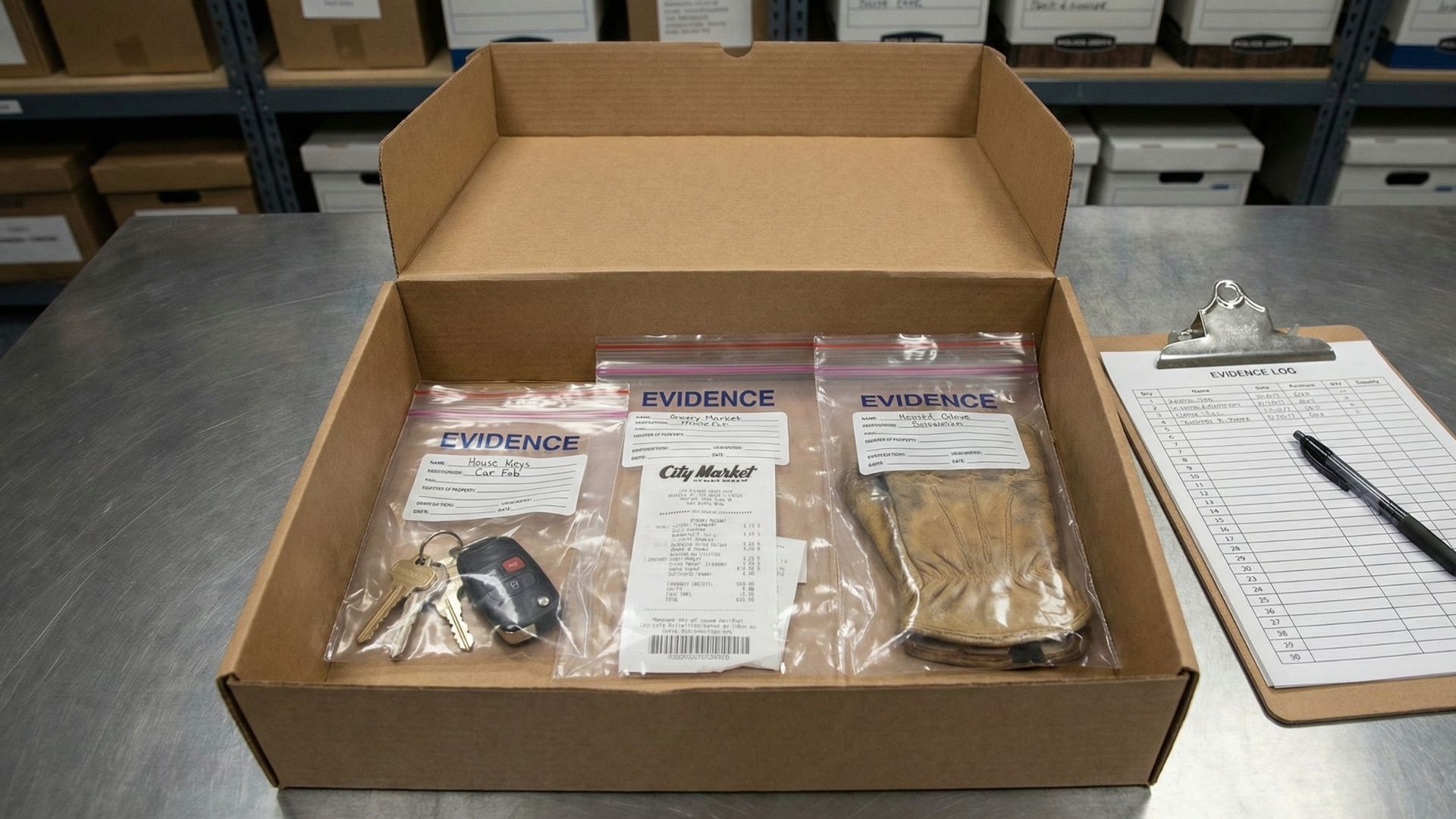
What Is Circumstantial Evidence?
If you keep hearing and wondering ‘what is circumstantial evidence,’ think of it as proof that suggests a fact through related details. It works by inference.
A jury observes a fact and then determines its significance in context. Prosecutors often rely on circumstantial evidence when no one saw the act happen or when the direct proof has gaps.
One clue usually does not settle a case. Lawyers and jurors look at how multiple facts line up, as well as look for other explanations that fit the same facts.
Examples of Circumstantial Evidence
These examples can point toward involvement while leaving room for innocent explanations:
- Phone location data places a device near the scene around the time of the crime.
- Fresh paint transfer appears on a car bumper after a hit-and-run report.
- An individual sells an item that someone reported stolen earlier.
- A fingerprint shows up on a broken window after a burglary, and investigators link it to a suspect.
- A receipt shows a purchase minutes after a credit card went missing, and video recording shows the same person at the register.
Each one needs reasoning. A phone can travel with someone else, paint can come from a different scrape, and a fingerprint can land on a surface for a harmless reason.

What Is Direct Evidence?
Lawyers refer to direct evidence when it supports a fact without extra reasoning. If a witness says, “I saw him take the wallet,” the statement points straight to the act. The court still has to decide if the witness got it right, but the logic chain stays short.
Direct evidence often comes from testimony, recordings, or documents that describe the event itself.
Examples of Direct Evidence
Examples that can count as direct evidence include:
- An eyewitness testifies that they saw the suspect commit the act.
- A confession describes what the person did and when they did it.
- A clear video recording shows the person committing the act.
- A voice message describes the act, and the identity matches the speaker.
Even when proof looks direct, disputes still come up around perception, pressure, and missing context.

Key Differences Between Direct and Circumstantial Evidence
Courts allow both types of evidence; both can show up in the same case. The difference sits in how many reasoning steps the jury must take.
Here’s a circumstantial vs direct evidence example. If a neighbor says they saw someone climb through a window, the testimony points straight to the act. However, if the neighbor only saw someone walking away a minute later with glass on their shoes, the jury has to infer what happened inside.
Practical differences often show up as follows:
- Logic steps: An item of direct evidence can point straight to a fact, while circumstantial evidence asks jurors to connect facts through inference.
- How lawyers challenge it: Direct evidence often turns on credibility and accuracy. Circumstantial evidence often turns on alternate explanations for the same clue.
- How the case gets built: Direct evidence may rely on one source, while circumstantial often relies on several pieces that line up.

How Courts Use Circumstantial Evidence
Prosecutors often present circumstantial evidence as a timeline and argue that the facts only point in one direction. Judges then tell jurors about the burden of proof.
The prosecution must prove guilt beyond a reasonable doubt, and jurors can reject a conclusion if the facts do not support the inference.
If you still find yourself asking ‘what is circumstantial evidence in real life,’ focus on the link between each fact and the conclusion the prosecutor wants. Individuals sometimes describe this as indirect evidence because it points to the claim through inference instead of stating it outright.
Another circumstantial vs direct evidence example involves video recording. It clearly shows a face, and the act may support a direct conclusion. A recording that only shows a similar jacket and someone running away pushes the case into inference. Accordingly, lawyers argue about identification and context.
Modern cases also lean on technical proof. That can include lab reports, phone records, and scientific comparisons. When those tools show up, the defense may challenge the methods, the chain of custody, and the people who collected the samples. That might include Forensic Evidence, Digital Evidence, or DNA Evidence.

What Are Possible Defenses?
Defense attorneys typically use several techniques, which include:
- Challenging the prosecutor’s theory of the case (i.e., the link between the defendant and the crime)
- Limiting how much information is presented to the jury
- Providing an alternative theory that fits the facts
Other possible defenses include:
- Presenting an alternate explanation for the “clue” (e.g., was present at the scene as part of employment)
- Attacking the inference the prosecutor makes about the defendant (i.e., pointing out gaps, holes, etc, in their argument)
- Challenging how the “clue” was identified (g., description too vague, bad lighting in video, etc.)
- Disputing the reliability of laboratory procedures used to obtain indirect evidence
- Moving to suppress any evidence obtained during illegal searches or improper interrogations
- Presenting positive evidence to refute an alibi or contradict the prosecutor’s version of the timeline (i.e., providing receipts, texts, etc.)
Working with a Los Angeles criminal defense lawyer allows you to identify weaknesses in the prosecution’s case, create a strategy based on the evidence, and determine potential motions and trial strategy.
Conclusion
Direct evidence points straight to a fact. Circumstantial evidence asks the court to connect facts through reasoning. When a case leans on inference, it is important to examine how each link connects to the next and what other explanations fit the same facts.
If someone says the evidence “speaks for itself,” slow down and ask what conclusion they want you to reach and what facts actually support that conclusion. Getting legal advice early can help protect your rights and respond with a clear plan.
References

Dec 28, 2025
Douglas Parker
Allegations involving domestic violence arrests in Newport Beach can lead to immediate consequences, including mandatory arrest policies, protective orders, and formal criminal charges filed by the Orange County District Attorney. Whether the incident involves a spouse, dating partner, household member, or cohabitant, individuals accused of domestic violence in Newport Beach face a legal process that moves quickly and requires careful navigation.
Overview of a Domestic Violence Arrest in Newport Beach
Domestic violence cases in Newport Beach typically begin with a 911 call, a report from a third party, or a police response to a disturbance. Officers from the Newport Beach Police Department conduct on-scene investigations to determine whether probable cause exists to believe an offense occurred.
Mandatory Arrest Standards
If officers determine that probable cause is present, an arrest is generally required, even when the alleged victim does not wish to press charges. Officers may:
- Evaluate physical injuries or signs of a struggle
- Photograph the scene and any property damage
- Speak with witnesses or neighbors
- Determine whether children were present
- Identify the primary aggressor when the parties provide conflicting accounts
Officers document statements and observations in their reports, which the prosecution may later rely on during court proceedings.
Booking and Initial Custody
After arrest, individuals are transported to the Orange County Jail for booking, fingerprinting, and initial processing. Domestic violence incidents often result in immediate protective orders and restrictions on returning home. Bail may be required before release, depending on the alleged conduct and risk factors evaluated under county guidelines.
For additional context regarding local trends, Common Criminal Charges in Newport Beach explain how these cases fit into broader enforcement patterns.

Key Legal Terms and Charges Explained
Domestic violence allegations in California can involve several statutes. Understanding the distinctions helps clarify the potential consequences of an arrest.
Domestic Battery — Penal Code §243(e)(1)
Domestic battery involves the use of force or unwanted touching against a spouse, former spouse, dating partner, fiancé, cohabitant, or the parent of the defendant’s child. It does not require visible injury. This offense is charged as a misdemeanor and may result in probation, fines, classes, and various court-ordered conditions.
Corporal Injury to a Spouse or Cohabitant — Penal Code §273.5
This statute applies when an individual inflicts a physical injury or “traumatic condition” on an intimate partner. Depending on the severity of the injuries and the defendant’s prior record, Penal Code §273.5 may be prosecuted as a misdemeanor or felony.
Emergency Protective Orders (EPOs)
During or following an arrest, officers may request an emergency protective order from an on-call judge. EPOs typically remain in effect for up to seven days and may include:
- No-contact provisions
- Requirements to vacate a shared residence
- Restrictions related to firearms and communication
These orders are intended to provide immediate short-term protection until a court determines the appropriate long-term restrictions.
Additional Allegations That May Be Filed
Depending on the evidence, prosecutors may also bring charges involving:
- Criminal threats
- Child endangerment
- Property damage or vandalism
- Violations of existing protective orders
Each allegation carries its own sentencing structure and collateral consequences.

What Happens After Arrest: Bail, Arraignment, and Court Appearances
Domestic violence cases progress quickly through the Orange County criminal system. The legal process typically includes several key stages.
Bail and Release Conditions
Individuals may be required to post bail before release. Courts evaluate the severity of injuries, prior history, and any risk posed to the alleged victim. Bail and release conditions may include:
- Orders to stay away from the alleged victim
- Restrictions on returning to a shared residence
- Prohibitions on firearm possession
- Mandatory check-ins or supervision
Arraignment in Orange County Courts
The arraignment is the first formal court appearance. At this hearing:
- The judge announces the charges.
- The defendant enters a plea.
- The court issues or continues protective orders.
- Bail and release conditions are reviewed.
If additional evidence exists, the district attorney may refine or expand the charges at this stage.
Subsequent Court Hearings
The period following arraignment includes pretrial hearings, evidence review, and negotiations between counsel and the prosecution. Defense counsel may:
- Request body-worn camera footage
- Evaluate witness statements
- Challenge the legality of the arrest
- File motions related to evidence suppression or constitutional violations
If no resolution is reached, the case may proceed to trial before a judge or jury.

How Newport Beach Courts Handle These Cases
Domestic violence cases arising in Newport Beach are typically prosecuted at the Harbor Justice Center. The court follows structured procedures designed to ensure timely resolution.
Case Review and Plea Negotiations
Prosecutors evaluate:
- Injury severity
- The presence of medical documentation
- Prior domestic violence allegations
- Statements from witnesses or children
- Any property damage
- Evidence of intoxication
Prosecutors may offer plea agreements, diversion opportunities, or alternative sentencing when appropriate.
Evidentiary Standards
Domestic violence cases often rely on:
- Photographs of injuries
- 911 recordings
- Medical records
- Officer observations
- Statements from neighbors or children
Even when the alleged victim does not wish to testify, the prosecution may continue based on independent evidence.

Common Defenses in Domestic Violence Cases
Defense strategies depend on the facts of the case, available evidence, and the conduct alleged.
Common defenses include:
- Insufficient evidence or inconsistencies in statements
- Lack of visible injuries
- Self-defense or mutual confrontation
- Unreliable witness testimony
- Improper police procedures or unlawful arrest
- Misidentification of the primary aggressor
In some situations, defense counsel may demonstrate that the injuries were accidental or unrelated to the alleged incident.

Seeking Legal Representation
Domestic violence allegations carry serious consequences, and early legal representation is essential. An experienced Newport Beach criminal defense lawyer can evaluate the strength of the evidence, address protective orders, and identify potential defenses.
Effective representation may include:
- Challenging probable cause
- Seeking modifications of protective orders
- Negotiating for reduced charges or alternative sentencing
- Preparing for trial
- Mitigating collateral consequences
- Addressing employment, licensing, or immigration concerns
Individuals seeking additional legal context may refer to California domestic violence laws for a detailed overview of statutory requirements and penalties.
Conclusion
Allegations involving domestic violence in Newport Beach move quickly through the legal system and often involve protective orders, strict release conditions, and detailed review by the Orange County District Attorney. Understanding how domestic violence arrests in Newport Beach progress through the court system is essential to preparing an effective defense. Early legal intervention helps protect individual rights, mitigate consequences, and position the case for the most favorable possible outcome.
Since those are full sentences with a subject and a verb, a period is required at the end of each sentence.
I’ll add the periods here, but please pay attention next time.

Dec 24, 2025
Douglas Parker
Allegations involving domestic violence arrests in Irvine can result in immediate and significant legal consequences. Irvine law enforcement and Orange County prosecutors treat domestic violence cases as high-priority matters, often leading to mandatory arrest policies, restrictive court orders, and rapid court timelines.
Whether the incident involves a spouse, partner, household member, or dating relationship, an individual accused of domestic violence in Irvine may face both criminal penalties and long-term personal repercussions.
What Happens During a Domestic Violence Arrest in Irvine
Domestic violence investigations in Irvine often begin with a 911 call, a report from a neighbor or family member, or an encounter involving the Irvine Police Department. Officers must determine whether probable cause exists to believe that an offense has occurred. If probable cause is found, an arrest is typically mandatory under California domestic violence protocols.
On-Scene Investigation
Officers may:
- Interview the parties involved
- Document injuries or property damage
- Photograph the scene and surroundings
- Speak with witnesses or neighbors
- Evaluate whether children were present
- Determine whether a primary aggressor can be identified
Statements made during the investigation may later be used by prosecutors. Even when the complaining witness chooses not to pursue charges, officers may still proceed with an arrest based on their independent observations.
Custody and Booking
Following the arrest, individuals are transported to the county facility for booking. Domestic violence cases often involve mandatory bail requirements. Release may not occur until a bail hearing or through a bail bond. Temporary protective orders are commonly issued at the time of booking.
Common Criminal Charges in Irvine provides additional context regarding related offenses commonly charged in the region.

Types of Domestic Violence Charges in California
Domestic violence encompasses several offenses under California law. The specific charge depends on the relationship between the parties, the severity of the alleged conduct, and any documented injuries.
Domestic Battery — Penal Code §243(e)(1)
This offense involves force or unwanted touching against a spouse, cohabitant, dating partner, former partner, fiancé, or the parent of the defendant’s child. Domestic battery under Penal Code §243(e)(1) does not require visible injury. It is typically charged as a misdemeanor and may result in probation, mandatory classes, and fines.
Corporal Injury to a Spouse or Cohabitant — Penal Code §273.5
This charge applies when the alleged victim sustains a physical injury or traumatic condition. Depending on the severity of the injuries and the defendant’s history, the case may be filed as a misdemeanor or felony.
Additional Allegations That May Be Filed
Prosecutors may also consider allegations such as:
- Criminal threats
- Child endangerment
- Vandalism
- Violations of existing protective orders
For a broader review of relevant statutes, individuals may consult California domestic violence laws.

Local Court Procedures for Domestic Violence Cases
Domestic violence matters arising in Irvine are typically prosecuted at the Harbor Justice Center. These cases progress through several structured stages.
Arraignment
The court formally presents the charges, and the defendant enters a plea. During this hearing, the judge may issue or continue protective orders and address bail, release conditions, and next steps.
Pretrial Proceedings
Pretrial proceedings often include:
- Review of police reports and officer statements
- Examination of body-worn camera footage
- Collection of surveillance or digital evidence
- Interviews of witnesses
- Negotiations with the district attorney
Defense counsel may file motions challenging the sufficiency of the evidence or the legality of the search or seizure.
Readiness Conferences and Trial
If the case does not resolve at the pretrial stage, it may proceed to trial. The prosecution must prove the allegations beyond a reasonable doubt. Evidence may include witness testimony, medical records, photographs, or recordings of the incident.

Protective Orders and No-Contact Orders
Domestic violence allegations in Irvine commonly result in the issuance of protective orders. These orders may include:
- Prohibitions on contacting the alleged victim
- Stay-away conditions
- Firearm restrictions
- Limitations on communication, including through third parties
- Orders preventing the individual from returning home
Temporary restraining orders may be issued immediately after arrest and typically remain in effect until the first court hearing. Judges may modify or revoke these orders depending on the information presented.
Violations of protective orders may result in additional criminal allegations, separate from the underlying domestic violence case.

Penalties and Long-Term Consequences
Penalties for domestic violence arrests in Irvine depend on the nature of the allegations, the presence of injuries, and the defendant’s prior history. Courts evaluate aggravating and mitigating circumstances when determining appropriate penalties.
Misdemeanor Penalties
A misdemeanor domestic violence conviction may involve:
- A probation period extending up to several years
- Completion of a 52-week batterer intervention program
- Fines and restitution
- Possible jail time
- Mandatory compliance with protective orders
These convictions may affect professional licensing, employment, and immigration status.
Felony Penalties
Felony domestic violence allegations typically involve injuries, prior convictions, or aggravating facts. Potential consequences include:
- State prison time
- Formal probation with strict supervision
- Long-term firearm prohibitions
- Extensive fines and restitution
Sentencing enhancements may apply when substantial injuries or prior convictions are involved.

Collateral Consequences
Domestic violence convictions may also result in:
- Barriers to certain forms of employment
- Restrictions on firearm ownership under state and federal law
- Negative effects on custody or family law proceedings
- Mandatory participation in counseling programs
- Immigration consequences for non-citizens
These secondary consequences underscore the importance of addressing the allegations promptly and strategically.
When to Contact an Irvine Criminal Defense Attorney
Domestic violence allegations require timely and informed legal intervention. Early representation allows counsel to evaluate the evidence, address protective orders, and prepare a defense strategy based on the facts of the case.
An experienced Irvine criminal defense lawyer can:
- Assess the legality of the arrest
- Review witness statements and officer reports
- Identify inconsistencies or constitutional issues
- Advocate for reduced charges or alternative sentencing
- Request modifications of protective orders
- Prepare for trial when necessary
Understanding local procedures at the Harbor Justice Center is essential for navigating these cases effectively.
Allegations involving domestic violence in Irvine progress rapidly and frequently involve protective orders, mandatory court appearances, and substantial legal consequences. Individuals who obtain legal representation early are better positioned to challenge the evidence, understand the implications of the allegations, and pursue the most favorable resolution.

Dec 19, 2025
Douglas Parker
Allegations involving Irvine drug possession charges can lead to significant legal consequences under California law. Whether the arrest occurs during a traffic stop, on the UC Irvine campus, or in a residential area, individuals often face a complex process involving local law enforcement, county prosecutors, and multiple required court appearances. Understanding how Irvine handles drug-related allegations is essential to protecting your rights at every stage of the case.
What Constitutes Drug Possession in Irvine
California law prohibits the possession of controlled substances under statutes such as Health & Safety Code §11350(a), which criminalizes the possession of certain narcotics without a valid prescription. Irvine law enforcement applies these requirements strictly, and possession may be charged even for minimal amounts.
Drug possession allegations generally fall into the following categories:
- Actual possession
- Constructive possession
- Joint possession
These allegations may involve narcotics, unauthorized prescription medications, stimulants, depressants, or substances listed under the Controlled Substances Act.
Cases are frequently initiated by the Irvine Police Department, including units that focus on narcotics-related investigations. Prosecutors evaluate the type of drug, quantity, surrounding circumstances, and any indicators of possible distribution.
For broader context regarding crimes charged in the area, Common Criminal Charges in Irvine provides more details.
Common Circumstances: Student and Non-Student Arrests

Irvine’s significant student population means that campus-adjacent and university-related incidents occur frequently. University-related drug arrests at UC Irvine may arise in dormitories, social gatherings, or surrounding neighborhoods. Although UC Irvine maintains its own police department, many cases are referred to the Irvine Police Department or the Orange County District Attorney.
Non-student arrests often stem from traffic stops, neighborhood patrols, probation checks, or community reports. When evidence suggests packaging, distribution, or repeated conduct, allegations may be escalated.
Legal Process After an Arrest
The criminal process typically begins with detention and a search. Officers may conduct searches based on probable cause, warrants, or consent. Any substances discovered are seized, documented, and submitted for analysis.
Booking Procedures
Following an arrest for Irvine drug possession charges, the accused is transported to the Orange County jail for booking, including fingerprinting, photography, and entry of charges into the system.
Prosecutorial Review
The Orange County District Attorney’s Office evaluates whether:
- the facts support criminal charges
- diversion is appropriate
- a misdemeanor or felony filing is warranted
An attorney may intervene before charges are filed, often influencing the direction of the case. A qualified Irvine criminal defense attorney can provide representation throughout the process and evaluate the specific circumstances of the arrest.
First-Time Offender Programs

Several first-time drug offender options exist for individuals with no significant criminal history. Depending on eligibility, diversion or treatment programs may be available.
Pretrial Diversion
This may include counseling, treatment, drug education, or supervised compliance. Successful completion may lead to dismissal.
Deferred Entry of Judgment
This option allows a plea to be entered but delays judgment while the individual completes treatment or education requirements. Completion may result in dismissal.
Eligibility depends on criminal history, substance type, and prosecutorial discretion.
Possible Penalties and Outcomes

The consequences associated with Irvine drug possession charges depend on the type of substance, criminal history, and the evidence presented. Courts in Irvine evaluate each case individually, balancing accountability and rehabilitation.
Misdemeanor Possession Consequences
When the facts suggest personal use, and the individual has no significant criminal history, prosecutors may file the case as a misdemeanor. In these cases, courts often impose:
- Informal probation
- Statutory fines
- Treatment or educational requirements
- Compliance reviews or progress hearings
While less severe than a felony, a misdemeanor still results in a permanent record that may affect employment, licensing, or academic opportunities.
Felony Possession Consequences
Felony allegations generally involve aggravating factors, such as larger quantities, evidence suggesting sales, or prior narcotics-related convictions. Felony sentencing may include:
- State prison exposure
- Formal probation with strict supervision
- Substantial fines
- Mandatory treatment or testing
- Collateral consequences that affect housing, licensing, and immigration
Details regarding state classifications can be reviewed in felony drug charges in California, which outlines the state’s felony framework.
Collateral and Long-Term Effects
Collateral consequences may include:
- Academic sanctions for university students
- Professional licensing obstacles
- Employment challenges
- Immigration implications for non-citizens
These long-term effects highlight the importance of addressing the allegations strategically.
Legal Help for Irvine Residents

Allegations involving drug possession require a detailed examination of the underlying facts, the legality of the search, and the sufficiency of the prosecution’s evidence. A knowledgeable Irvine criminal defense attorney can challenge unconstitutional searches, pursue diversion, negotiate reductions, or litigate the case when necessary.
Attorneys familiar with the Irvine Police Department, UC Irvine enforcement practices, and the Orange County District Attorney’s Office are best positioned to guide individuals through the process and pursue the strongest possible resolution.
Conclusion
Allegations involving Irvine drug possession charges require careful evaluation and informed decision-making. Outcomes vary significantly based on the facts, eligibility for diversion, and the strength of the evidence. Individuals who obtain legal representation early are often better positioned to pursue favorable resolutions, including dismissal or reduced charges.

Dec 12, 2025
Douglas Parker
Questions about “Romeo and Juliet” laws often arise when young people engage in consensual sexual relationships and one or both parties are close in age. In many states, close‑in‑age exceptions protect teenagers from severe criminal penalties for consensual conduct.
California handles these situations differently and does not have a formal Romeo and Juliet statute. That is why it is important to know how California applies its unlawful sexual intercourse law when the parties are close in age, what penalties may follow, and why prompt legal advice is critical.
What Is the Romeo and Juliet Law?
In many states, a “Romeo and Juliet law” is a close‑in‑age exception that shields teenagers from prosecution for consensual sexual relationships, even when one or both individuals are under the legal age of consent.
The goal of these laws is to avoid imposing harsh penalties – including felony convictions or mandatory sex offender registration – on close-in-age relationships involving minors.
Does California Have a Romeo and Juliet Law?
California does not have a formal Romeo and Juliet law. Instead, the state relies on Penal Code section 261.5, the unlawful sexual intercourse statute, to distinguish between:
- Consensual acts involving minors who are close in age
- Acts where the age gap is significant
- Acts involving adults and minors
California law does not provide immunity from criminal charges in these situations, but it does impose different levels of penalties based on the age gap between the parties, particularly when the younger party is at least 14 years old.

The Age of Consent in California
The age of consent in California is 18 years old. This means that any sexual activity with a person under 18 can lead to charges under Penal Code section 261.5, even when the conduct is consensual and even when both individuals are minors.
The law applies irrespective of either party’s intentions, the younger person’s apparent consent, or the fact that the individuals may attend the same school. Because consent is not a legal defense when one party is under 18, many people are surprised to learn they can still face statutory rape charges despite mutual agreement between the parties.
How California Handles Close‑in‑Age Situations
Although California does not have a formal Romeo and Juliet law, Penal Code section 261.5 applies tiered penalties based on the ages involved. The law recognizes that not all cases should be treated the same and that an older adult with a much younger minor presents different concerns than two teenagers close in age.
When Both Parties Are Close in Age
If the younger party is at least 14 years old and the other one is no more than three years older, the conduct still violates Penal Code section 261.5, but prosecutors often consider factors such as:
- The relative maturity of the teens
- The nature and duration of the relationship
- The voluntariness of the conduct and surrounding circumstances
- The absence of coercion, force, or manipulation
In such cases, prosecutors may be more inclined to file a misdemeanor instead of a felony. While this is not a statutory “exception,” it functions as a practical close‑in‑age consideration that can significantly affect how the case is charged and resolved.
Young people who fall within this range may face less severe penalties than in wide age‑gap cases, but the consequences can still be long‑lasting.

Penalties Under California’s Statutory Rape Law
Penalties under Penal Code section 261.5 depend heavily on the age difference and whether the accused is an adult or another minor.
Minor with Another Minor (Age Gap of Three Years or Less)
- Generally charged as a misdemeanor
- Punishable by up to one year in county jail
- Possible fines and probationary terms
- No mandatory sex offender registration in many cases, absent aggravating factors
Minor with Another Minor (Age Gap Greater Than Three Years)
- May be charged as a misdemeanor or felony.
- Felony convictions can carry multi‑year prison sentences.
- Courts and prosecutors weigh the age difference and circumstances in deciding how to proceed.
For a more detailed discussion of how California differentiates unlawful sexual intercourse from other offenses (including rape), statutory rape laws in California explains how Penal Code section 261.5 operates alongside other sex-offense statutes.
Adult with a Minor
- Often treated more harshly, especially if the minor is younger or particularly vulnerable.
- Felony charges are more likely and can result in substantial prison time.
- A conviction can trigger mandatory sex offender registration, which may have lifelong effects on housing, employment, and community standing.
These distinctions show how a close‑in‑age situation may reduce, but not eliminate the risks under California law.

Limits of Close‑in‑Age Considerations in California
California’s approach has clear limits:
- Close‑in‑age considerations are not a legal defense.
- There is no statutory immunity for close‑in‑age relationships.
- A minor’s consent is not legally valid in unlawful sexual intercourse cases.
- Prosecutors retain broad discretion and may still file serious charges.
- Defendants can still face significant criminal, personal, and collateral consequences.
A young person accused of violating Penal Code section 261.5 may face criminal charges, probation, restrictive conditions, school or employment-related consequences, and potential immigration effects. In more serious cases, a conviction can also lead to mandatory sex offender registration under California’s sex offender registry system, which can severely restrict housing and work opportunities and impose long‑term monitoring obligations.
California also prosecutes other offenses involving minors, such as sexual assault on a minor, which can carry even more severe penalties than unlawful sexual intercourse and may involve additional enhancements when force, threats, or a position of trust is alleged.
Practical Examples of the Romeo and Juliet Concept
Below are common situations where people may refer to the “Romeo and Juliet law,” even though California has no formal statute bearing that name:
Example 1 — Both Parties Are Minors
A 16‑year‑old individual is in a consensual relationship with someone who is 17. The conduct is unlawful, but prosecutors often treat it as a misdemeanor, especially if there is no coercion, force, or exploitation.
Example 2 — Small but Significant Age Gap
A 15‑year‑old and an 18‑year‑old engage in consensual sexual conduct. This age gap exceeds three years, meaning more significant penalties may apply, including potential felony exposure for the older party.
Example 3 — Younger Party Is at Least 14
If the younger party is 14 years old and the older individual is three years or fewer older, the case may fall within the informal close‑in‑age consideration. Even then, the conduct can still be charged, but prosecutors may view the case differently than a wide age‑gap scenario.
Example 4 — Mistaken Belief About Age
A teenager believes a peer is the same age but later learns the person is younger. A mistaken belief about age does not automatically excuse the conduct, although courts may consider the circumstances and the reasonableness of that belief when determining charges and sentencing.

Common Misconceptions About Romeo and Juliet Laws in California
Many people misunderstand how California treats close‑in‑age relationships involving minors. Common misconceptions include:
- “California has a statutory Romeo and Juliet law.” In reality, California does not have an official Romeo and Juliet statute. Unlawful sexual intercourse with a minor remains a crime even when the parties are close in age.
- “Consent from a minor prevents charges.” A minor cannot legally consent to sexual intercourse, so apparent agreement does not bar prosecution.
- “Close‑in‑age couples cannot be charged.” Being close in age may influence charging and sentencing decisions, but it does not create immunity from prosecution or guarantee leniency.
- “Charges always require sex offender registration.” Not every conviction involving unlawful sexual intercourse requires registration; whether someone must register depends on the specific offense, the facts of the case, and how it is charged.
More serious allegations may be prosecuted under other sex offense statutes. A Los Angeles sex crimes lawyer can advise you on how registration requirements and other collateral consequences may apply in a particular case.

Importance of Legal Representation
Allegations involving minors and unlawful intercourse are treated very seriously in California, even when the individuals are close in age. Immediate legal representation is essential to protect the accused person’s rights and to mitigate potential long‑term consequences.
A knowledgeable criminal defense attorney can:
- Evaluate the specific ages, timelines, and factual details
- Argue for misdemeanor treatment where appropriate
- Challenge the sufficiency and reliability of the prosecution’s evidence
- Seek to avoid unnecessary felony exposure
- Work to prevent or limit sex offender registration and other collateral consequences
- Present mitigating factors to prosecutors and the court
Anyone accused under California’s unlawful sexual intercourse laws should speak with an experienced Los Angeles criminal defense attorney at Manshoory Law Group to evaluate defenses, understand potential outcomes, and protect their future.
Conclusion
Although many states recognize a statutory Romeo and Juliet law, California does not. Instead, California relies on Penal Code section 261.5 and related statutes to impose tiered penalties based on the ages and circumstances of those involved, offering limited consideration for close‑in‑age relationships without eliminating criminal liability.
Anyone facing allegations related to sexual activity with a minor should seek immediate assistance from an experienced Los Angeles criminal defense attorney. Skilled representation can significantly affect how charges are filed, how a case proceeds, and what impact the outcome has on a person’s life.

Dec 9, 2025
Douglas Parker
Facing drug possession in San Bernardino can be overwhelming, especially when dealing with local law enforcement, the county jail system, and the complexities of California drug laws. San Bernardino takes drug cases seriously, and the outcomes can range from diversion opportunities to felony charges that can have long-term consequences. Understanding how the legal process works is essential to protecting your rights.
Individuals facing drug allegations often need immediate guidance. Experienced counsel can help explain the process, challenge unlawful police conduct, and pursue the best possible outcome.
Understanding Local Drug Laws in San Bernardino
Drug possession laws in California are primarily governed by Health and Safety Code § 11350, § 11377, and related statutes that prohibit possessing controlled substances, including narcotics, prescription drugs without authorization, and certain synthetic substances. In counties like San Bernardino, enforcement is strict, and prosecutors evaluate the facts closely when determining whether charges should be filed as misdemeanors or felonies.
Local agencies, including the San Bernardino County Sheriff’s Office, conduct narcotics investigations throughout the region. Officers may also coordinate with multi-agency task forces when a case involves larger quantities of drugs, suspected sales, or aggravating circumstances.
San Bernardino treats each case based on:
- Quantity of the substance
- Type of drug
- Prior criminal history
- Evidence suggesting personal use or sales
- Circumstances of the arrest
Additional perspective is offered through Common Criminal Charges in San Bernardino, which highlights the prevalence of drug possession and similar offenses in the county.

What Happens After a Drug Arrest
An arrest for drug possession in San Bernardino can occur during traffic stops, home searches, probation checks, or routine police encounters. Regardless of how the arrest occurs, officers typically follow a standard procedure.
Initial Detention and Search
Officers may conduct a search based on consent, probable cause, or a warrant. If drugs or paraphernalia are found, they will be seized as evidence.
Unlawful searches remain one of the most contested issues in local drug cases.
Seizure of Evidence and Documentation
Law enforcement will document where and how the substance was found. The accuracy of this documentation is often critical to the prosecution and the defense.
Transport to Detention Facility
After the arrest, individuals are taken to the West Valley Detention Center or another local facility operated by the San Bernardino County Sheriff’s Office.
Prompt legal representation in San Bernardino is vital at this point, because early intervention can impact bail, the filing decision, and the ability to challenge any constitutional violations.
Booking, Bail, and Charges

After transport, the individual undergoes the booking process, which includes:
- Fingerprints
- Mugshot
- Collection of personal information
- Inventory of belongings
- Entry of charges into the system
Bail Determination
Depending on the alleged offense, the jail follows the county bail schedule to determine whether the individual may be released. For certain cases, attorneys may request a bail reduction or argue for release on recognizance at the earliest hearing.
Type of Charges
Drug cases range from misdemeanors to felonies, with prosecutors reviewing the facts before filing. When the amount or circumstances suggest transportation, distribution, or repeated offenses, a case may be filed as felony drug possession.
Individuals often benefit from learning how the state distinguishes misdemeanor and felony substance-related cases. To understand broader state-level rules, felony drug charges in California demonstrate how prosecutors classify offenses.

San Bernardino Court Process Explained
Drug cases in San Bernardino are heard at the San Bernardino Superior Court, where matters progress through several stages:
1. Arraignment
The defendant is informed of the charges and enters a plea. The court may address release conditions at this stage.
2. Pretrial Proceedings
This stage involves:
- Review of police reports
- Examination of lab results
- Filing motions to suppress evidence due to unlawful search or seizure
- Negotiations with the district attorney
- Requests for diversion programs
Defense counsel often challenges how the evidence was collected, whether probable cause existed, and whether testing procedures adhered to legal standards.
3. Motions and Hearings
In drug-related cases, a motion to suppress is common when officers search without proper justification. If the court determines the search was unlawful, the case may be dismissed.
4. Negotiation or Resolution
Many drug cases resolve before trial when the parties reach a plea agreement, diversion arrangement, or dismissal based on evidentiary concerns.
5. Trial
If no resolution is reached, the case proceeds to trial. The prosecution must prove possession, knowledge, and intent beyond a reasonable doubt.
Penalties and Sentencing Guidelines

The penalties for drug possession in San Bernardino depend heavily on the facts of the case and the individual’s criminal history.
Misdemeanor Possession
- Up to one year in county jail
- Fines
- Treatment requirements
- Probation
Felony Possession
Felony-level cases may involve:
- State prison time
- Felony probation
- Mandatory treatment conditions
- Potential long-term consequences
San Bernardino courts often emphasize rehabilitation, and some defendants may qualify for:
- Drug diversion programs
- Education programs
- Treatment-based solutions
Courts may also consider early termination of probation when individuals demonstrate compliance and progress.
Additional Consequences
Penalties may also include:
- Impacts on employment
- Driver’s license issues
- Immigration consequences for non-citizens
The county’s approach to California drug crime penalties prioritizes both accountability and opportunities for treatment when appropriate.
Choosing the Right Defense Lawyer

Selecting qualified legal counsel is one of the most important steps after a drug possession arrest. An experienced attorney can evaluate whether:
- the search was lawful
- the evidence is admissible
- the prosecution can prove actual or constructive possession
- diversion is available
- the charges can be reduced or dismissed
A knowledgeable San Bernardino criminal defense attorney can also assist with local law enforcement practices, filing tendencies within the district attorney’s office, and judicial expectations at the San Bernardino Superior Court.
In addition, legal representation in San Bernardino is especially important when dealing with repeat allegations, felony filings, or cases involving multiple substances. For this reason, early intervention can significantly influence the direction of the case.
Conclusion
Charges involving drug possession in San Bernardino require careful attention to both the legal process and the potential consequences. Understanding local law enforcement practices, court procedures, and available alternatives can help individuals make informed decisions. Strong legal representation often determines whether an individual faces severe penalties or is able to pursue options such as diversion, reduced charges, or dismissal.
If you or someone you know is facing allegations involving drug possession, contact a San Bernardino criminal defense attorney to discuss available defenses and ensure that your rights are protected from the outset.